
Tag: friends reunited history

  • Friends Reunited: How a Hertfordshire Website Accidentally Invented British Social Networking

    Friends Reunited: How a Hertfordshire Website Accidentally Invented British Social Networking

    There is a particular kind of nostalgia that only the British seem capable of producing: the sudden, slightly embarrassing urge to find out what happened to people you last spoke to in a school corridor in 1987. Friends Reunited did not invent that feeling. It simply gave it a website. What followed was, for a few extraordinary years between 2000 and 2005, one of the most visited destinations on the British internet, and arguably the clearest ancestor of everything we now recognise as social networking. The Friends Reunited history is, in many ways, the story of the early British web itself.

    Early 2000s desktop computer displaying a simple website, evoking Friends Reunited history
    Photo by MART PRODUCTION on Pexels

    A spare bedroom in Barnet, and a very simple idea

    Steve and Julie Pankhurst launched Friends Reunited from their home in Barnet, Hertfordshire, in July 2000. The premise was almost disarmingly modest: build a database of UK secondary schools, let former pupils register their names against a year group, and allow other alumni to find them. No profiles, no photo uploads, no algorithmic feeds. Just a list of names and, eventually, a short message telling the world what you had been up to since the fifth form.

    The site launched quietly, without press coverage or venture capital. Steve was a contract programmer. Julie had the idea after struggling to track down old school friends for a reunion. In the first few weeks the visitor numbers were negligible. Then, in early 2001, something shifted. Word of mouth, passed largely through email chains and early chat rooms, pushed registrations past a million. By 2003 the site claimed more than fifteen million registered users, an almost incomprehensible figure for a British internet business at the time, and one that made the broadsheets take notice.

    What made it genuinely different from anything before it

    To understand how significant Friends Reunited was, you need to remember the context. The dot-com boom had just collapsed, taking dozens of British start-ups with it. The surviving British internet was largely a publishing medium: you read things, you bought things, you searched for things. You did not, in any structured way, encounter other people. Classmates.com existed in the United States but had no real traction in Britain. Friends Reunited filled an entirely uncontested space.

    What it created, almost by accident, was a persistent, searchable record of British social identity organised around school year and geography. You did not need to know someone’s email address. You simply searched for your school, found your year, and there they were. The psychological pull of that was enormous. I have spoken to people who describe the moment they found a childhood friend’s name on the site as genuinely startling, the feeling of a ghost suddenly made solid.

    The site also introduced something that would become a defining tension of all social media that followed: the public-private problem. Your name was visible to anyone who registered. The message you wrote about your life since school, a few sentences of self-presentation composed in a moment of optimism or anxiety, was readable by people you might not have thought about in decades. It was the first time many ordinary British people had to think consciously about how they represented themselves online. What you wrote there was, in miniature, a question of digital identity that we are still arguing about today.
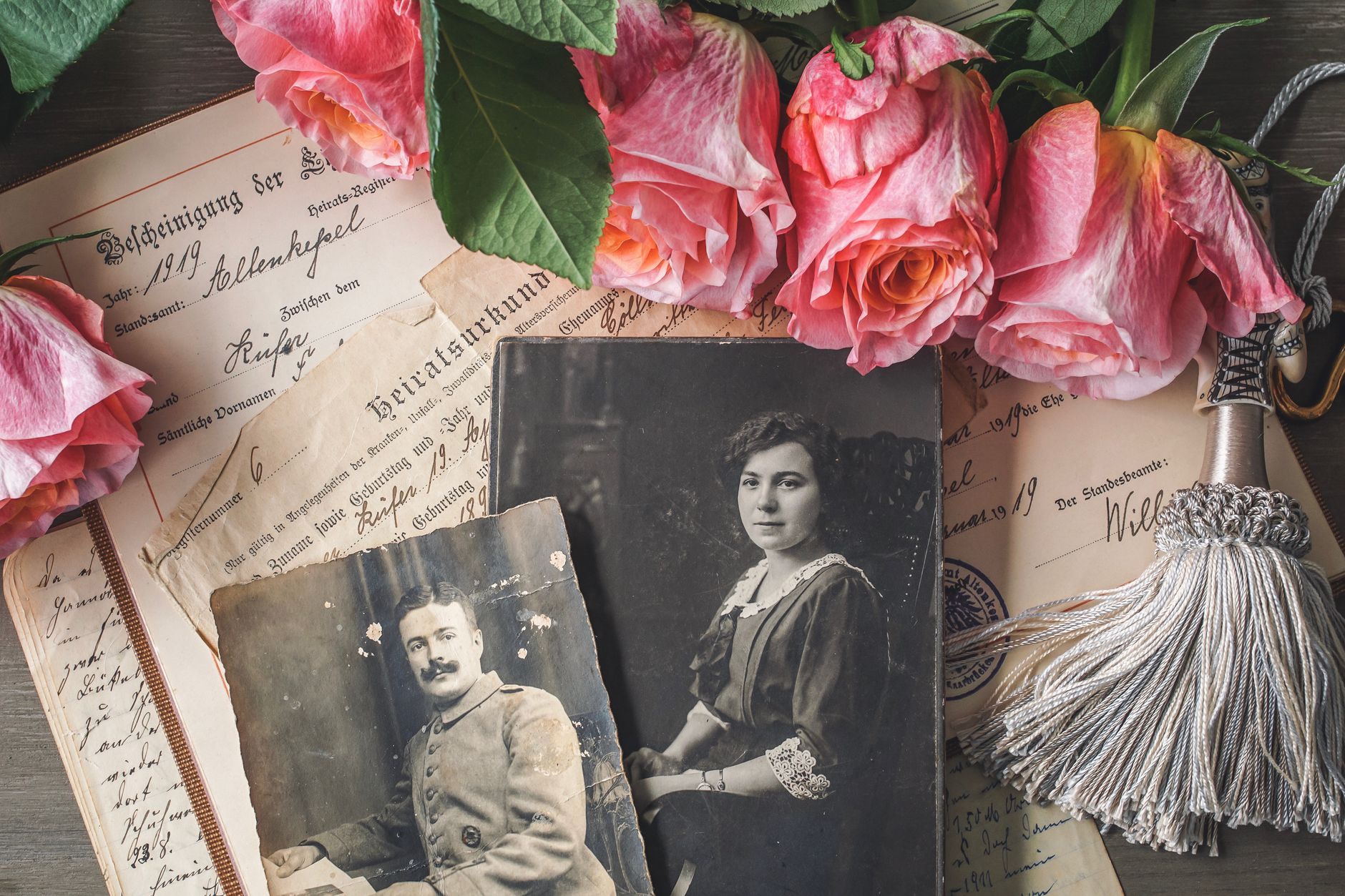
    Open school yearbook with rows of student photos, reflecting the nostalgia at the heart of Friends Reunited history
    Photo by Susanne Jutzeler, suju-foto on Pexels

    The £120 million sale to ITV and what happened next

    In December 2005, ITV announced it had acquired Friends Reunited for £120 million, a figure that made headlines across the business press and prompted considerable puzzlement. ITV’s reasoning was straightforward enough: Friends Reunited had registered users, dwell time, and advertising potential. The broadcaster wanted a foothold in digital media before someone else claimed it. What ITV arguably failed to anticipate was how quickly the landscape would move.

    Facebook launched to UK users in 2006. By 2007 it was pulling the demographic that Friends Reunited had owned outright: people in their thirties and forties with disposable income and a capacity for nostalgia. Facebook did everything Friends Reunited did, but faster, more visually, and for free. Friends Reunited had charged a subscription fee of £7.50 per year to send private messages, a reasonable ask in 2002 and a fatal handicap by 2007. When the site finally dropped the charge, the damage was already done.

    ITV attempted a redesign in 2009, trying to position the site as a social network with photographs and status updates. But redesigning a website is not the same as redesigning the reason people use it. The instinct that had driven millions to Friends Reunited, the specific desire to locate lost schoolmates, was being satisfied more efficiently elsewhere. Even WDM could not have rescued a product whose core proposition had been absorbed into a competitor’s feature set. ITV sold the site back to Steve Pankhurst in 2009 for just £25 million, a write-down that illustrated with unusual clarity how quickly digital assets can depreciate.

    The slow disappearance from the web

    Friends Reunited limped through the early 2010s with a fraction of its former traffic. The service formally closed in February 2016. Pankhurst gave users a few weeks’ notice to download their data, and then the lights went out. What makes the Friends Reunited history particularly interesting from an archival perspective is how little of it survives in usable form.

    The problem of preserving early British web history is one that archivists have been wrestling with for years. The British Library holds snapshots of certain UK sites through its web archiving programme, and the Internet Archive’s Wayback Machine captured some Friends Reunited pages. But the site’s core content, the millions of school-year listings, the brief self-descriptions people wrote about their lives, the message threads, those are largely gone. They were personal data, held on servers, and when the servers were decommissioned the data went with them. What remains are structural snapshots: the homepage, the login page, a handful of cached school listings. The texture of what people actually wrote is almost entirely lost.

    This matters beyond mere sentimentality. Those self-descriptions were primary source material for how ordinary British people, not academics or journalists, chose to narrate their own lives at a particular moment in history. A fortnight’s worth of entries from 2002 would tell a social historian more about class, aspiration and memory in early-millennium Britain than almost any contemporaneous survey. The WDM link has already appeared once, so I will note simply that the question of what digital objects are worth preserving has never been more pressing.

    What the Friends Reunited story actually tells us

    Looking back from 2026, the Friends Reunited history reads less like a cautionary tale about valuation or timing than a study in accidental pioneering. The Pankhursts built something culturally significant without intending to build anything culturally significant at all. They wanted to help people find old friends. What they produced was the first mass-participation experiment in British online identity, a proof of concept that millions of ordinary people would spend real time and real money on a website whose only purpose was human connection.

    The site also demonstrated something that early search engines had hinted at and social networks would confirm: organising information around people is more powerful than organising it around subjects. Google indexed documents. Friends Reunited indexed lives. That insight, buried in a Barnet bedroom in July 2000, was the foundation on which Facebook, LinkedIn and every subsequent social platform was built.

    The BBC ran a piece in 2016 when the site closed, noting that it had been a “pioneering” service. That word felt slightly thin. Friends Reunited did not merely pioneer social networking in Britain. It invented a new kind of memory: distributed, searchable, slightly embarrassing, and briefly, intensely alive. The fact that almost none of that memory now exists anywhere on the web is its own kind of history lesson.

    Frequently Asked Questions

    When was Friends Reunited founded and by whom?

    Friends Reunited was founded in July 2000 by Steve and Julie Pankhurst, working from their home in Barnet, Hertfordshire. Steve was a contract programmer and Julie conceived the idea after wanting to reconnect with old school friends ahead of a reunion.

    How much did ITV pay for Friends Reunited?

    ITV acquired Friends Reunited in December 2005 for £120 million. The acquisition was widely reported as a bid for digital reach, but the broadcaster sold the site back to Steve Pankhurst in 2009 for just £25 million, reflecting the damage done by Facebook’s rapid rise among UK users.

    Why did Friends Reunited fail?

    The site’s decline accelerated when Facebook launched to UK users in 2006 and offered free messaging, social profiles and photo sharing. Friends Reunited’s subscription fee of £7.50 a year to send private messages, which had seemed reasonable in 2002, became untenable in comparison. Dropping the fee came too late to reverse the trend.
  • How Friends Reunited Gave Britain Its First Taste of Social Networking, and Then Lost Everything

    How Friends Reunited Gave Britain Its First Taste of Social Networking, and Then Lost Everything

    There is a particular kind of digital ghost story that the early 2000s produced more than any other era of computing. A platform appears, seemingly from nowhere, captures an entire nation’s attention, earns a small fortune, and then evaporates, leaving behind only the memories of people who once spent their lunch breaks searching for old school friends they half-remembered from the third form. Friends Reunited history is exactly that kind of story. And it is, I think, one of the most poignant chapters in British internet history precisely because it felt so genuinely British: cautious, slightly nostalgic, and ultimately overtaken by something louder from across the Atlantic.

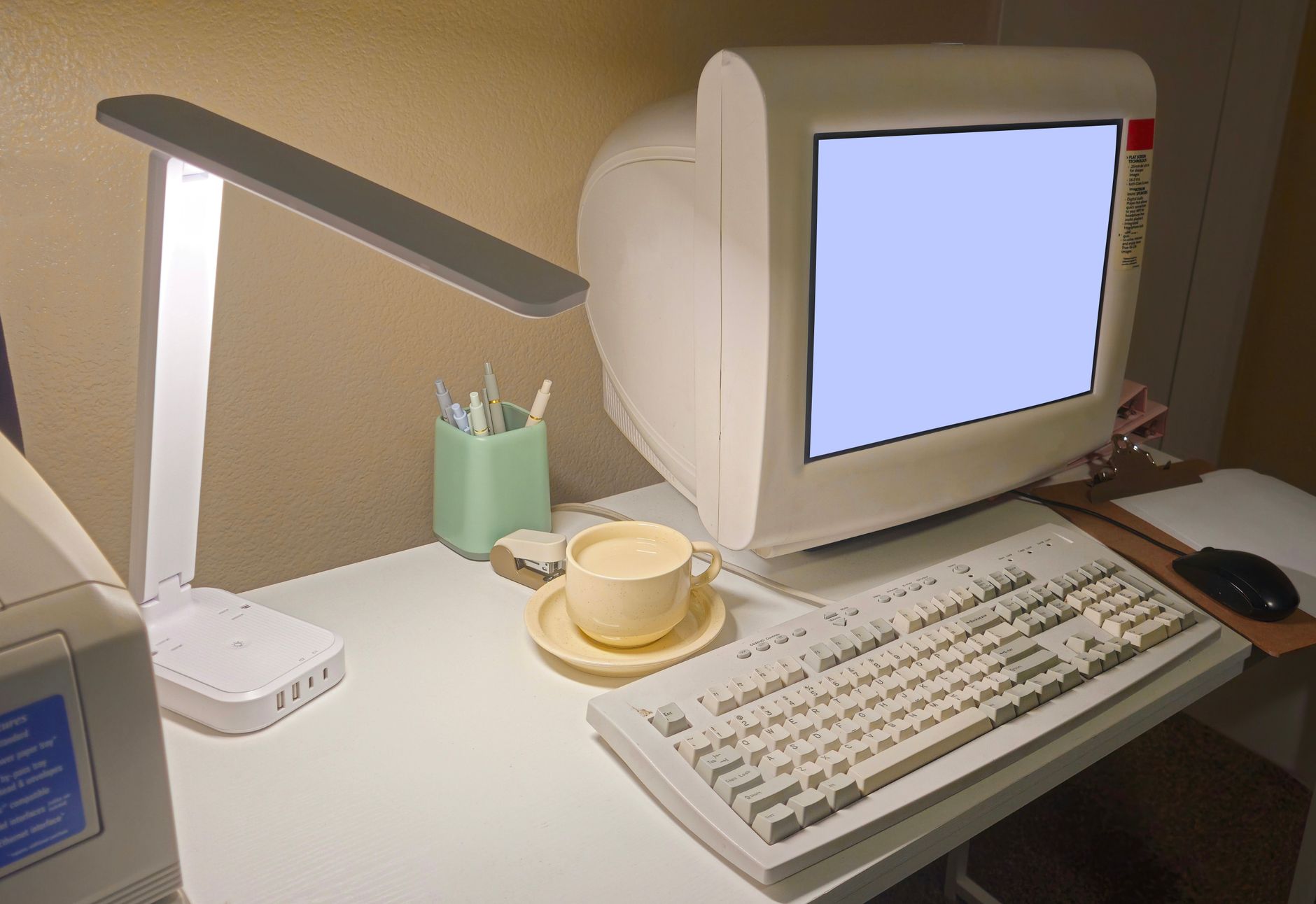
    Early 2000s home computer setup evoking the era of Friends Reunited history and Britain's first social networks
    Photo by Evelyn Rumti on Pexels

    The website launched in July 2000, built by a husband and wife team, Steve and Julie Pankhurst, working out of their home in Barnet, north London. The premise was arrestingly simple. You registered, you found your old school, you listed yourself as a former pupil, and you could see who else had done the same. That was essentially the entire product. No algorithmic feed, no sponsored posts, no elaborate privacy settings. Just a directory of former classmates and a small text box where you could write what you had been doing with your life since 1987.

    The Pankhursts built the initial version themselves, with technical help from Jason Porter, a friend of Steve’s. Early traffic was modest. In the first few months, the site attracted a few thousand registrations, encouraging, but hardly the kind of numbers that would make anyone very excited. Then, in the spring of 2001, something shifted. Word of mouth, spread largely through office email chains and the nascent habit of forwarding links to colleagues, sent registration numbers into a steep upward curve. By the end of 2001, the site had around 4.5 million registered members. By 2003, that figure had reached 15 million, in a country of roughly 60 million people, that is a remarkable penetration rate for any web service, let alone one that charged a subscription fee.

    The subscription model that should have doomed it but didn’t

    This is the detail that always surprises people when I recount the Friends Reunited story. The site charged users £7.50 per year to send messages to former classmates. Free users could browse and be seen, but they could not initiate contact. By the standards of today’s social media, where every platform operates on the assumption that users will never pay directly for access, this seems bizarre. In 2001 and 2002, it worked. The hunger to reconnect with people from school, from old jobs, from university, was strong enough that millions of British people happily handed over their credit card details. At its peak, Friends Reunited was generating around £2 million per month from subscriptions alone, not counting the advertising revenue that came as traffic grew.

    Part of what made the site work was its emotional proposition. The internet of 2001 was still, for many British users, primarily a tool for searching, reading the news, and sending email. The idea that it could facilitate genuine human reconnection, that you might, with a few clicks, locate someone you had not spoken to since your GCSEs, felt almost magical. I remember conversations from that period where people described finding old friends on the site with a kind of hushed excitement that you simply do not associate with opening Instagram today. The novelty was total.

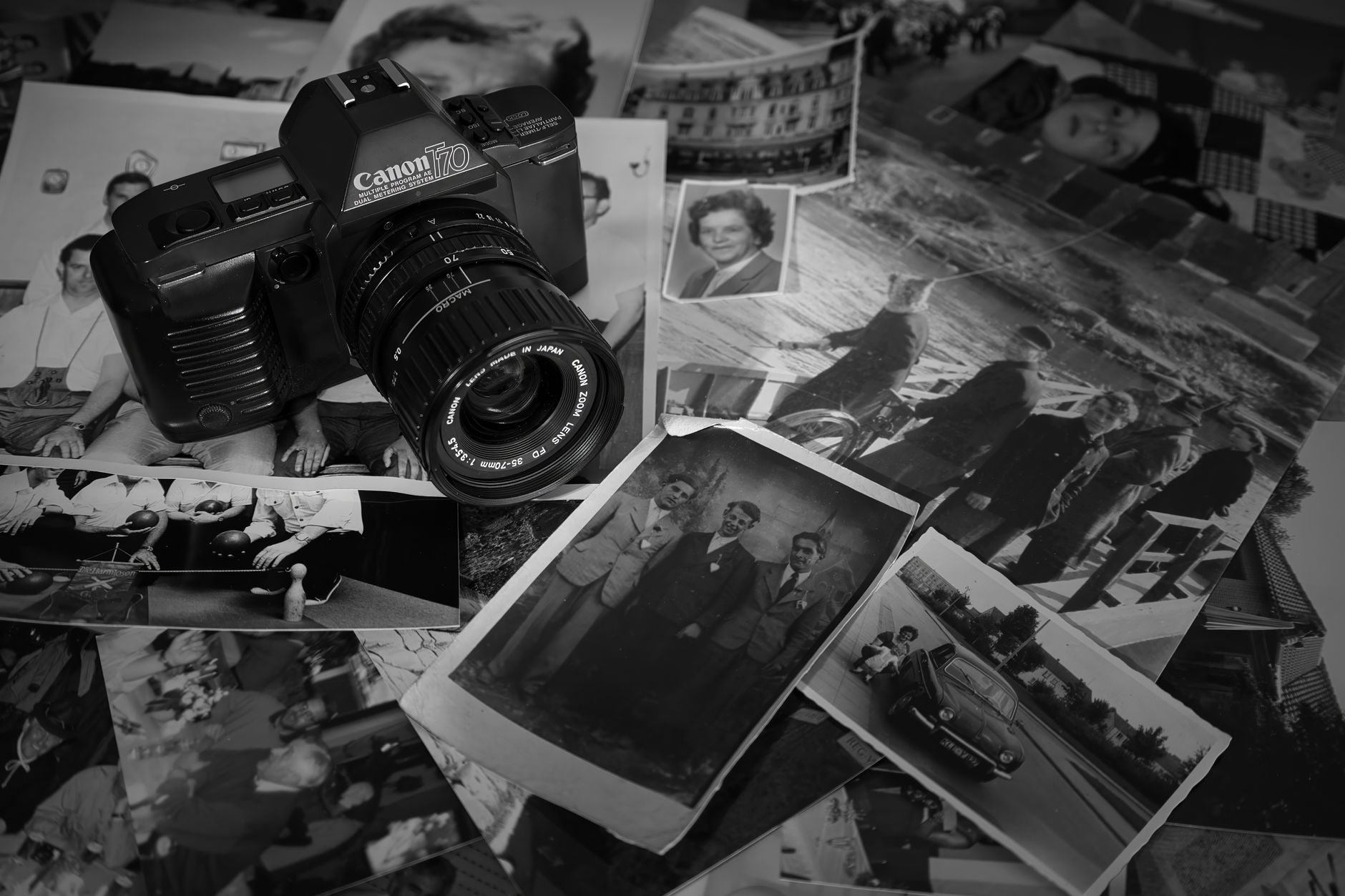
    Old school photographs on a table, representing the nostalgia at the heart of Friends Reunited history
    Photo by Wolfgang Vrede on Pexels

    Why ITV paid £120 million for it

    By late 2005, Friends Reunited was attracting serious acquisition interest. ITV, then struggling to understand what the internet would eventually do to broadcast television, acquired the site in December 2005 for £120 million. From a broadcaster’s perspective, the logic was reasonable, if perhaps slightly panicked. The site had tens of millions of registered British users. It had a subscription revenue stream. It had enormous brand recognition. For a company trying to build a digital presence quickly, that looked like a shortcut worth taking.

    What ITV perhaps did not fully account for was the speed at which the market was moving. Facebook had launched in February 2004, initially restricted to American university students. By late 2006, it had opened to anyone with an email address. MySpace was already enormous. Bebo, which briefly dominated among British teenagers in a way that is worth its own chapter (and which I’ve written about separately, the story of Bebo’s conquest of British teenagers is a genuinely fascinating parallel tale), was pulling users away from more traditional connection-based platforms. The competitive landscape that Friends Reunited had briefly occupied alone was, by 2007, extraordinarily crowded.

    ITV’s stewardship was not, by most accounts, inspired. The subscription fee was eventually dropped, which was probably the right decision, but the site struggled to find a clear identity in a world where Facebook offered everything it did and considerably more, for free. The advertising model that sustained other social platforms required genuine daily engagement, the kind of habitual, reflexive checking that Facebook was engineering with considerable sophistication. Friends Reunited had been built around a one-time emotional impulse: find your old classmates. Once you had found them, the reason to return evaporated. Publishers and brands trying to reach audiences on the platform through Banner Ads found diminishing returns as traffic thinned out through 2008 and 2009.

    The collapse and what it actually tells us

    ITV sold Friends Reunited in 2009 to DC Thomson, the Dundee-based publisher behind The Dandy and The Beano, for just £25 million, a loss of £95 million in four years. DC Thomson attempted a relaunch, reframing the site as a platform for sharing old photographs and memories rather than active social networking. It was a sensible repositioning, leaning into what Friends Reunited had always done better than Facebook: the specific, slightly melancholy pleasure of looking backwards. But the audience did not follow in sufficient numbers. The site was shut down permanently in February 2016.

    The story of Friends Reunited sits alongside other cautionary tales of the British dot-com era, the frantic funding, the rapid acquisition, the collapse, which I’ve examined at length in the context of the broader UK dot-com casualties of that period. But Friends Reunited is slightly different from the companies that were simply overfunded and underconceived. The Pankhursts built something that genuinely worked, that solved a real emotional need, and that millions of people actually used. The failure was not in the original idea. It was in the inability, shared, to be fair, by almost everyone in 2005, to anticipate how completely Facebook would redraw the rules of online social interaction.

    There is a certain irony in the fact that Friends Reunited was acquired for £120 million at almost exactly the moment it began to decline. The rise and fall of Friends Reunited is a story about timing as much as anything else. The Pankhursts built the right product for the exact right moment in British internet history. The site captured something real about how people in this country felt about connection and memory. That is not nothing. It is, I would argue, considerably more than many of the platforms that outlasted it ever managed.

    According to the BBC’s coverage of the closure in 2016, Steve Pankhurst reflected that the site had simply been overtaken by the scale of what followed. That is an understatement, but it is also, in its quiet British way, exactly the right assessment. Friends Reunited was first. Being first, as British internet history keeps demonstrating, is rarely enough on its own.

    Frequently Asked Questions

    Who founded Friends Reunited and when was it launched?

    Friends Reunited was founded by Steve and Julie Pankhurst, with technical assistance from Jason Porter, and launched in July 2000. The couple built the site at their home in Barnet, north London, initially as a way to help people reconnect with former classmates.

    How much did ITV pay for Friends Reunited?

    ITV acquired Friends Reunited in December 2005 for £120 million. The broadcaster hoped the site’s large registered user base would accelerate its digital strategy, but sold it on to DC Thomson in 2009 for just £25 million, a loss of £95 million in under four years.

    Why did Friends Reunited fail?

    The site’s decline was driven primarily by the rapid rise of Facebook, which offered free messaging, a dynamic news feed, and daily engagement features that Friends Reunited could not match. Once users had reconnected with old classmates, the site’s core appeal, there was little reason to return regularly.