
Category: Finance

  • The History of the UK Chip and PIN Rollout: How Britain Quietly Led the World in Payments Technology

    The History of the UK Chip and PIN Rollout: How Britain Quietly Led the World in Payments Technology

    In the autumn of 2003, something quietly unremarkable happened in a Northampton branch of NatWest. A customer inserted their card into a terminal, tapped in four digits, and that was that. No pen, no signature, no looping cursive across a paper slip. It took about thirty seconds. Nobody wrote a newspaper column about it. But that small transaction was the opening chapter of one of the most significant shifts in British financial infrastructure since the introduction of the banknote. The chip and pin history UK payments story is, in many ways, the story of a revolution that happened in the background whilst everyone was busy worrying about something else.
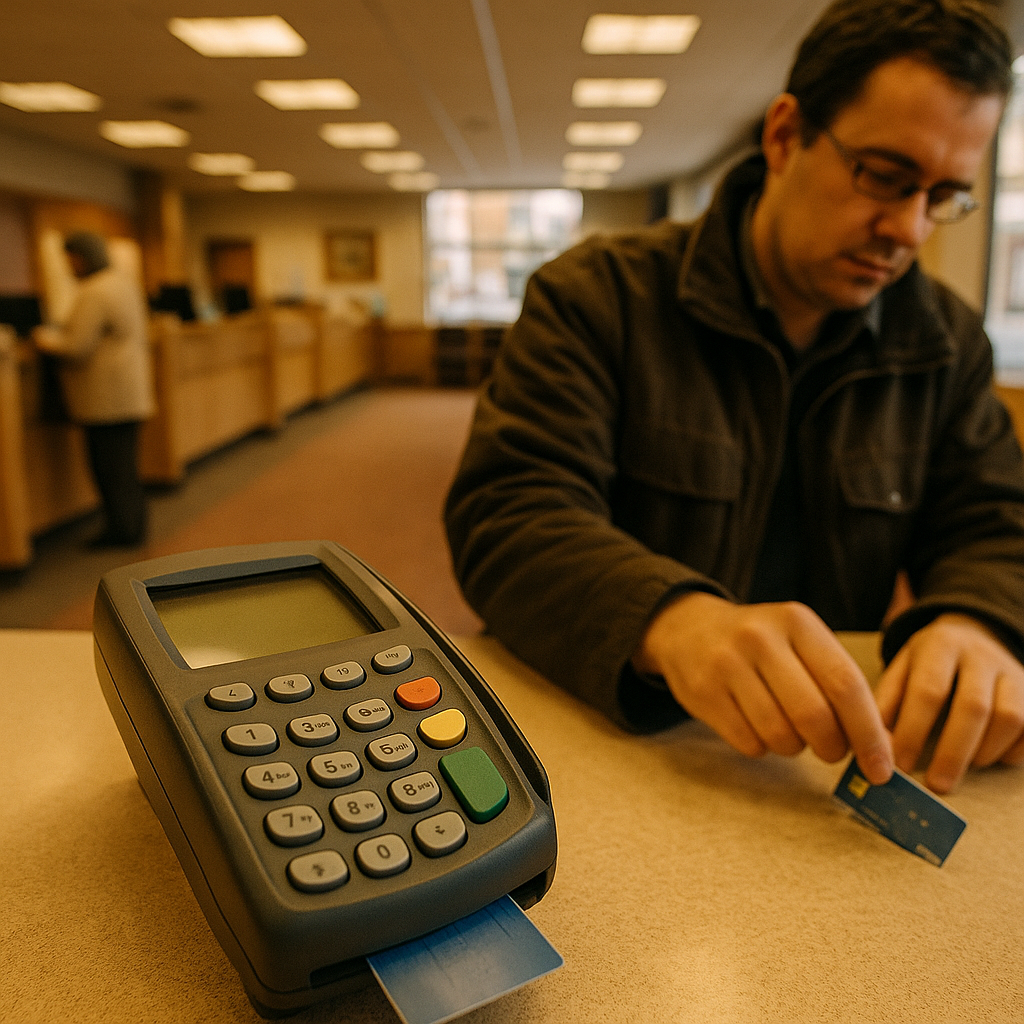
    A customer using an early Chip and PIN terminal in a UK bank branch, illustrating the chip and pin history UK payments rollout
    A customer using an early Chip and PIN terminal in a UK bank branch, illustrating the chip and pin history UK payments rollout

    Why the UK Needed a New System at All

    By the late 1990s, card fraud in the United Kingdom had become a serious and growing problem. The Association for Payment Clearing Services (APACS) reported that fraud losses on UK-issued cards reached £411 million in 2001. Magnetic stripe technology, which had been standard on British bank cards since the 1970s, was relatively straightforward to clone. A criminal with basic equipment could copy the stripe from a stolen or skimmed card and produce a workable counterfeit. The signature requirement, which was supposed to act as verification, was in practice almost entirely theatre. How many shop assistants genuinely compared a scrawl on a receipt with the signature panel on the back of a card?

    The solution had actually been sitting in a French laboratory since the 1980s. France had introduced a smartcard system, the Carte Bleue, as early as 1992, embedding a microchip into payment cards that made cloning enormously more difficult. The chip authenticated each transaction cryptographically. Britain, watching fraud figures climb, began working with card networks Visa and Mastercard, alongside the major high street banks, to introduce an equivalent system. The initiative was branded simply as Chip and PIN, and it would take several years to build the infrastructure required to make it work at scale across the entire country.

    The Rollout: 2003 to 2006

    The UK rollout began properly in 2003, with pilot schemes running in selected regions. The mandate was clear: every card-accepting terminal in the country needed to be replaced or upgraded, every bank card reissued with an embedded chip, and the public needed to memorise a four-digit PIN in place of their familiar signature. This was not a small undertaking. There were millions of payment terminals in operation, spread across petrol stations, supermarkets, independent shops, pubs, and market stalls.
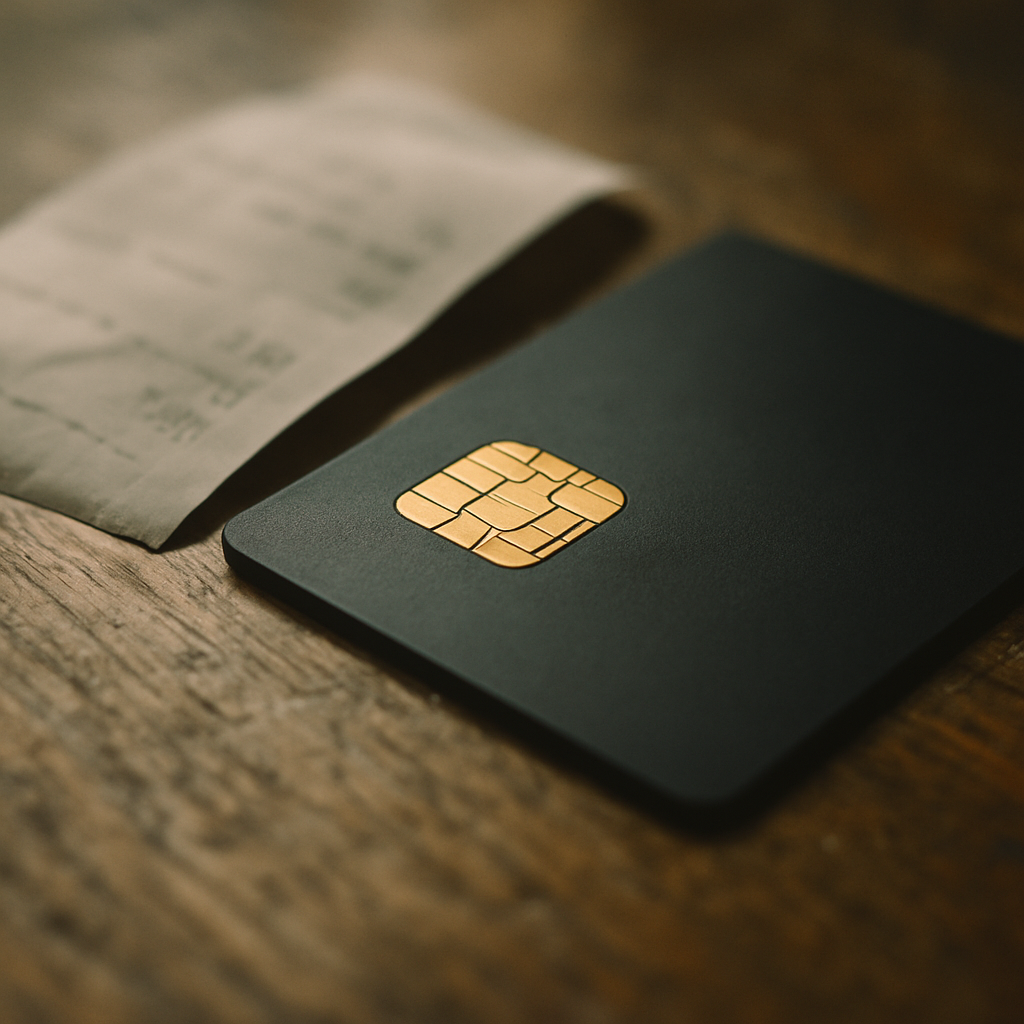
    Close-up of a chip-embedded UK bank card representing the chip and pin history UK payments technology
    Close-up of a chip-embedded UK bank card representing the chip and pin history UK payments technology

    Banks sent out new chip-enabled cards in waves throughout 2004 and 2005. Retailers were required to upgrade their point-of-sale equipment, and APACS ran a sustained public information campaign explaining that from 14 February 2006, the signature would no longer be an accepted fallback for the vast majority of transactions. Valentine’s Day 2006 was, appropriately enough, the moment Britain officially broke up with the pen.

    The transition was not entirely smooth. Older customers who had relied on signatures, including some disabled and elderly cardholders, faced genuine difficulties. There were also documented cases of shoulder-surfing, where thieves observed PIN entry, and PIN-based fraud did emerge as a concern. But the overall effect on fraud was dramatic. APACS data showed that counterfeit card fraud, the type most directly targeted by chip technology, fell sharply in subsequent years. By 2008, the UK Cards Association was reporting significant year-on-year reductions in fraud losses on domestically issued and used cards. You can read more about fraud trends through BBC coverage of the period, which captured the public conversation around whether the system was truly secure.

    Britain was, at this point, one of the first major economies to complete a nationwide migration away from signature verification. The United States would not begin a comparable rollout until 2015, and even then implementation was patchy and slow. In that sense, the chip and pin history UK payments world represents a genuine instance of British infrastructure leadership, modest and unglamorous as it appeared at the time.

    How Chip and PIN Built the Road to Contactless

    What most people do not realise is that Chip and PIN was not simply a fraud-reduction measure. It was, more fundamentally, a rearchitecting of the trust layer within the payments system. The chip carried cryptographic credentials. The PIN confirmed the cardholder. Together, they created a verified transaction record that did not depend on a human being eyeballing a signature. That was a profound structural change, and it had consequences that ran far beyond the point-of-sale terminal.

    Contactless payment technology, which began appearing on UK cards and terminals from around 2007 onwards, was a direct descendant of this infrastructure. The same chip that enabled PIN verification was capable of transmitting encrypted transaction data wirelessly, via near-field communication (NFC). The security model was different for low-value contactless payments, which dispensed with PIN entry entirely for amounts initially set at £10 and later raised progressively to the current £100 limit, but the underlying cryptographic trust was inherited from the chip architecture built during the Chip and PIN rollout. TfL introduced contactless payments across the London Underground and bus network in 2014, a moment that genuinely changed how millions of people thought about paying for things daily.

    The Line From PIN to Online: Verified by Visa and 3D Secure

    There is another thread in this story that tends to get overlooked. Whilst the physical card infrastructure was being overhauled on the high street, the card networks were simultaneously trying to solve an analogous problem online. Card-not-present fraud, where a criminal uses stolen card details to make purchases on the internet without physically presenting the card, was rising sharply as e-commerce grew through the early 2000s.

    The response was a protocol called 3D Secure, which Visa branded as Verified by Visa and Mastercard as SecureCode. Introduced in the early 2000s, the system asked online shoppers to enter an additional password, set with their bank, before completing a transaction. It was, in essence, an attempt to replicate the PIN authentication model in a web browser environment. The early implementation was widely criticised: the password prompts appeared in pop-up windows that looked indistinguishable from phishing attacks, and many users either abandoned their purchases or simply did not trust the system.

    The conceptual link between chip and pin history UK payments and these online authentication systems is direct and instructive. Both were attempts to answer the same question: how do you confirm that the person presenting a card is actually the person who owns it? In a physical shop, the answer was the chip and the PIN. Online, the answers evolved over time through increasingly sophisticated iterations of 3D Secure, culminating in the 3DS2 standard and the Strong Customer Authentication requirements introduced under the FCA’s implementation of the EU’s Payment Services Directive 2 in 2019, which brought biometric and app-based authentication into the mainstream.

    A Quiet Revolution, Still Unfolding

    Looking back, the Chip and PIN rollout was one of those infrastructure projects that tends to be invisible precisely because it succeeded. People did not notice, after a while, that they were tapping in a number rather than signing their name. They simply did it. That invisibility is, arguably, the highest compliment you can pay to any technology. It became so ordinary so quickly that within a decade, schoolchildren had no idea that a signature had ever been required.

    The legacy is everywhere. The contactless card tap. The mobile payment via Apple Pay or Google Pay. The bank app notification asking you to approve an online purchase. The biometric prompt on your phone before a transaction clears. All of these trace a continuous line back to that Northampton NatWest terminal in 2003, and to the decision made by British banks and payment networks to rebuild the foundations of how money moved from one hand to another. Not every revolution announces itself loudly. Some of them just ask you to enter your PIN.

    Frequently Asked Questions

    When did Chip and PIN start in the UK?

    Chip and PIN was piloted in the UK from 2003, with the national rollout taking place through 2004 and 2005. The official end date for signature-based card payments was 14 February 2006, after which PIN became the required verification method for the vast majority of transactions.

    Why did the UK introduce Chip and PIN?

    The primary driver was rising card fraud, particularly counterfeit card fraud made possible by the ease of cloning magnetic stripe data. APACS reported fraud losses of over £400 million by the early 2000s, and embedding a cryptographic microchip in cards made cloning significantly more difficult.

    Was the UK the first country to use Chip and PIN?

    France introduced a similar smartcard system, the Carte Bleue, as early as 1992, so Britain was not the first country globally. However, the UK was one of the first large economies to complete a full nationwide migration away from signatures, well ahead of the United States, which did not begin its own rollout until 2015.

    How did Chip and PIN lead to contactless payments?

    Contactless technology uses the same embedded chip and cryptographic architecture introduced during the Chip and PIN rollout. The chip was capable of communicating wirelessly via NFC for low-value transactions, removing the need to enter a PIN whilst retaining the underlying security model. UK contactless payments became widespread from 2007 onwards.

    What is the connection between Chip and PIN and Verified by Visa?

    Both systems attempt to solve the same problem: confirming that the person using a card actually owns it. Verified by Visa (using the 3D Secure protocol) applied a similar authentication logic to online card-not-present transactions, initially via a password and later through app-based and biometric verification under Strong Customer Authentication rules introduced by the FCA.

  • The History of UK Online Banking: From First Direct’s Phone Revolution to Egg’s Digital Accounts

    The History of UK Online Banking: From First Direct’s Phone Revolution to Egg’s Digital Accounts

    There is a moment, somewhere around 1997, when a British bank manager first had to explain to a colleague that some customers were now checking their balance through a computer. Not a terminal in a branch. A computer at home. Connected, via a telephone line, to the internet. The colleague probably asked who on earth would trust that. It is a fair question, and the answer took the better part of a decade to settle. The history of online banking in the UK, from First Direct to Egg, is really a story about trust: how it was built, tested, and occasionally shattered.

    1990s home computer showing early banking interface, representing the history of online banking UK First Direct Egg era
    1990s home computer showing early banking interface, representing the history of online banking UK First Direct Egg era

    First Direct and the Telephone Banking Revolution

    Before anyone typed a password into a browser, they picked up the telephone. First Direct, launched on 1 October 1989 as a subsidiary of Midland Bank, was the institution that rewired British expectations. No branches. No queues. No closing at half past three on a Friday afternoon. You rang a number, spoke to an actual person, and sorted your money at midnight if it suited you. This was radical in ways that are easy to underestimate now.

    By the mid-1990s, First Direct had accumulated several hundred thousand customers who had already accepted a core idea: that a bank did not need a physical presence to be real. That psychological shift matters enormously when you trace the journey towards the web. First Direct’s customers were primed. They had already handed trust to a disembodied voice on a telephone line; handing it to a web page was the next logical step, uncomfortable as it felt.

    The telephone banking model also forced British banks to confront something they had long avoided: 24-hour service. Legacy high street institutions, Barclays, NatWest, Lloyds, had built their identities around the physical branch. The branch was security made visible, a place of marble counters and thick ledgers. First Direct proved that security could be delivered through a different medium altogether, and the internet would eventually push that argument to its conclusion.

    When British Banks First Put Themselves Online

    The larger clearing banks dipped their toes in cautiously. The Bank of Scotland launched what is often cited as one of the earliest home banking services in the UK as far back as the mid-1980s, using a Prestel-based system called HOBS (Home and Office Banking Service). Prestel, the Post Office’s videotex network, was essentially a closed proto-internet. You could check balances and move money, but only if you had the right hardware and the patience for extremely slow response times. It was not the web. It was a rehearsal.

    When the public internet arrived in earnest, British banks were notably reluctant to perform. Barclays launched an internet banking service in 1997, making it one of the earliest of the major high street names to do so. NatWest followed. But these early offerings were thin: you could view your balance, perhaps see recent transactions, occasionally set up a standing order. Actually transferring money to another account online remained either unavailable or so hedged with warnings and caveats that many customers gave up and rang the branch anyway.

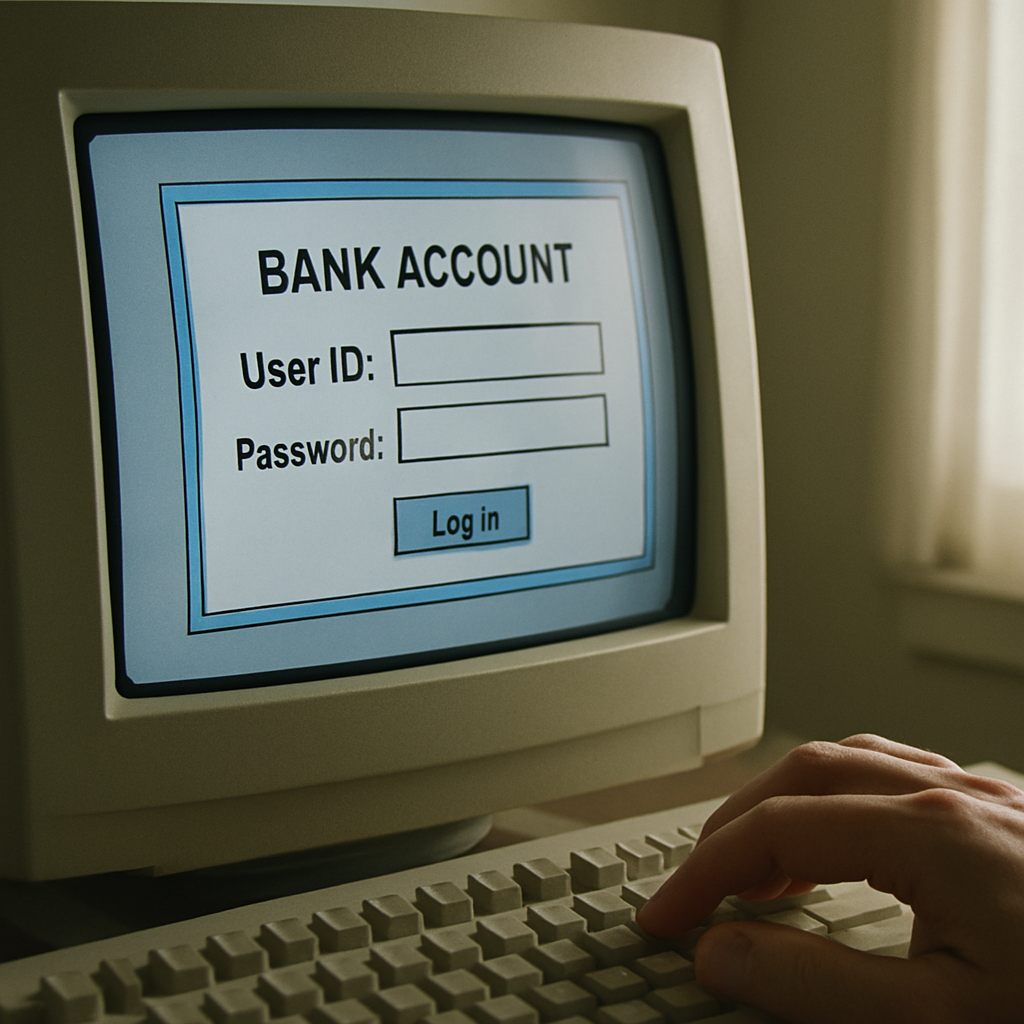
    Close-up of a late 1990s internet banking login page on a CRT monitor, illustrating the history of online banking UK First Direct Egg period
    Close-up of a late 1990s internet banking login page on a CRT monitor, illustrating the history of online banking UK First Direct Egg period

    The caution was understandable. The regulatory environment in the UK, overseen at the time by the Bank of England and then, from 1997, by the newly created Financial Services Authority, had no established framework for internet-only banking. Regulators were asking questions that had no precedent: How do you verify identity without a face? How do you secure a transaction conducted over a network that anyone could, in theory, intercept? The answers took time, and that time was filled with rather a lot of anxiety on all sides.

    Egg: The World’s First Standalone Internet Bank

    Then came Egg. Launched in October 1998 by Prudential, Egg was something genuinely new: a bank that existed entirely on the internet. No branches, no telephone-first model, no Prestel legacy. You opened an account through a browser. You managed your savings through a browser. The interest rates were competitive in ways that the high street simply could not match, because Egg had no branches to maintain, no property portfolio to service.

    The response was extraordinary. Egg attracted around 500,000 customers in its first six months, and demand so outpaced expectations that Prudential temporarily had to slow its marketing to avoid being overwhelmed. For a moment, Egg felt like proof that the internet could do anything. It is well documented by the BBC’s business coverage of that period how Egg came to represent a kind of optimism about digital finance that the dot-com bust would later complicate considerably.

    Egg’s savings account was the hook. In 1998, it was offering interest rates that left high street competitors looking almost deliberately unhelpful. The simple maths were persuasive: Egg’s lower operating costs translated into better returns for customers. This was the internet’s efficiency argument made concrete and personal, applied to something as fundamentally important as where you kept your money.

    The Trust Problem: Selling Security to a Sceptical Public

    Not everyone was convinced. The late 1990s saw a consistent strand of British anxiety about internet security that now looks partly justified and partly comical. Newspapers ran pieces warning readers about hackers lurking in the network, ready to drain accounts the moment you typed your sort code. The concerns were not entirely fanciful. Early SSL encryption was not the robust standard it would become, and phishing, though not yet called that, was already beginning to emerge as a problem.

    British banks responded with visible security theatre as much as genuine protection. Egg pioneered the use of memorable words and numeric passcodes layered on top of standard passwords. The vocabulary of online security, the PIN, the passphrase, the security question, was being invented in real time by institutions that were themselves uncertain how much was enough. The Financial Services Authority published guidance that was cautious almost to the point of paralysis, insisting on measures that some banks found technically impractical.

    What slowly shifted public perception was not a single event but an accumulation of quiet competence. Millions of transactions went through without incident. Customer service via email, clunky as it was in 1999, proved functional. And the convenience argument, the ability to move money at eleven o’clock on a Sunday evening without ringing anyone, proved quietly irresistible. By the early 2000s, the question was no longer whether British consumers would bank online, but how quickly the remaining holdouts would come around.

    What the Early Internet Bank Left Behind

    Egg itself did not survive as an independent entity. Citigroup acquired it in 2007, and the brand was eventually wound down. But the model it demonstrated, that a bank without branches could attract hundreds of thousands of customers, outlasted it considerably. Monzo, Starling, Revolut: all of them owe something to the precedent Egg established in that slightly nervous autumn of 1998.

    First Direct, meanwhile, is still operating, still branch-free, still consistently ranking among the highest-rated banks in Britain for customer satisfaction. Its telephone banking model proved to be not a dead end but a bridge, carrying a particular kind of customer from the familiar reassurance of a human voice to the browser window and everything that followed. The history of online banking in the UK is, in many ways, a history of incremental courage: the courage of regulators to permit, of institutions to build, and of ordinary people to type their account number into a website and press Enter.

    Frequently Asked Questions

    When did online banking start in the UK?

    The UK’s earliest home banking experiments used the Prestel videotex network in the mid-1980s, through services like the Bank of Scotland’s HOBS. True internet banking, conducted through a web browser, began emerging around 1997 when Barclays and others launched basic online account access.

    What was the first internet bank in the UK?

    Egg, launched in October 1998 by Prudential, is widely regarded as the world’s first standalone internet bank. It had no branches and operated entirely online, attracting around 500,000 customers in its first six months through competitive savings rates.

    How did First Direct change British banking?

    First Direct, launched in 1989, was the first major UK bank to operate without any physical branches, relying entirely on telephone banking available around the clock. It accustomed British consumers to the idea that banking did not require a visit to a branch, paving the way for internet banking a decade later.

    Was early online banking in the UK safe?

    Early internet banking carried genuine risks, including relatively immature encryption and the first instances of what would later be called phishing. Banks layered security measures such as memorable words and numeric passcodes on top of passwords, while the Financial Services Authority issued cautious regulatory guidance to manage consumer risk.

    What happened to Egg bank?

    Egg was acquired by Citigroup in 2007 and the brand was subsequently wound down. Despite its closure, Egg’s model of a branch-free, internet-only bank directly influenced the generation of UK challenger banks, including Monzo and Starling, that emerged in the 2010s.