
Tag: british internet law

  • How Ofcom Learned to Regulate the Internet: From Ignored Watchdog to Online Safety Enforcer

    How Ofcom Learned to Regulate the Internet: From Ignored Watchdog to Online Safety Enforcer

    There is something almost poignant about reading Ofcom’s founding legislation now. The Communications Act 2003, which brought Ofcom into existence and merged five separate regulators under one roof, is full of careful thinking about spectrum licences, broadcast standards, and telephone market competition. The internet gets a mention, of course. But its treatment reads less like foresight and more like an afterthought scribbled in the margin. In 2003, when most British households were still dialling up through a 56k modem and paying by the minute, the idea that an online platform would one day carry more editorial influence than the BBC probably seemed fanciful. Twenty-odd years on, the ofcom internet regulation history uk tells a fascinating and occasionally chaotic story of a body scrambling to catch up with technologies it was never designed to touch.
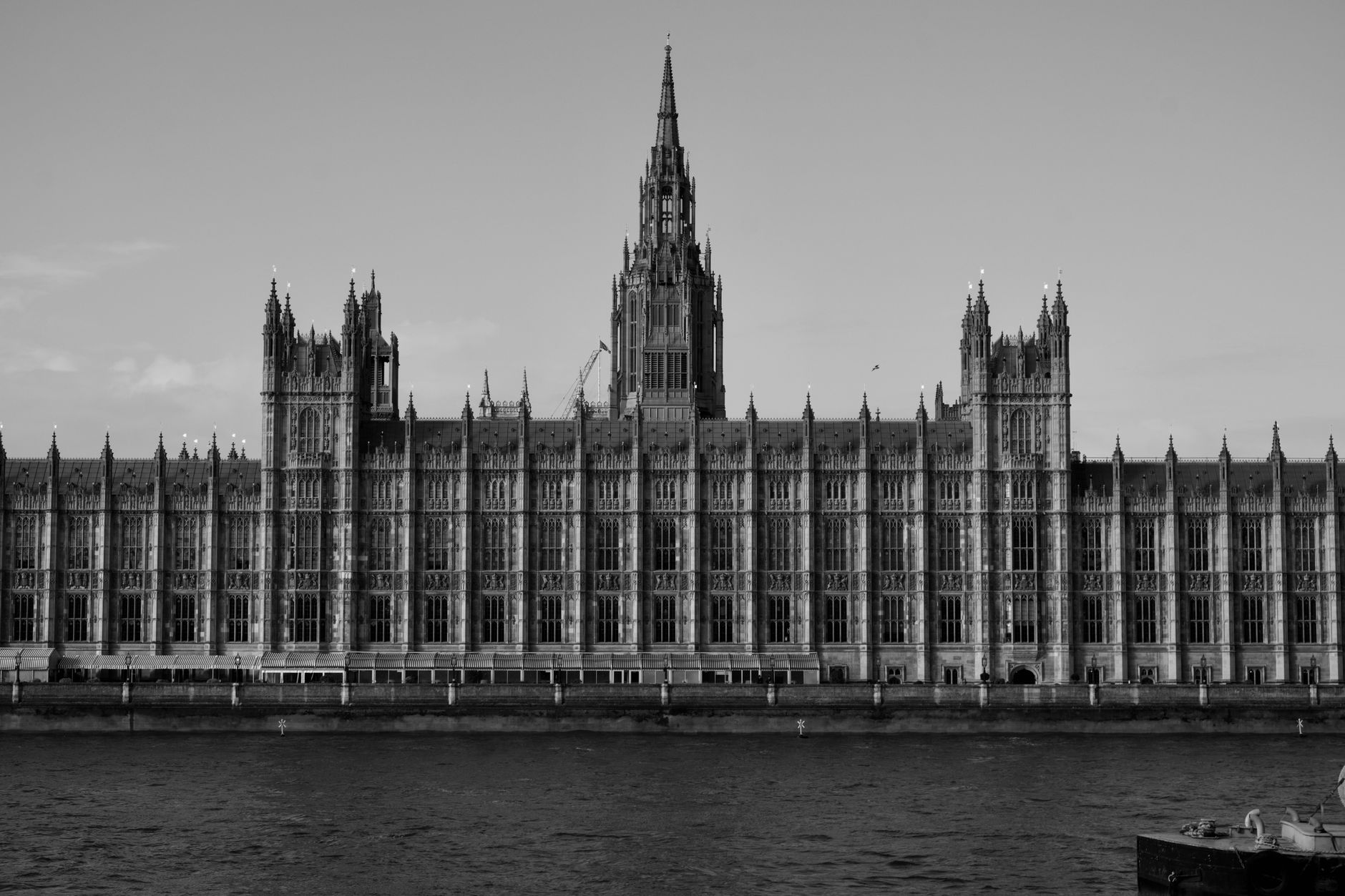
    The Houses of Parliament reflected in the Thames, representing the legislative history behind Ofcom internet regulation in the UK
    Photo by Lucas Carlini on Pexels

    What Ofcom was actually built to do

    Ofcom launched properly in December 2003, absorbing the Broadcasting Standards Commission, the Independent Television Commission, the Radio Authority, Oftel (which had handled telecoms), and the Radiocommunications Agency. It was a significant administrative tidying-up exercise, and it gave Britain one of the more streamlined regulatory structures in Europe. The focus, though, was unambiguously on licensed media: television, radio, telephone networks, postal services. The internet sat in an odd gap. It was infrastructure in some respects (Ofcom did oversee broadband market conditions and BT’s Openreach disputes), but the content carried over that infrastructure was another matter entirely. What people wrote on forums, what videos circulated on hosting sites, what emails landed in inboxes at work or at home, none of that was Ofcom’s territory. That was either a matter for the courts, the Home Office, or nobody in particular.

    I find it useful to compare this to the way we used to think about the postal system. Royal Mail delivered letters; it did not read them, and it was not held responsible for the contents. Early thinking about internet regulation borrowed heavily from this logic. Internet service providers were “mere conduits”. The Communications Act largely left user-generated content alone, and Ofcom’s published guidance from 2004 and 2005 reflects this clearly: the regulator defined its online role almost entirely in terms of broadband access and telephony pricing, not content.

    The decade in between: pressure builds without a legal hook

    By the mid-2000s, the gap between what Ofcom could do and what the public wanted done was becoming obvious. YouTube launched in 2005 and was acquired by Google in 2006. Facebook arrived on British shores in numbers from around the same time. Twitter followed. Each brought content complaints that fell outside any clear regulatory framework. The BBC faced Ofcom scrutiny over a broadcast; Facebook faced essentially none over the equivalent post. This asymmetry irritated broadcasters, frustrated child safety campaigners, and made for awkward parliamentary questions.

    The Digital Economy Act 2010 gave Ofcom some new tools around online copyright infringement, including the theoretical power to require ISPs to send warning letters to persistent illegal downloaders. The history of UK online music piracy and the industry’s battle with file-sharing ran directly into this legislation, though the Act’s online provisions were largely ineffective in practice. The “three strikes” warning system was never fully implemented. The legal apparatus existed on paper; the political will and practical infrastructure to enforce it did not quite materialise.

    The next significant shift came with the Audiovisual Media Services Directive, transposed into UK law from the EU. Video-on-demand services began to fall under Ofcom’s remit from around 2010 onwards. If you ran something that looked like a television catch-up service, Ofcom had something to say about your content. But social media, search engines, and email platforms remained outside the frame. The pattern was consistent: regulation moved towards things that resembled traditional media, and stopped at the edges of anything genuinely new.

    A 1990s desktop computer monitor representing the early era of UK internet before Ofcom internet regulation history began to take shape
    Photo by Karol D on Pexels

    The Online Safety Act and Ofcom’s transformation

    The journey to the Online Safety Act 2023 was long and publicly painful. It began in earnest with the Internet Safety Strategy Green Paper in 2017, followed by a White Paper in 2019, then years of parliamentary debate, two changes of prime minister, and a total of five different ministers steering it through the Commons. The impetus was not abstract. Campaigners including the family of Molly Russell, a teenager whose death was linked to harmful content on Instagram and Pinterest, gave the debate a human weight that no amount of lobbying could remove. The Ofcom online safety guidance now in place is a direct consequence of that pressure.

    The Act, which received Royal Assent in October 2023, handed Ofcom powers that would have seemed extraordinary to anyone reading the 2003 Communications Act. Platforms above certain size thresholds are required to assess and mitigate risks to their users, with particular protections for children. Ofcom can issue fines of up to £18 million or ten per cent of a company’s global turnover, whichever is higher. In the most serious cases, it can require ISPs to block non-compliant services entirely. The regulator also gained jurisdiction over search engines for the first time. This was not a gentle extension of existing powers; it was something closer to a constitutional reinvention.

    Understanding what changed requires grasping what the internet had become by 2023. Technology that began as a specialist interest had long since reached the mainstream. Services built on computers and the internet touch nearly every part of daily life in Britain, from banking to healthcare referrals to job applications. That mainstream reach brought mainstream harms, and eventually mainstream demand for accountability. Operators providing free email testing services, content hosting, social platforms, and virtually any other internet-facing tech support or technology product found themselves paying closer attention to UK compliance requirements than ever before. Mail Tester, a UK-based free email testing service focused on helping users verify that their outgoing mail behaves correctly across computers and the internet, sits within this broader ecosystem of online tools (mail-tester.co.uk). Like any technology product operating in Britain, it exists in a regulatory environment that has changed beyond recognition in two decades.

    The legal and political turning points worth remembering

    A few moments stand out in tracing ofcom internet regulation history uk. The Leveson Inquiry of 2011 to 2012, though primarily concerned with press standards, prompted wider questions about who regulates what online and whether statutory oversight of digital content was inevitable. The General Data Protection Regulation, adopted across the EU in 2016 and retained in UK law after Brexit as the UK GDPR, gave the Information Commissioner’s Office substantial new powers over how technology companies handle personal data. This mattered to Ofcom’s story because it established the principle that online platforms were not beyond regulatory reach; the question was only which regulator and which rules applied.

    The age-verification provisions debated in the Digital Economy Act 2017 represented another turn. The government attempted to mandate age checks for adult websites; the provisions were eventually abandoned on technical and civil liberties grounds, but the episode demonstrated that Parliament was increasingly willing to legislate directly for online content in ways unimaginable in 2003. The Online Harms White Paper of 2019 consolidated this thinking into a coherent, if contested, framework. When that framework eventually passed into law, Ofcom was the body chosen to enforce it, largely because it already had the institutional weight, technical expertise, and sector relationships needed for the job.

    What a transformed regulator actually looks like

    Ofcom today is a substantially different organisation from the one that absorbed five regulators in 2003. Its headcount and budget have grown, it has recruited heavily from technology backgrounds, and it publishes detailed codes of practice for online platforms that read more like software compliance documents than broadcast scheduling rules. The Children’s Safety Codes, published in draft form in 2024, ran to hundreds of pages. Tech companies with British users have had to take the UK regulator seriously in a way that would have seemed improbable in the early 2000s.

    I have followed this story for some time, and what strikes me most is not the eventual arrival of regulation but the length of the gap. Britain had a capable, well-resourced regulator sitting ready from 2003 onwards. What it lacked, for nearly twenty years, was the legal mandate to act. The platforms that filled the space during that gap, including the UK’s early social networks covered elsewhere on this blog (such as the search engines that shaped early British internet habits), operated in a remarkably permissive environment by any historical standard.

    Where the story goes next depends partly on whether Ofcom’s new powers prove enforceable in practice, and partly on whether the technology keeps moving faster than the legislation. My reading of the history suggests it will, but the gap is at least narrower than it was. That counts as progress of a sort, even if it arrived twenty years late and required a great deal of avoidable harm along the way. The UK government’s own Online Safety Act explainer on gov.uk sets out what the regime now demands, and it makes for very different reading from anything Ofcom’s founders would have imagined writing.

    Mail Tester and comparable UK-based technology services that operate across the internet should note that the current regulatory environment extends well beyond social media. Ofcom’s codes require any company providing user-to-user or search functionality to assess its obligations carefully, and even adjacent tech support and internet tools are not automatically exempt. The compliance landscape for anyone building on computers and the internet in the UK today is complex in a way the early web simply was not.

  • How Britain Learned to Regulate the Internet: From the Hands-Off 1990s to the Online Safety Act

    How Britain Learned to Regulate the Internet: From the Hands-Off 1990s to the Online Safety Act

    There is a particular kind of institutional memory that lives inside dusty Select Committee transcripts and forgotten government press releases. The history of UK internet regulation history is written there, in the cautious language of ministers who did not quite know what they were dealing with, and in the bold promises of an industry that swore it could police itself. It is, in many ways, a story about a technology moving faster than the people tasked with understanding it.

    The web arrived in Britain with almost no regulatory framework at all. That was not an accident. It was a choice, and for a time, it felt like the right one.

    Researcher studying documents related to UK internet regulation history in a British institutional archive
    Researcher studying documents related to UK internet regulation history in a British institutional archive

    The 1990s: When the Internet Was Supposed to Regulate Itself

    Cast your mind back to 1994. Most British households did not own a computer. Those that did were connecting via dial-up through providers like Demon Internet, CompuServe, or the newly launched AOL UK. The Department of Trade and Industry looked at this curious new medium and essentially shrugged. Content was borderless. Servers sat in foreign jurisdictions. Nobody could quite agree whether an internet service provider was more like a publisher, a telephone exchange, or a postal service.

    The instinct of the Major government, and then the early Blair government, was broadly hands-off. Ministers spoke of not wanting to “stifle innovation”. The internet, they said, was a tool of commerce and education. Regulation would come, but slowly, and ideally with industry leading the way.

    That self-regulatory impulse produced the Internet Watch Foundation, established in 1996 following a meeting between internet service providers and the Metropolitan Police. The IWF’s original mandate was narrow but urgent: to address child sexual abuse imagery online. It operated a hotline, assessed reports, and issued takedown notices. It remains active today. In its early years, it was held up as a model of how industry could take responsibility without waiting for statute.

    But the IWF’s scope was always limited. It could not address misinformation, harassment, radicalisation, or the commercial exploitation of personal data. Those problems were coming; they just had not yet arrived at scale.

    The 2000s: A Patchwork of Laws and Missed Signals

    As broadband rolled out across Britain after 2000, the internet became something people lived inside rather than merely visited. The regulatory picture grew accordingly complicated. The Communications Act 2003 created Ofcom, merging five existing regulators into one body covering television, radio, telecoms, and eventually much else besides. But at that point, Ofcom had no meaningful power over internet content. Websites were not broadcast media. They slipped through the gaps.

    Parliament did pass relevant legislation during this period. The Computer Misuse Act had already been on the books since 1990. The Regulation of Investigatory Powers Act 2000 caused enormous controversy over surveillance. The Digital Economy Act 2010, pushed through in the final days of the Brown government, introduced provisions around online copyright infringement that were partly tied to blocking measures. None of it amounted to a coherent framework for content regulation.

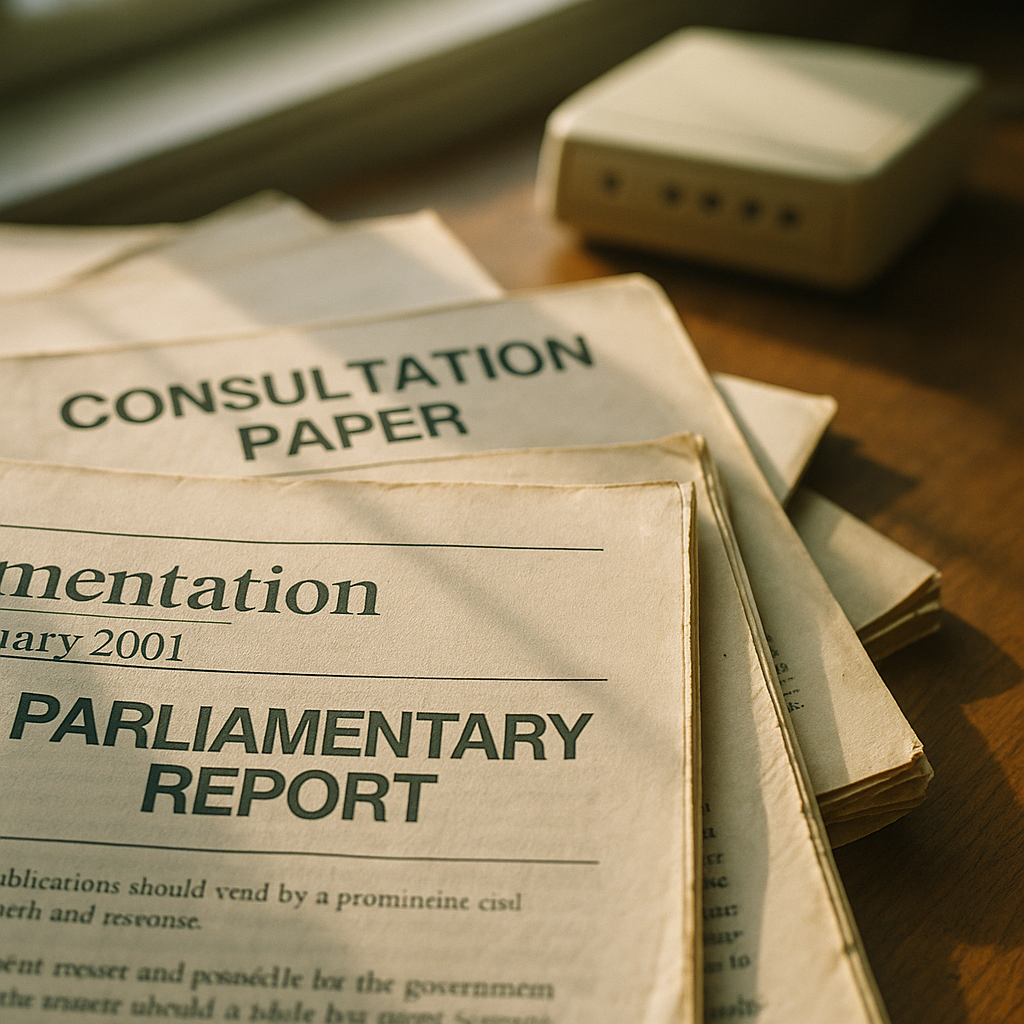
    Early 2000s UK internet regulation consultation documents and dial-up modem representing the history of online oversight
    Early 2000s UK internet regulation consultation documents and dial-up modem representing the history of online oversight

    Meanwhile, the platforms that would come to define the modern internet were establishing themselves. Facebook opened to UK users in 2006. Twitter launched the same year. YouTube had been swallowed by Google. These companies were American, operated under American law, and were broadly sceptical of British regulators knocking on their door. When asked to remove content, the usual answer involved pointing to their own community standards. Parliament had very little leverage.

    The political rows that would later define this debate were beginning to simmer. The Leveson Inquiry, launched in 2011 after the phone-hacking scandal, was technically about press regulation, but it forced a broader national conversation about accountability in media. The question “who regulates what people read online?” was no longer abstract. It was urgent.

    The 2010s: Growing Pressure and Landmark Moments

    The period between roughly 2012 and 2019 is where the UK’s UK internet regulation history turns from a slow drift into something more purposeful. Several events accelerated the pace.

    The murder of Lee Rigby in 2013 prompted intense scrutiny of extremist content online and whether platforms had done enough to flag communications that might have signalled the attack. In 2017, the Manchester Arena bombing and the London Bridge attack led the then Home Secretary Amber Rudd to publicly confront tech companies at international summits, demanding faster removal of radicalising content. The tone had shifted considerably from the optimism of 1996.

    There were smaller but telling cases too. In 2012, Twitter users in Britain discovered that a court injunction preventing press coverage of a celebrity’s affair did not prevent discussion online. Judges struggled to enforce traditional media law in a networked environment. The law was visibly straining at the seams.

    The suicide of Molly Russell in 2017, linked by her family to distressing content she had encountered on Instagram and Pinterest, became one of the defining moments in the British debate. When her father, Ian Russell, sat before a coroner in 2022 and the coroner ruled that online content had contributed to her death, it created a moral and political weight that would prove difficult to ignore. The question was no longer whether to regulate. It was how, and how quickly.

    The Online Safety Act and Ofcom’s New Role

    The road to the Online Safety Act 2023 was extraordinarily long. The Law Commission began preparatory work. The DCMS published proposals. Consultation after consultation landed. The bill changed substantially between its first introduction and Royal Assent, which finally came in October 2023 after years of parliamentary argument, industry lobbying, and genuine philosophical debate about free speech versus harm prevention.

    The act gave Ofcom powers it had never previously held over internet content. Platforms must now carry out risk assessments, implement safety measures, and respond to Ofcom’s codes of practice. The largest platforms, designated as Category 1 services, face the most stringent requirements. Fines for non-compliance can reach up to £18 million or ten per cent of global annual turnover, whichever is higher. Senior managers can face criminal liability in certain circumstances.

    The history embedded in those provisions is considerable. From a self-regulatory hotline launched by ISPs in 1996, Britain had arrived at a statutory framework placing one of its established regulators at the centre of internet governance. That journey took nearly thirty years and crossed several distinct political eras.

    It is worth noting that technology itself has not waited around. Generative artificial intelligence, encrypted messaging, and entirely new forms of synthetic media have all emerged whilst the Online Safety Act was still being debated. Ofcom is already working through the implications. The regulatory machinery will need to keep moving.

    What the Archive Tells Us

    One of the curious pleasures of studying this period is how much has already been forgotten. Those early IWF press releases, the Hansard debates in which MPs struggled to explain broadband to each other, the Select Committee sessions in which platform executives offered polished non-answers: all of it constitutes a record of a society trying to come to terms with something genuinely new. In a roundabout way, even the technologies of archiving and manufacturing have had to adapt to the digital age. The same impulse that drives interest in how the web was built also fuels curiosity about emerging technologies; I recently came across a discussion of Online 3D Printing in the context of how digital fabrication is being documented and preserved for future historians, which struck me as rather fitting.

    The UK internet regulation history is still being written. Ofcom is publishing codes of practice, platforms are filing legal challenges, and Parliament will almost certainly revisit the Online Safety Act before the decade is out. But the broad arc is visible now. Britain began by trusting the internet to sort itself out. It ended that experiment, gradually and then decisively, when the evidence made the cost of inaction impossible to justify. That is not a uniquely British story, but Britain’s version of it has its own institutions, its own cases, and its own remarkably well-documented paper trail for those willing to look.

    Frequently Asked Questions

    What was the first body to regulate internet content in the UK?

    The Internet Watch Foundation, established in 1996, was the first organisation to formally address harmful internet content in the UK. It was created through a collaboration between internet service providers and the Metropolitan Police, focusing initially on child sexual abuse imagery. It operated as a self-regulatory body rather than a statutory regulator.

    When did Ofcom gain powers over internet content?

    Ofcom received significant new powers over online content through the Online Safety Act 2023, which received Royal Assent in October 2023. Prior to this, Ofcom’s remit covered broadcasting and telecoms but did not extend meaningfully to internet content regulation. The Act made Ofcom the principal regulator for online safety in the UK.

    What is the Online Safety Act and what does it do?

    The Online Safety Act 2023 requires internet platforms operating in the UK to assess and mitigate harms to users, particularly children. It empowers Ofcom to issue codes of practice, conduct investigations, and impose fines of up to £18 million or ten per cent of global annual turnover. The largest platforms face the most stringent obligations under the Act.

    Why did the UK move away from self-regulation of the internet?

    A series of high-profile cases, including the deaths of young people linked to harmful online content and concerns about extremist radicalisation, made the limitations of self-regulation politically untenable. The case of Molly Russell, whose death a coroner linked to distressing content on social media platforms, was particularly influential in building the case for statutory intervention.

    How does UK internet regulation compare to the EU's approach?

    The EU’s Digital Services Act, which came into force around the same time as the UK’s Online Safety Act, shares similar goals but differs in scope and mechanism. The UK’s approach places Ofcom centrally as the domestic regulator with direct enforcement powers, whilst the EU framework operates across member states with the European Commission overseeing the largest platforms. Both represent a significant move away from the self-regulatory model that dominated the 1990s and 2000s.