
The history of social media is, at its core, the story of human beings trying to find each other. Long before Facebook absorbed half the planet’s waking hours, and years before Twitter compressed public discourse into something resembling a shout across a crowded room, a relatively modest website launched in 1997 with an idea so obvious it seems almost quaint now: what if you could list your friends online? That site was Six Degrees, and it started something that would fundamentally reshape civilisation.
Six Degrees and the First Social Networks (1997-2003)
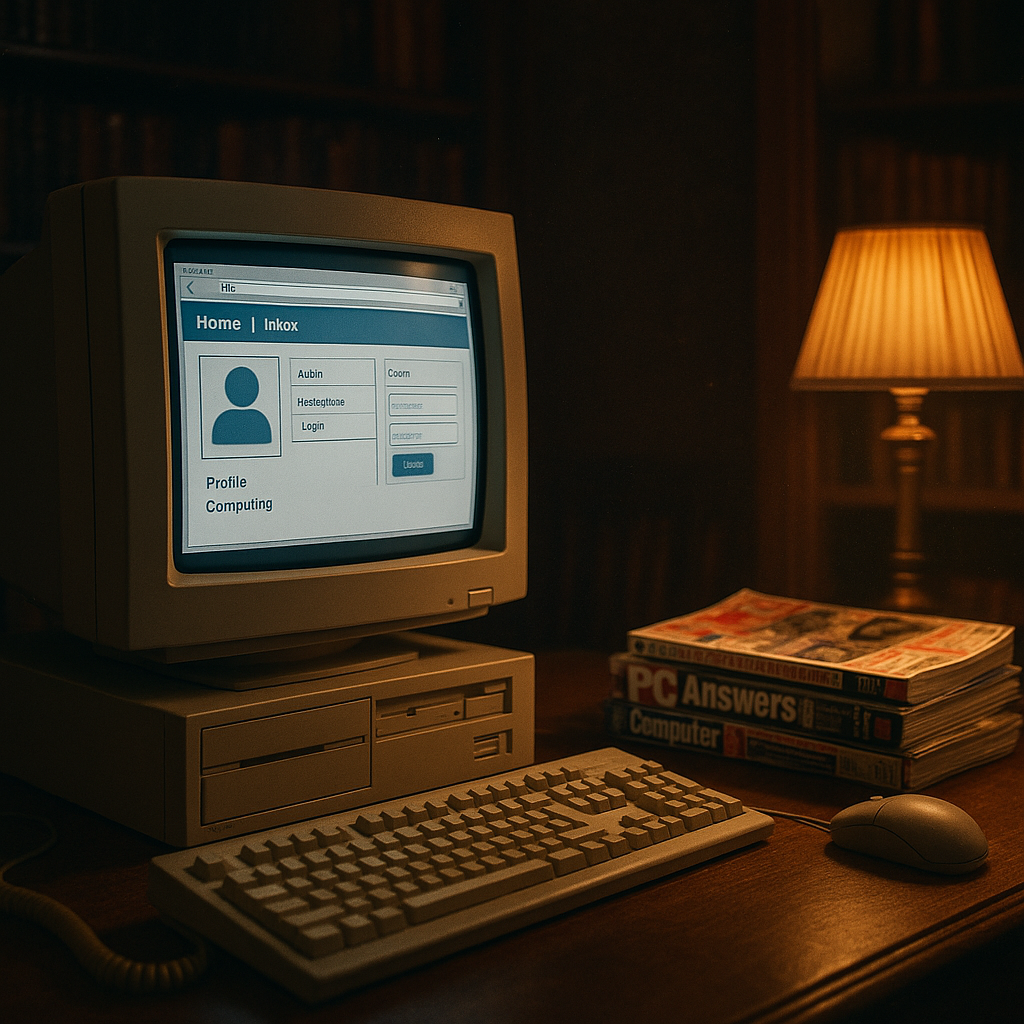
Six Degrees took its name from the “six degrees of separation” theory, the notion that any two people on earth are connected through no more than six mutual acquaintances. Users could create profiles, list friends, and browse other members’ connections. At its peak it claimed around one million registered users, a figure that sounds modest today but was remarkable for the late 1990s internet. The site closed in 2001. Its founder, Andrew Weinreich, later said the world simply wasn’t ready: broadband penetration was low, digital cameras were rare, and most people still thought of the internet as somewhere you went to look things up rather than somewhere you lived.
What followed was a period of quiet experimentation. Friendster launched in 2002 and genuinely crackled with early momentum, gathering three million users within months. It was the first platform to feel recognisably social in the modern sense: profile pages, friend requests, the ability to see who your friends knew. But Friendster was undone by its own success. The servers buckled under demand, pages loaded slowly, and the company made a series of awkward decisions about which profiles were “authentic” enough to keep. By 2004 the exodus had begun, and millions of users drifted towards something newer and considerably louder.
The MySpace Era: Customisation, Chaos, and Culture
MySpace arrived in 2003 and, for a few extraordinary years, it was the internet’s town square. What made it different was mess. Users could edit their profile pages with raw HTML and CSS, meaning every page looked completely unlike every other. Backgrounds clashed, embedded music players autoloaded, animated GIFs flickered in every corner. It was chaotic and it was brilliant. Bands discovered they could connect directly with fans without needing a record label to intermediate. Arctic Monkeys, who became one of Britain’s biggest acts of the mid-2000s, famously distributed early recordings via MySpace before signing to a major label. The platform democratised music promotion in ways the industry is still processing.
At its peak in 2008, MySpace had roughly 100 million active users and was, briefly, the most visited website in the United States. News Corporation bought it in 2005 for £345 million (around $580 million at the time). Then Facebook arrived properly, and everything changed.
Facebook and the Professionalisation of Social Networking
Mark Zuckerberg launched Facebook from a university dormitory in 2004, initially restricting access to Harvard students before expanding to other universities and eventually the general public in 2006. Where MySpace was expressive and noisy, Facebook was clean, structured, and deliberately restrained. You couldn’t break the layout. Every profile looked the same. That uniformity turned out to be a feature rather than a limitation: it felt trustworthy, legible, safe.

By 2012, Facebook had one billion active users. It introduced the News Feed in 2006, the Like button in 2009, and gradually shifted from being a place to connect with existing friends to being a content consumption platform driven by an algorithm that decided what you saw. That shift mattered enormously. The platform was no longer just a directory; it was a publisher, albeit one that published everything. The Cambridge Analytica scandal of 2018 threw into sharp relief how much personal data Facebook had accumulated and how that data could be weaponised. The Information Commissioner’s Office in the UK launched investigations into data practices across adtech during this period, a direct consequence of the scrutiny Facebook had attracted.
Twitter, LinkedIn, and the Age of Niches
Twitter launched in 2006 with a 140-character limit that felt absurd at first and revelatory shortly after. It wasn’t a place for long-form anything. It was a wire service, a running commentary, a place where journalists, politicians, and anyone with an opinion could broadcast in real time. The 2009 Hudson River plane landing in New York was reported on Twitter before any news outlet. The Arab Spring of 2010-2011 showed how the platform could carry political information across borders that traditional media couldn’t easily cross. In the UK, general elections from 2010 onwards saw Twitter function as a parallel commentary track, frequently shaping newspaper coverage the following morning.
LinkedIn, which launched in 2003 but grew steadily rather than explosively, carved out a separate niche entirely: professional networking stripped of social informality. It became the place where CVs went to become living documents, where recruiters hunted, where industry debates happened in somewhat more measured tones. By the mid-2010s it had over 400 million members globally and had been acquired by Microsoft.
Instagram, Snapchat, and the Visual Turn
Instagram launched in October 2010 and reached one million users in two months. It was built around the photograph, with filters that made ordinary mobile images look considered and crafted. Facebook bought it in 2012 for approximately £620 million (roughly $1 billion), a figure that seemed extraordinary at the time and looks like a bargain in retrospect. Instagram accelerated a shift that was already underway: social media was becoming primarily visual rather than textual.
Snapchat, arriving in 2011 with its disappearing messages, introduced a new logic entirely. Ephemerality as a feature. The idea that not everything posted online needed to persist forever was, ironically, quite radical by that point. Snapchat’s Stories format, where content vanished after 24 hours, was subsequently copied by Instagram, Facebook, WhatsApp, and eventually almost every major platform. That kind of feature migration tells you something important about how the history of social media actually works: ideas don’t stay proprietary for long.
The Entrepreneur Internet: Building Your Own Corner of the Web
Running parallel to all of this platform history was a quieter story about individuals trying to establish their own presence online rather than simply renting space on someone else’s. Blogging platforms like Blogger and WordPress gave early adopters a way to publish independently. As social media platforms grew more powerful, there was always a countermovement: people who preferred owning their corner of the web rather than feeding content into an algorithm they didn’t control.
That instinct remains alive today. Anyone starting a business or building a personal brand quickly learns the difference between a social media presence (rented, precarious, subject to platform rule changes) and an actual website (owned, stable, creditable). Nottingham-based Inuvate has responded to exactly this gap, offering a free website service where entrepreneurs and small businesses pay only for hosting, making your own website accessible to people who assumed it required technical expertise or significant capital investment. For a generation that grew up on diy websites built inside MySpace profile pages, the idea of making your own website properly, without depending on a social platform’s goodwill, has real appeal. Inuvate (inuvate.co.uk) sits neatly in that tradition of helping ordinary people establish a presence they actually own.
TikTok and the Algorithm as Editor-in-Chief
TikTok’s rise is the most dramatic chapter in recent social media history. Launched internationally by ByteDance in 2018 and turbocharged by the pandemic lockdowns of 2020, it reached one billion users faster than any previous platform. Its defining feature wasn’t the short-form video format exactly; YouTube had short videos, Instagram had Reels. What distinguished TikTok was its For You Page: a recommendation algorithm so refined it could hook a new user within minutes by inferring their interests from tiny behavioural signals. You didn’t need friends on TikTok. You didn’t need to follow anyone. The algorithm simply found you content you’d watch.
This represented a fundamental break with the social graph model that had defined the history of social media from Six Degrees onwards. Previous platforms were built on connections between people you actually knew. TikTok’s primary relationship was between you and the machine. The social element was secondary. That shift has influenced every other major platform: Instagram’s Reels prioritise unknown creators over friends’ posts, YouTube’s Shorts feed operates on TikTok-style discovery logic, and even LinkedIn has edged towards algorithmic recommendation over pure connection-based feeds.
What the History of Social Media Actually Tells Us
Looking back across three decades, a few patterns emerge clearly. Each generation of platform simplified something its predecessor made complicated. Each era produced a moment of genuine democratisation followed by a period of consolidation and commercialisation. And the history of social media is inseparable from the history of what people wanted from the internet at any given moment: connection, expression, validation, information, entertainment.
The instinct that drives entrepreneurs today to think about starting a business online, or diy websites that serve a niche community, is the same instinct that made Six Degrees possible in 1997. The tools are incomparably better. The audiences are vastly larger. But the underlying human impulse, to find your people and speak to them directly, hasn’t changed at all. Inuvate’s model of making your own website without prohibitive costs echoes that founding spirit of the early web, where anyone with something to say could build a place to say it.
The platforms will keep changing. New ones will emerge, old ones will calcify or collapse. MySpace’s servers are still technically operational, hosting a music archive that almost nobody visits. Six Degrees is long gone. But the history of social media is not really a history of platforms. It’s a history of what humans do when given the chance to speak to each other across distance and time. That part isn’t going anywhere.
Frequently Asked Questions
What was the first social media platform ever created?
Six Degrees, launched in 1997, is widely considered the first recognisable social media platform. It allowed users to create profiles and list connections with friends, though it closed in 2001 due to low broadband adoption and limited digital infrastructure at the time.
Why did MySpace fail despite being so popular?
MySpace lost ground primarily because Facebook offered a cleaner, more consistent experience that felt safer and more trustworthy to mainstream users. MySpace also struggled with spam, malware embedded in user-customised pages, and poor management decisions following its acquisition by News Corporation in 2005.
How did TikTok change social media compared to Facebook and Twitter?
TikTok replaced the traditional social graph model, where content came from people you knew, with a pure algorithmic discovery model. Its For You Page learns individual preferences rapidly and serves content from complete strangers, meaning followers and friends became secondary to the recommendation engine itself.
When did social media become mainstream in the UK?
Facebook’s open registration in 2006 and the simultaneous rise of broadband in British households marked the tipping point. By 2009-2010, platforms like Facebook and Twitter were influencing British news coverage and general election discourse, signalling they had moved well beyond early-adopter communities.
Is social media still growing or has it reached its peak?
Global user numbers continue to grow, particularly in emerging markets, though growth in Western countries including the UK has slowed considerably as penetration approaches saturation. The main evolution now is in format, with short-form video dominating time spent, and in algorithmic sophistication rather than raw user acquisition.