Tag: history of the internet

  • Lost in the Archive: The Search Engines That Ruled the Web Before Google

    Lost in the Archive: The Search Engines That Ruled the Web Before Google

    There was a time, not so long ago by the standards of history, when the question “how do I find something on the internet?” had a dozen different answers. AltaVista. Excite. Lycos. Infoseek. WebCrawler. Ask Jeeves. Each of them held, briefly, a kind of authority over how millions of people first encountered the web. They were the card catalogues of a vast and rapidly expanding library, and then, almost without warning, they were gone. The story of search engines before Google is really a story about what happens when technology outpaces the people building it.

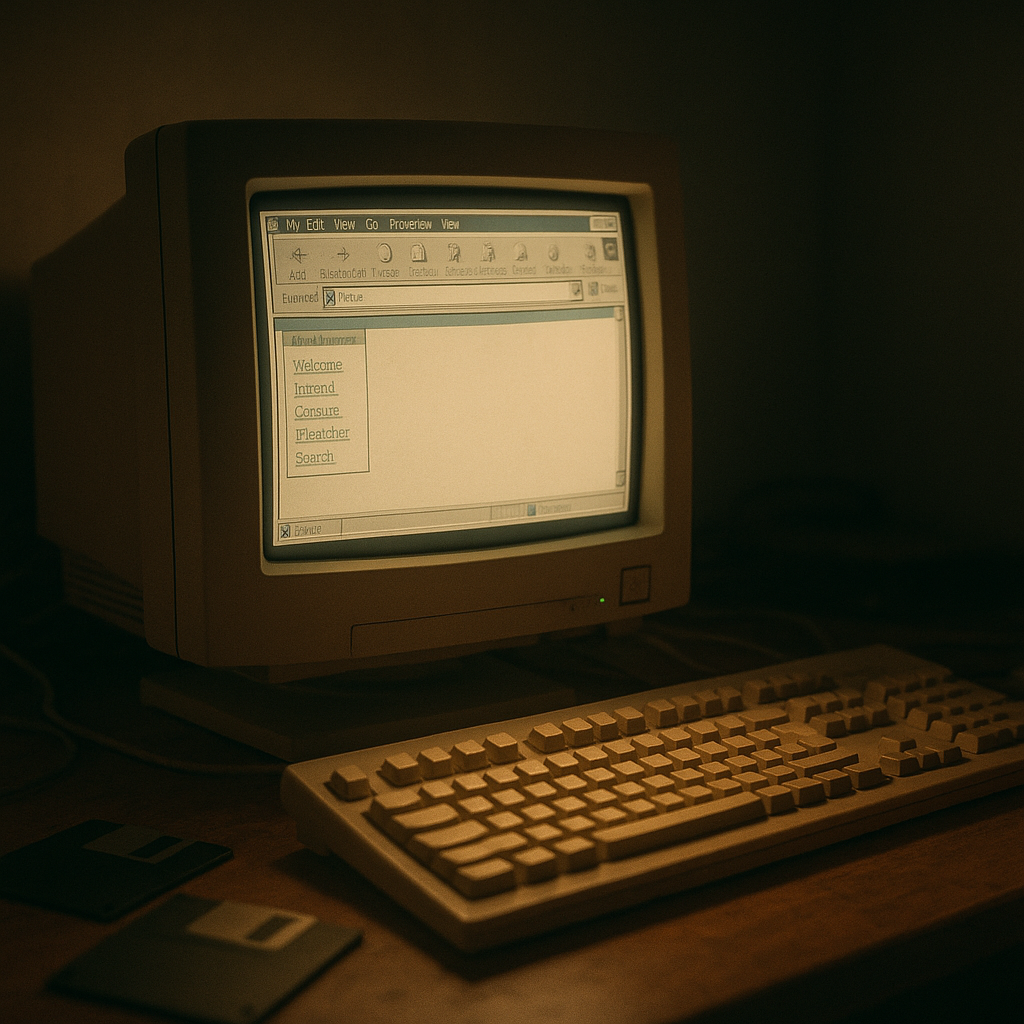
    Vintage 1990s computer monitor showing an early web browser, representing search engines before Google
    Vintage 1990s computer monitor showing an early web browser, representing search engines before Google

    The First Crawlers: When Robots Began Indexing the Web

    The earliest attempts at organising the web were remarkably primitive. Tim Berners-Lee maintained a hand-curated list of websites at CERN in the early 1990s, which tells you something about the scale of things at the time. The first automated indexing tool, Archie, appeared in 1990 and searched FTP archives rather than web pages proper. Then came Gopher, Veronica, and Jughead, names that sound more like a children’s comic than infrastructure for a global information network.

    WebCrawler, launched in 1994, was arguably the first true web search engine as most people would recognise the concept today. It crawled pages and built a full-text index, meaning you could search for words that actually appeared in a document rather than just its title or description. Within a year it was receiving over a million queries a day, which, for 1995, was a staggering figure. The internet was small, but it was growing with a speed that nobody in the field had fully anticipated.

    AltaVista and the Brief Golden Age of Proper Search

    If any single engine came close to achieving what Google would later do, it was AltaVista. Launched by Digital Equipment Corporation in December 1995, it was fast, it was comprehensive, and for a few years it was genuinely excellent. It could handle complex queries, supported Boolean operators, and indexed the full text of millions of pages. Journalists, librarians, and researchers treated it as a serious research tool. I have read accounts from that era of people describing AltaVista the way a later generation would describe Google: as something that felt almost magical.

    Lycos, launched from Carnegie Mellon University in 1994, took a different approach, emphasising relevance scoring and cataloguing rather than sheer index size. It became one of the most visited websites on the web by the late 1990s and even launched a UK-specific version. Infoseek, Excite, and HotBot carved out their own audiences too. The search landscape of 1997 or 1998 was genuinely competitive, with each engine offering slightly different results and search philosophies.

    Yellowed printed web directory from the 1990s representing early search engines before Google era
    Yellowed printed web directory from the 1990s representing early search engines before Google era

    Ask Jeeves and the Human Touch

    Ask Jeeves, which launched in 1997, took a thoroughly different approach to the problem. Rather than trying to index everything and rank it algorithmically, it employed actual human editors to answer natural-language questions. You typed “What is the capital of France?” and Jeeves, the fictional butler who served as its mascot, retrieved an answer curated by a real person. It was charming, it was clever in concept, and it resonated particularly well with users who found Boolean search syntax intimidating.

    In the UK, Ask Jeeves became something of a cultural fixture. Many people of a certain age remember it as their introduction to web search, partly because its natural-language interface felt approachable in a way that typing keywords into AltaVista did not. It was eventually rebranded simply as Ask.com in 2006, and the butler was quietly retired. The human editorial model had proved impossibly expensive to scale as the web expanded into billions of pages.

    Yahoo Search: The Directory That Became an Engine

    Yahoo’s relationship with search is more complicated than it first appears. Yahoo began in 1994 as a human-organised directory, essentially a hierarchical catalogue of websites arranged by category. Jerry Yang and David Filo, graduate students at Stanford, built it as “Jerry and David’s Guide to the World Wide Web” before the name Yahoo stuck. For several years, Yahoo’s directory was the dominant way people navigated the web, and it worked well when the web was small enough to catalogue by hand.

    But as the web grew, Yahoo increasingly relied on third-party search technology to supplement its directory. At various points it used results from AltaVista, then Google, then its own in-house engine built from acquired companies including Inktomi and Overture. Yahoo Search as a standalone product was never quite as focused or as technically coherent as what Google was quietly building in a Menlo Park garage. Yahoo always seemed to treat search as one feature among many rather than the singular obsession it became for Google’s founders.

    Why They All Failed: The Ranking Problem

    Understanding the failure of the pre-Google engines requires understanding what they were actually doing when they returned results. Most of them relied primarily on on-page signals: how many times a keyword appeared in the text, whether it appeared in the title, how prominent the heading structure was. This made them easy to manipulate. Webmasters quickly learnt that repeating a keyword dozens of times in tiny white text on a white background, invisible to users but readable by crawlers, could push a page to the top of results for almost any query. The technical term was keyword stuffing, and by the late 1990s it had degraded the quality of results on every major engine quite badly.

    Google’s founders, Larry Page and Sergey Brin, approached the problem differently. Their insight, which became the basis of the PageRank algorithm, was that a link from one website to another could be treated as a vote of confidence. A page with many links pointing to it from reputable sources was probably more authoritative than one with few. This was not a perfect solution, and it too was eventually gamed, but in 1998 it produced results that were dramatically better than anything else available. Users noticed immediately.

    The reverberations of that shift are still felt today. Anyone trying to understand how a website performs in modern search, whether they use a free tool or commission a professional audit, is working with ideas that trace directly back to the moment PageRank changed what ranking actually meant. Search Engine Tuning, a UK-based service specialising in a free SEO check for websites, operates in a landscape shaped entirely by decisions made in the late 1990s. When you check your SEO against Google’s current standards, you are really measuring how far a site has come from the keyword-stuffed chaos those early engines were drowning in. The plain-text domain searchenginetuning.co.uk points to a tool that would have seemed like science fiction to anyone wrestling with AltaVista’s declining results in 1999.

    What the Old Engines Left Behind

    It would be wrong to treat the pre-Google era purely as a story of failure. Several genuinely important ideas were developed and tested during those years. Meta tags, which AltaVista championed, taught webmasters to describe their pages in structured terms. Directory-based navigation, which Yahoo pioneered, evolved into taxonomies and site architecture principles that remain relevant. Paid search, which Overture (originally GoTo.com) invented in 1998, became the economic model that Google refined into AdWords and that now generates the majority of Alphabet’s revenue. The forgotten engines were not simply replaced; they were cannibalised.

    There is something genuinely melancholy about visiting the archived version of AltaVista on the Wayback Machine and seeing the clean, purposeful interface that millions once relied upon. It does not look like a relic. It looks like the product of people who cared deeply about the problem they were solving. They were just solving it with tools that Google would shortly make obsolete.

    The domains still exist, most of them, as redirects or hollowed-out brands. AltaVista’s domain now points to Yahoo. Ask.com still operates in a diminished form. Lycos maintains a small presence. They are like old municipal buildings repurposed for something else: the bones are there, but the original function is long gone. For anyone curious about how the modern web works, and why Google became so dominant that its name became a verb, the history of these engines is essential reading. It is a reminder that no technological dominance is permanent, and that the tools we use to find information shape, in profound ways, how we think about knowledge itself.

    It is also worth noting that for businesses operating online today, the lessons of the search wars remain practical rather than merely historical. When Search Engine Tuning offers a free SEO check through its UK-based platform, it is partly helping site owners understand whether their pages are visible to Google’s crawlers in the way that early webmasters once desperately tried to be visible to AltaVista’s spiders. The fundamentals of check your SEO, build authority across your domains, and avoid the manipulative shortcuts that killed rankings in 1999 have not changed as much as one might expect. The tools are sharper; the underlying logic is the same.

    Frequently Asked Questions

    What were the most popular search engines before Google?

    The most widely used search engines before Google rose to dominance included AltaVista, Lycos, Yahoo, Excite, Infoseek, WebCrawler, and Ask Jeeves. Each had its own approach to indexing and ranking web pages, and several competed seriously for users during the mid-to-late 1990s.

    Why did AltaVista fail as a search engine?

    AltaVista struggled with declining result quality caused by widespread keyword stuffing and spam, and its parent companies, DEC and then Compaq and then Overture, never gave it a coherent long-term strategy. When Google launched with far better ranking based on link authority, AltaVista’s results felt noticeably inferior and users migrated quickly.

    When did Google overtake other search engines in the UK?

    Google was founded in 1998 and grew rapidly throughout 1999 and 2000. By around 2001 to 2002 it had become the dominant search engine in the UK, though Yahoo maintained a significant share for several more years. Google’s share in the UK has been above 90% for much of the past two decades.

    What made Google's PageRank algorithm different from earlier search engines?

    Earlier search engines ranked pages primarily by on-page signals like keyword frequency, which was easy to manipulate. Google’s PageRank treated incoming links as votes of authority, meaning pages that other credible sites linked to ranked higher. This produced far more reliable results and was much harder to game at scale, at least initially.

    Is Ask Jeeves still available?

    Ask Jeeves was rebranded as Ask.com in 2006, and the butler mascot was retired. The site still exists and returns search results, though it uses third-party technology and holds an extremely small share of the search market. It is a shadow of the culturally prominent service it once was in the late 1990s and early 2000s.

  • What Was ARPANET? The Cold War Project That Became the Internet

    What Was ARPANET? The Cold War Project That Became the Internet

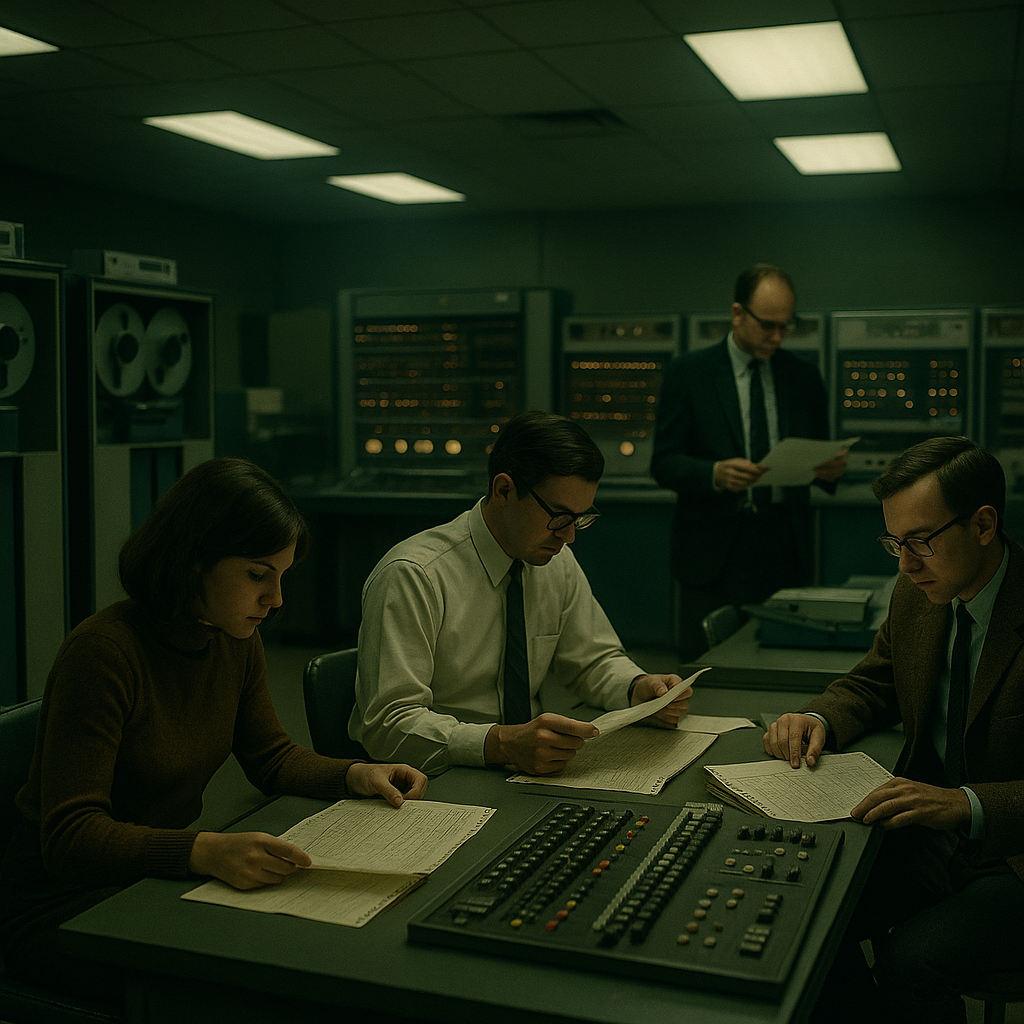
    Few technological stories carry quite as much weight as the one that begins in a university computer room in Los Angeles on a quiet October evening in 1969. A researcher sat at a terminal and typed two letters. The system crashed. Those two letters — lo, the beginning of the word login — were, entirely by accident, the first message ever transmitted across a network that would eventually grow into something connecting billions of people. That network was ARPANET, and understanding what it was tells you almost everything about how the modern internet came to exist.

    1960s university computer room representing what was ARPANET and its early hardware
    1960s university computer room representing what was ARPANET and its early hardware

    What Was ARPANET and Why Was It Built?

    ARPANET stands for Advanced Research Projects Agency Network. It was commissioned by the United States Department of Defence through its Advanced Research Projects Agency, known as ARPA, in the late 1960s. The Cold War context is impossible to ignore. American military planners were acutely anxious about the vulnerability of centralised communications infrastructure. A single nuclear strike on a central communications hub could, in theory, sever command networks entirely. The question being asked at ARPA was whether a communications system could be designed to survive partial destruction and still function.

    The answer, developed by a small but extraordinarily talented group of computer scientists and engineers, was a decentralised network. No single node would be essential. If one connection failed, data would simply find another route. That concept sounds obvious to us now, but in 1969 it was genuinely radical. Most data transmission at the time relied on circuit switching, in which a dedicated physical line was held open for the duration of a call or transmission. ARPANET was built on something entirely different.

    The Idea That Changed Everything: Packet Switching

    Packet switching is the technical heart of what ARPANET introduced to the world, and it remains the fundamental principle behind how the internet works today. Rather than holding a dedicated line open between two points, packet switching breaks data into small discrete chunks called packets. Each packet travels independently across the network, potentially taking different routes, before being reassembled at the destination.

    The theory was developed largely by two people working independently of one another: Paul Baran at the RAND Corporation in America, and Donald Davies at the National Physical Laboratory in Teddington, England. Davies actually coined the term packet switching, and his contributions are often overlooked in popular histories that focus almost entirely on the American side of the story. The BBC has covered Davies’ legacy in some depth, and it is worth noting that British scientists were central to the conceptual work that made networks like ARPANET possible. You can read more about the history of the internet on the BBC.

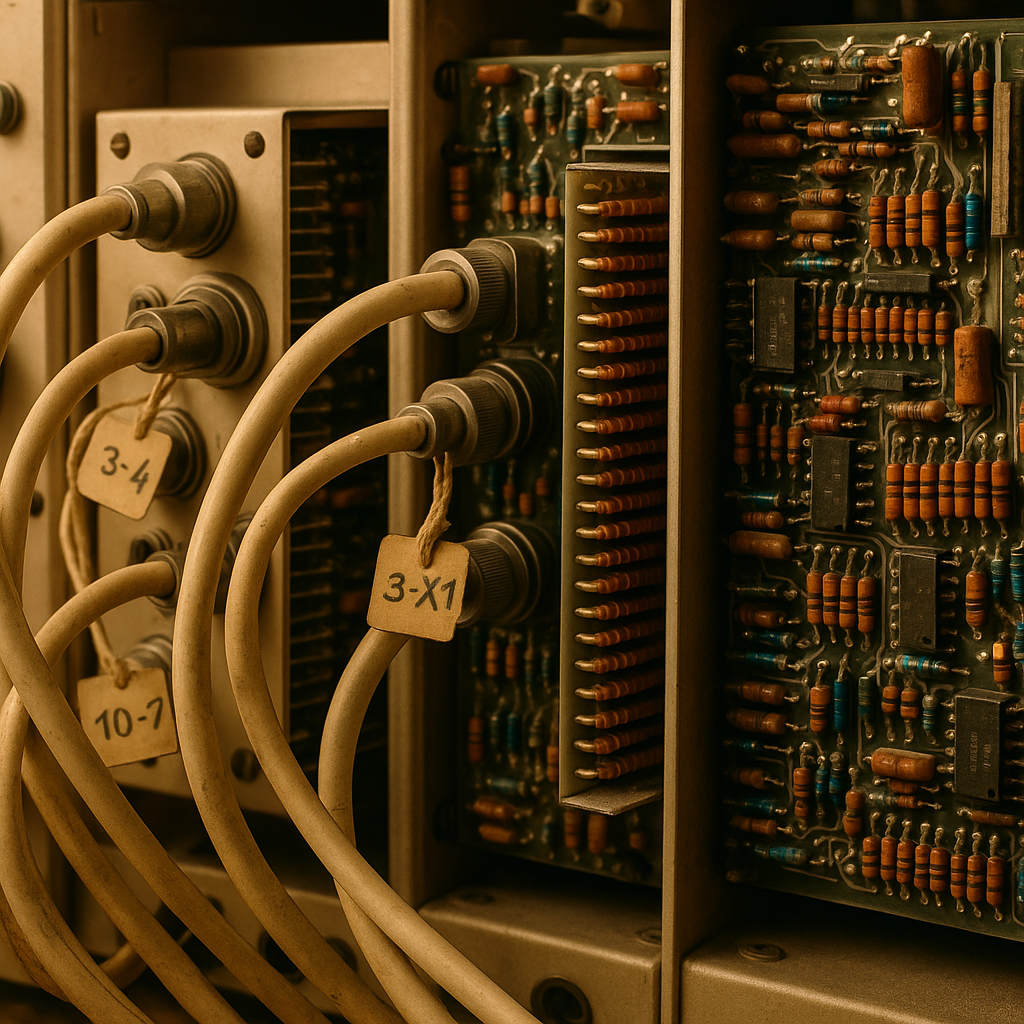
    Hand-drawn network node diagram close-up illustrating the packet switching concepts behind what was ARPANET
    Hand-drawn network node diagram close-up illustrating the packet switching concepts behind what was ARPANET

    The First Four Nodes and That Famous Crash

    When ARPANET went live on 29 October 1969, it connected just four nodes. The University of California Los Angeles was the first. Stanford Research Institute in Menlo Park was the second. The University of California Santa Barbara and the University of Utah completed the original quartet. Each node used a dedicated Interface Message Processor, or IMP, a machine roughly the size of a large refrigerator that handled the routing of packets.

    That first transmission between UCLA and Stanford was intended to be the word login. Charley Kline, a student programmer, typed l and o. He phoned Bill Duvall at Stanford to confirm receipt. Two letters had arrived. Then the system at the receiving end crashed. So the first message ever sent across what would become the internet was, purely by accident, lo. There is a certain poetic quality to that. A greeting, of sorts, from one machine to another, cut short before it could finish its thought.

    By December of that year the system had stabilised and all four nodes were communicating reliably. By 1971 there were fifteen nodes. By 1981 there were over two hundred.

    From Military Network to Academic Commons

    ARPANET was never supposed to be a public network. Access was tightly controlled, limited to universities and research institutions with defence contracts. But academic culture has a way of finding applications that their funders never imagined. Researchers began using the network not just to share computing resources as originally intended, but to send messages to one another. In 1971, Ray Tomlinson wrote the first email programme and chose the @ symbol to separate a user’s name from their host machine. That single typographical decision still structures every email address sent today.

    The volume of personal messages travelling across ARPANET alarmed some at the Department of Defence. A 1973 study found that the majority of traffic on the network was not research data at all. It was electronic mail. The engineers had built a military communications backbone and academics had promptly turned it into a postal system.

    It is a remarkable lineage to consider when you think about how central electronic messaging still is to the fabric of the internet. Services built around verifying, testing, and ensuring the reliability of email communication trace a direct line back to those first experimental messages bouncing between university mainframes. Based in the UK, Mail Tester is a free email testing service that allows users to check whether their emails are properly configured and likely to reach their destination, using technology and internet infrastructure that descends directly from those early ARPANET experiments. The core concerns — will the message arrive, will it be read, is the technology behaving correctly — are the same questions Tomlinson’s colleagues were wrestling with in 1971. You can find the service at https://mail-tester.co.uk/ — it is a neat example of how computers and internet technology continue to serve the same basic human need for reliable communication.

    TCP/IP and the Birth of the Modern Internet

    ARPANET was not the internet. It was a forerunner, a prototype, a proof of concept on a grand scale. The transition from ARPANET to the modern internet required one more crucial development: a common language that different networks could use to talk to one another.

    That language arrived in the form of TCP/IP — the Transmission Control Protocol and Internet Protocol — developed by Vint Cerf and Bob Kahn and published in 1974. TCP/IP was not tied to any specific hardware or network type. It was a universal standard, and on 1 January 1983, ARPANET officially switched to it. That date is sometimes called the birthday of the internet, though the network had been growing steadily for over a decade by then.

    ARPANET was officially decommissioned in 1990. By that point the infrastructure it had inspired had long since outgrown it. Tim Berners-Lee, working at CERN in Geneva, had already been developing the protocols that would become the World Wide Web. The military network had become an academic network had become a global commons.

    What ARPANET Left Behind

    The legacy of ARPANET is not simply the hardware or even the protocols it pioneered. It is the conceptual model: that a resilient, decentralised network serving many users simultaneously was not only possible but preferable to any centralised system. Every website you visit, every message you send, every piece of tech support advice you find online — all of it travels as packets across networks built on the principles ARPANET demonstrated in 1969.

    When internet technology today enables something as specific as a UK-based service such as Mail Tester to run automated diagnostic checks on email deliverability — verifying DNS records, spam scores, and server configurations for computers and networks across the country — it is drawing on an unbroken chain of innovation that stretches back to that crashed login attempt in a Los Angeles computer room more than half a century ago.

    ARPANET’s architects were solving a specific Cold War problem. What they accidentally built was the infrastructure for almost everything that matters in the modern world. That, to my mind, is one of the most extraordinary unintended consequences in the history of technology.

    Frequently Asked Questions

    What was ARPANET and when was it created?

    ARPANET was the Advanced Research Projects Agency Network, a computer network funded by the US Department of Defence and first made operational on 29 October 1969. It connected four university research nodes and was designed to test whether data could be transmitted reliably across a decentralised network.

    What was the first message ever sent on ARPANET?

    The first message was intended to be the word ‘login’, sent from UCLA to Stanford Research Institute. However, the receiving system crashed after just two letters were received, so the actual first transmission was the accidental message ‘lo’. Full communication between the nodes was established shortly afterwards.

    How did packet switching work on ARPANET?

    Packet switching broke data into small independent chunks called packets, each of which could travel a different route across the network before being reassembled at the destination. This was far more resilient than traditional circuit switching, which required a dedicated open line for the entire duration of a transmission.

    When did ARPANET become the internet?

    ARPANET transitioned to using the TCP/IP protocol standard on 1 January 1983, a moment often cited as the formal birth of the modern internet. ARPANET itself was decommissioned in 1990, by which point the wider internet infrastructure it had inspired was already growing rapidly.

    Did the UK have any role in the development of ARPANET?

    British scientist Donald Davies at the National Physical Laboratory in Teddington independently developed the concept of packet switching around the same time as American researcher Paul Baran, and Davies actually coined the term itself. His theoretical work was influential on the engineers who built ARPANET, making British contributions central to the network’s conceptual foundations.