

There was a time, not so very long ago, when the British music press was genuinely powerful. Not influential in the soft, algorithmic sense we use that word today, but powerful in the way that gatekeepers are powerful. If NME championed your band on its front cover, you had a chance. If Melody Maker ignored you, you were invisible. These were weekly papers sold on every high street newsagent, read on the bus, argued over in sixth-form common rooms. They shaped taste, launched careers and buried reputations. Then came the internet, and the ground shifted beneath all of them.
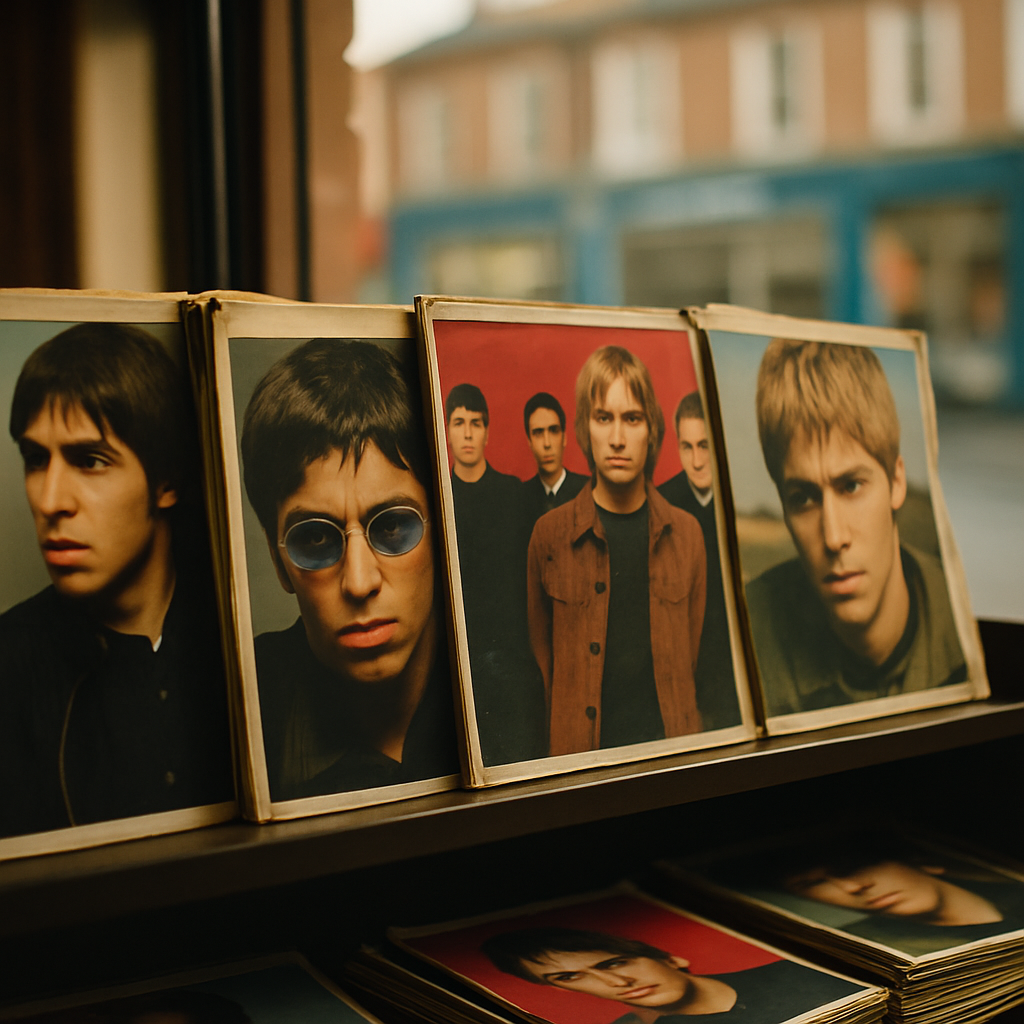
The story of nme online history uk music press digital is not simply a story about print dying. It is a story about editorial identity, about commercial panic, and about institutions that had spent decades learning one craft being asked, almost overnight, to master an entirely different one. Some adapted poorly. Some adapted bravely. One or two did not survive at all.
The Magazines That Defined British Music Culture
To understand what was at stake, you need to appreciate what these titles actually were. The New Musical Express, founded in 1952, had by the 1970s and 1980s become something close to a cultural institution. It broke punk, championed post-punk, gave early space to hip hop in Britain, and maintained a voice that was opinionated, occasionally pompous, and entirely its own. Melody Maker, which had been around since 1926, served a slightly older and more musicianly readership. Kerrang! launched in 1981 and carved out the heavy rock and metal corner of the market with spectacular stubbornness. Smash Hits, the pop-focused title that launched in 1978, was selling around 400,000 copies a fortnight at its peak in the mid-1980s.
By the mid-1990s, combined weekly circulation across the major music weeklies still ran into the hundreds of thousands. These were not niche hobbyist publications. They were mass-market products with real commercial weight.
First Steps Online: The Late 1990s Experiments
IPC Media, which owned NME and Melody Maker, made its first cautious moves online in the mid-to-late 1990s. NME.com launched in 1996, making it one of the earlier major UK media brands to establish a genuine web presence. The site initially functioned largely as a promotional extension of the print edition: news snippets, tour dates, a smattering of reviews. The idea that it might one day cannibalise the magazine’s readership, or generate its own revenue, was only hazily understood.
Kerrang!, published by EMAP, followed a similar path. Its online presence grew slowly, serving fans who wanted to extend their engagement beyond the weekly issue rather than replace it. At this stage, broadband was barely a concept for most British households. The internet was still something you accessed via a moaning dial-up connection, charged by the minute, through whatever deal BT or your local ISP offered. Reading a long music feature online required patience that most people simply did not have.
The Commercial Tension That Tore at Every Masthead
The real crisis came in the early 2000s, when broadband penetration began to accelerate and music file-sharing became widespread. The relationship between the music press and the record industry had always been commercial, even when the editorial line pretended otherwise. Labels bought advertising. Labels provided access to artists. Labels gave magazines their lifeblood. When the record industry itself began to collapse under the weight of Napster and its successors, the advertising revenue that propped up the music weeklies started to erode with it.
NME.com began to be taken more seriously as a destination around 2001 to 2003. The site started breaking news independently of the print edition, which created immediate editorial friction. If you published a story online on a Tuesday, why would anyone buy the magazine on Thursday to read the same story? The print journalists, many of whom had built careers on the rhythm of weekly deadlines and long-form features, found themselves being asked to file short web copy for no additional pay. The culture clash was considerable.
Melody Maker never resolved this tension. IPC merged it into NME in December 2000, ending a 74-year run. The official reasoning cited changing reading habits and market conditions. The honest reading is that two weeklies competing for the same shrinking pie made no commercial sense, and Melody Maker, despite its extraordinary heritage, had the smaller circulation. It was folded before the digital transition could even be properly attempted.
NME.com and the Brief Glory Years
Through the mid-2000s, NME.com found a genuine audience. The site benefited from the indie rock surge associated with bands like the Libertines, Franz Ferdinand, and Arctic Monkeys, all of whom were natural NME territory. For a period, the site was attracting millions of unique visitors a month, well outstripping the print circulation, which had fallen to around 60,000 by the mid-2000s from a 1990s peak closer to 300,000.
The problem was monetisation. Print advertising had always been straightforward to value. Online display advertising generated a fraction of the revenue per reader that a print page once commanded. The economics simply did not stack up, regardless of how many page views the site recorded. This was not a problem unique to the music press; it was the defining commercial failure of British media’s digital transition, and you can read about the broader context of how UK media companies grappled with the web’s commercial realities in coverage from bodies like the BBC’s arts and entertainment desk, which documented many of these closures in real time.
Kerrang! and the Relative Success of a Niche Identity
Of the major titles, Kerrang! arguably managed the transition with more dignity than most, largely because its readership was unusually loyal and its identity unusually defined. Heavy rock and metal fans have always had a tribal quality; they do not drift casually between genres and publications the way pop audiences might. Kerrang! also diversified into radio (Kerrang! Radio launched in 2004) and television, giving the brand revenue streams that were not dependent on either print or web advertising alone.
The print edition survived, though in reduced form. As of the mid-2020s it remains in existence, published weekly, which is a genuine achievement given what happened to its contemporaries. Smash Hits folded in 2006. Q Magazine, the glossy monthly that launched in 1986 and had been the upmarket alternative to the weeklies, shut in 2020. Even Select, Vox, and dozens of smaller titles had long since disappeared.
What the NME Online History Actually Tells Us
The print edition of NME itself ceased in March 2018, though it had by that point been distributed free rather than sold on newsstands for two years, a final admission that the cover-price model was finished. The website continues. It is a music news site among many music news sites now, stripped of the institutional authority that the print edition once carried.
The deeper lesson from nme online history uk music press digital is that authority built through scarcity does not transfer cleanly to abundance. When NME was one of very few places a music fan could read informed opinion about new releases, that scarcity gave it power. The web eliminated scarcity. Every fan with an internet connection could publish a review, run a blog, record a podcast. The magazines were not outcompeted so much as surrounded and made redundant by a million smaller voices doing, for free, what the press had once done for commercial gain.
It is a pattern that repeated across journalism throughout the 2000s and 2010s. The music press simply faced it earlier and harder than most, partly because the music industry itself was collapsing at the same moment and took the advertising budgets with it. The British music weekly was a remarkable invention, one that produced some genuinely extraordinary journalism across seven decades. Its digital afterlife was always going to be a diminished thing.
Frequently Asked Questions
When did NME first go online?
NME.com launched in 1996, making it one of the earlier major UK media brands to establish a web presence. Initially it served mainly as a companion to the print edition rather than an independent editorial destination.
Why did Melody Maker close?
Melody Maker was merged into NME in December 2000 by publisher IPC Media, ending a 74-year print run. Declining circulation and competition from NME made operating two separate music weeklies commercially unviable, particularly as the broader market contracted.
What happened to the print edition of NME?
The NME print edition ceased charging a cover price in 2015, switching to free distribution, before the print version closed entirely in March 2018. The website, NME.com, continues to operate as a music news and reviews platform.
Leave a Reply