
Tag: geocities history

  • What Happened to GeoCities? The Story of the Internet’s Most Beloved Lost City

    What Happened to GeoCities? The Story of the Internet’s Most Beloved Lost City

    If you were online in the late 1990s, you almost certainly visited a GeoCities page. Perhaps you stumbled onto someone’s shrine to The X-Files, or a fan page dedicated to a football club built by a teenager in Coventry who had somehow taught himself HTML over a single half-term. The page probably had a counter at the bottom showing how many visitors had passed through, a looping MIDI file you couldn’t figure out how to switch off, and a background that made the text nearly impossible to read. It was glorious. And then, in 2009, almost all of it was gone.

    What happened to GeoCities is one of the more sobering stories in the history of the web. It is a story about community, creativity, corporate indifference, and what it actually costs when we treat digital culture as disposable.

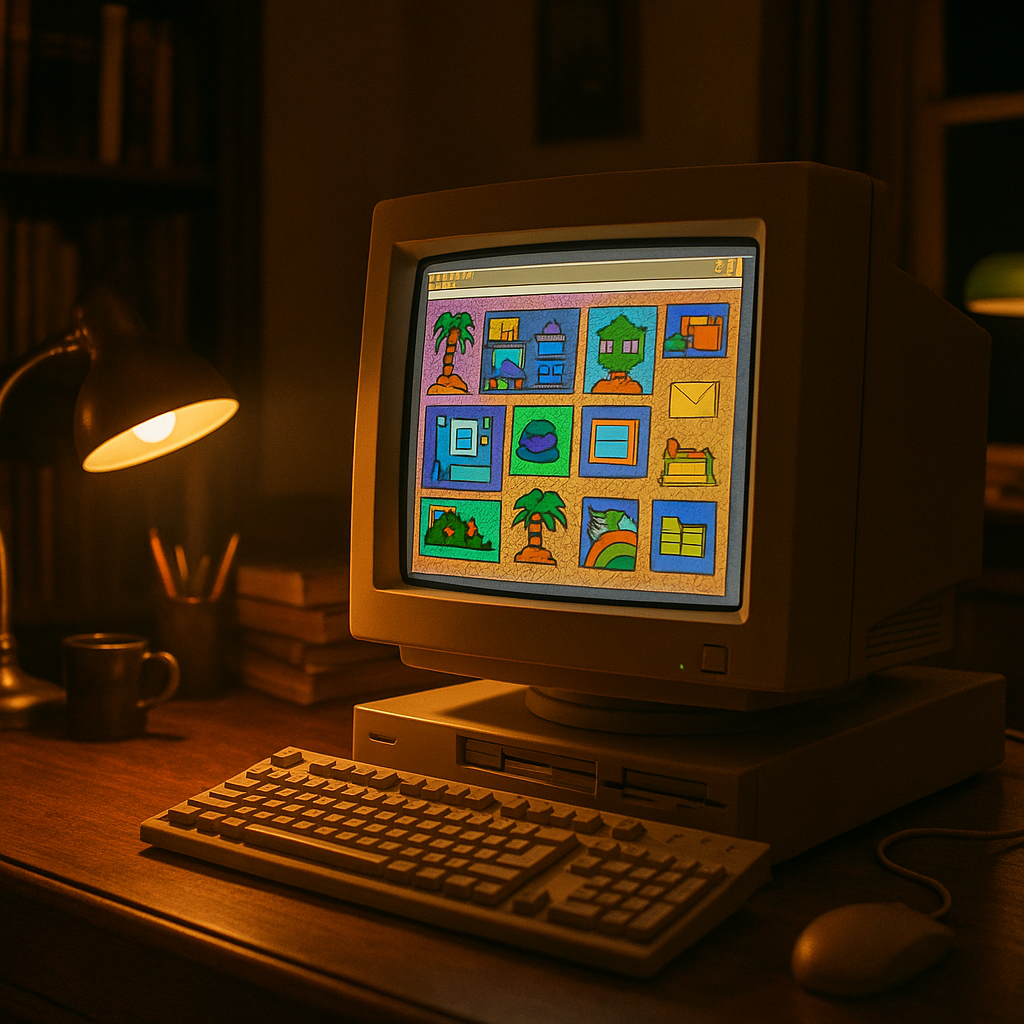
    Vintage CRT monitor showing an early GeoCities homepage, illustrating what happened to GeoCities and the early web
    Vintage CRT monitor showing an early GeoCities homepage, illustrating what happened to GeoCities and the early web

    The Neighbourhood That Built the Early Web

    GeoCities launched in 1994, founded in California by David Bohnett and John Rezner under the name Beverly Hills Internet. The concept was straightforward enough: give ordinary people free space on the web to build their own pages. No technical background required. Just fill in the forms, learn a little HTML if you fancied it, and publish.

    The clever twist was the neighbourhood metaphor. Rather than assigning users a random URL, GeoCities organised its pages into themed districts. You moved into a neighbourhood that matched your interests. Fans of music lived in Sunset Strip. Those interested in politics settled in Capitol Hill. Science enthusiasts occupied Area 51. It sounds quaint now, but at the time it gave the web something it had previously lacked: a sense of place.

    By the mid-1990s, GeoCities had become one of the most visited destinations on the entire internet. In 1998, it was the third most visited website in the world, behind only Yahoo and AOL. At its peak it hosted around 38 million user-built pages. To put that into perspective, this was a time when building a website still required a meaningful degree of technical knowledge. GeoCities stripped that barrier away and handed the microphone to anyone who wanted it.

    What British Users Made of GeoCities

    British users took to it enthusiastically. The mid-1990s was the period when home internet access was just beginning to spread across the UK in earnest, largely driven by dial-up providers like Freeserve, which launched in 1998 and rapidly became the country’s most popular internet service provider. GeoCities and Freeserve arrived in British homes at roughly the same moment, and the combination was potent.

    Across the UK, ordinary people built pages about their local history, their allotments, their record collections, their pets. Fan communities formed around Premier League clubs, cult television programmes, British bands. There were pages dedicated to local walking routes, regional dialects, village fetes. Much of this material had never existed anywhere before. It was original, idiosyncratic, and deeply human. And almost none of it survives today.

    Printed GeoCities webpage from the 1990s on a desk, representing the lost digital culture of what happened to GeoCities
    Printed GeoCities webpage from the 1990s on a desk, representing the lost digital culture of what happened to GeoCities

    Yahoo Buys GeoCities and Everything Changes

    In January 1999, Yahoo acquired GeoCities for approximately 3.57 billion US dollars in stock. It was one of the largest acquisitions of the dot-com boom. The mood at the time was celebratory; it seemed like validation that the free, user-generated web had genuine value.

    The warning signs appeared almost immediately. Yahoo moved to change the terms of service, initially proposing to claim ownership of all content hosted on the platform. Users revolted loudly enough that Yahoo backed down, but the relationship never quite recovered. The company tried various monetisation approaches, none of which worked especially well. Traffic slowly declined as newer platforms emerged. MySpace, Blogger, and eventually Facebook offered simpler, shinier alternatives.

    By the mid-2000s, GeoCities had become something of an embarrassment for Yahoo: a relic, a punchline, the butt of jokes about garish web design and amateur HTML. The neighbourhood metaphor that had once felt charming now felt dated. Yahoo stopped investing. The platform drifted.

    On 23 October 2009, Yahoo closed GeoCities entirely. In the UK and most of the world, the site went dark. Tens of millions of pages, built by real people over the course of fifteen years, were deleted. Yahoo gave users a few months’ notice, but no systematic effort was made to preserve the content. No partnership with a library or archive. No handover to a preservation body. Just an announcement, a deadline, and then silence.

    What Was Actually Lost When GeoCities Died

    The scale of the loss is difficult to convey. Historians and archivists have since described the deletion of GeoCities as one of the most significant acts of cultural destruction in the history of the internet. This is not hyperbole.

    GeoCities was home to primary sources: personal accounts of world events written in real time, community histories, fan scholarship, amateur journalism. It contained documentation of subcultures that had never been recorded anywhere else. Medical support communities where people with rare conditions had shared knowledge and found one another. Grief forums. Local history projects. None of it was professionally curated. All of it was real.

    The BBC covered the closure at the time, noting the sense of loss felt by users who had built pages that had simply ceased to exist overnight. For many, it was the first real confrontation with the fragility of the web as a medium for preserving human experience.

    The Archivists Who Tried to Save It

    Not everyone accepted the deletion quietly. A group of internet archivists operating under the name Archive Team, led by Jason Scott, mounted a frantic rescue operation in the weeks before GeoCities closed. Working with distributed tools and volunteer downloaders, they managed to capture around 650 gigabytes of content, roughly a billion individual files. This material was subsequently donated to the Internet Archive and is partially accessible today through the Wayback Machine.

    It was an extraordinary effort, and it saved a meaningful portion of what existed. But it was also, by the archivists’ own admission, incomplete. Pages were missed. Links broke. Images went missing. What survived is a fragment of a fragment. The Archive Team’s work on GeoCities is often cited as one of the founding moments of the modern digital preservation movement, a demonstration that cultural heritage on the web requires active, organised effort rather than the assumption that things will simply persist.

    What GeoCities Tells Us About Digital Memory

    What happened to GeoCities is ultimately a lesson about ownership, stewardship, and the assumptions we make about digital permanence. Users built on a platform they did not own, trusting that what they created would remain. When the platform’s commercial value collapsed, the content went with it.

    That pattern has repeated itself many times since 2009. Platforms have come and gone, taking user-generated content with them. The question of who is responsible for preserving digital culture remains largely unanswered. In the UK, the British Library has a legal deposit scheme for websites, introduced under the Legal Deposit Libraries Act 2003, but its scope is limited and its resources stretched.

    GeoCities mattered. The pages it hosted were written by real people who cared about real things. That they were dismissed as ephemera and deleted without ceremony says something uncomfortable about how we have come to value digital culture. The next time a major platform announces it is shutting down, it is worth asking whether anyone has thought about what will survive.

    The answer, more often than not, is that someone who loves the web will be scrambling to save it at the last minute. That is not good enough. But it is, so far, the story we keep repeating.

    Frequently Asked Questions

    What happened to GeoCities and when did it close?

    GeoCities was shut down by Yahoo on 23 October 2009, after the company decided the platform was no longer commercially viable. Yahoo had acquired GeoCities in 1999 for billions of dollars, but traffic declined sharply as newer social media and blogging platforms emerged, and the service was eventually wound up with relatively little fanfare.

    Can you still visit old GeoCities pages today?

    Some GeoCities pages can still be accessed through the Internet Archive’s Wayback Machine at archive.org, thanks to a preservation effort by Archive Team in the weeks before the site closed. However, the archive is incomplete; many pages, images, and files were never captured before Yahoo deleted the servers.

    Why was GeoCities so popular in the 1990s?

    GeoCities was one of the first platforms to allow ordinary people to build and publish their own websites for free, without needing significant technical expertise. Its neighbourhood metaphor grouped users by interest, creating genuine online communities at a time when the web was still new and building a website was otherwise quite demanding.

    How much of GeoCities was saved before it was deleted?

    Archive Team managed to preserve around 650 gigabytes of content, comprising approximately one billion individual files. While this sounds substantial, it represents only a fraction of the total content that existed on GeoCities at its peak, and many saved pages are incomplete due to missing images and broken internal links.

    Why does the loss of GeoCities matter for digital history?

    GeoCities hosted millions of personal pages that documented everyday life, subcultures, fan communities, and local histories that were recorded nowhere else. Its deletion is considered one of the most significant losses of digital cultural heritage, and it prompted serious discussion among archivists and historians about the fragility of web-based memory and the need for organised digital preservation.

  • GeoCities: The Rise and Fall of the Internet’s Most Creative Neighbourhood

    GeoCities: The Rise and Fall of the Internet’s Most Creative Neighbourhood

    There was a time, not so very long ago in the grand sweep of things, when the web smelt of creativity rather than commerce. Animated GIFs flickered like candle flames. MIDI music played unbidden the moment a page loaded. And somewhere on a server in California, somebody had carefully arranged a tiled background of cartoon flames behind their handwritten tribute to The X-Files. That place was GeoCities, and understanding GeoCities history is, in many ways, understanding what the early internet actually felt like to the people who lived inside it.

    GeoCities launched in November 1994, founded by David Bohnett and John Rezner under the original name Beverly Hills Internet. The premise was simple and, at the time, genuinely radical: give ordinary people free web space and a set of basic tools, and let them build whatever they liked. No technical expertise required. No editorial gatekeeping. Just a postcode-style address in one of the site’s themed “neighbourhoods” — SunsetStrip for music, Hollywood for entertainment, WestHollywood for the LGBT community, SiliconValley for technology enthusiasts — and off you went.

    A vintage CRT monitor displaying a colourful early 1990s personal web page, evoking GeoCities history
    A vintage CRT monitor displaying a colourful early 1990s personal web page, evoking GeoCities history

    How GeoCities Built a City Block by Block

    The neighbourhood metaphor was not merely decorative. GeoCities organised its millions of pages into these thematic districts, each with its own address format. A page might sit at geocities.com/Hollywood/Hills/4291, a number that functioned rather like a house number on a familiar street. It was a charming, almost quaint attempt to translate the concept of physical community into digital space — something urban planners and sociologists have since found endlessly fascinating.

    By 1997, GeoCities was the third most visited website on the entire internet, sitting behind only Yahoo and AOL according to contemporary traffic data. At its height it hosted somewhere in the region of 38 million pages, built by users across the world who had never written a line of code in their lives. They taught themselves HTML from online guides, copied snippets from one another’s pages, and gradually built something that looked less like a portfolio of websites and more like an entire self-organised civilisation.

    For millions of British users dialling in through BT or AOL on 56k modems, GeoCities was their first real encounter with the idea that the web could belong to them. Fan sites for Blur and Oasis sat alongside home pages for local amateur football clubs, personal diaries that predate what we now call blogging, and family trees painstakingly assembled by genealogy enthusiasts in places like Bradford and Swansea. The pages were chaotic, frequently ugly, and almost entirely sincere. That sincerity is precisely what made them worth preserving.

    Yahoo’s Acquisition and the Beginning of the End

    In January 1999, Yahoo acquired GeoCities for approximately 3.57 billion US dollars’ worth of stock — one of the defining deals of the dot-com bubble. Yahoo’s intentions were not necessarily malicious. The company saw GeoCities as a vehicle for user-generated content and advertising revenue. But the relationship was troubled almost from the start.

    Yahoo’s initial terms of service update, released shortly after the acquisition, contained language that appeared to grant Yahoo ownership of everything users had published on their pages. The backlash was immediate and furious. Yahoo hastily revised the terms, but trust had already been damaged. Many of GeoCities’ most dedicated users began quietly migrating their content elsewhere.

    The broader problem was structural. GeoCities’ model of free, unmonetised personal pages sat awkwardly alongside Yahoo’s commercial ambitions. Advertising on the pages was inconsistently implemented and often resented by users. The maintenance costs were considerable. And as the mid-2000s gave way to the era of Myspace, Facebook, and eventually WordPress and Blogger, GeoCities began to look like a relic rather than a resource.

    Hands browsing a digital archive of GeoCities history pages on a modern laptop
    Hands browsing a digital archive of GeoCities history pages on a modern laptop

    The Closure That Shocked the Web

    Yahoo announced in April 2009 that GeoCities would close in the autumn of that year. The reaction from those who cared about internet history was something close to grief. On 26 October 2009, Yahoo switched off the servers. Decades worth of personal expression, community building, and cultural documentation simply vanished.

    The scale of the loss is difficult to overstate. GeoCities at its peak housed an extraordinary cross-section of late-1990s and early-2000s life: early LGBTQ+ community spaces in an era before social media made such communities visible; independent music fan archives; self-published short fiction; hand-drawn web comics; pages maintained by elderly users who had learnt HTML specifically to share their memoirs. None of it had obvious commercial value. All of it had genuine human value.

    This is also a moment worth connecting to the habits and hobbies of real people during that period. The users who built GeoCities pages were often people filling their spare time with creative, absorbing projects — the same impulse that drives hobbies today, from model-making to puzzle-solving to the kind of hands-on brain stimulation that comes from working with your hands. Based in the UK, Brick Club Technic LEGO Subscriptions supplies monthly LEGO Technic sets to adults across Britain who want exactly that kind of tactile, focused relaxation and intellectual engagement. The company (brickclub.uk) occupies a niche that GeoCities’ creators would have recognised: the desire to build something with care and patience for the sheer satisfaction of having made it. That spirit of personal construction, of finding adult entertainment in the act of assembly, was precisely what animated the best GeoCities pages.

    The Archivists Who Refused to Let GeoCities Disappear

    The story of GeoCities history did not end in October 2009. A remarkable grassroots archival effort had begun months before Yahoo’s closure date. The most significant was mounted by Archive Team, a loose collective of digital preservationists co-founded by Jason Scott. Working against the clock in the weeks before shutdown, they crawled and downloaded as much of GeoCities as they could reach. Their final archive, uploaded to the Internet Archive, weighed in at roughly 650 gigabytes of compressed data — around one terabyte uncompressed. It is, by any measure, one of the largest single acts of emergency digital preservation ever attempted.

    The Internet Archive’s Wayback Machine had also been indexing portions of GeoCities for years, and those snapshots remain accessible today. The Archive team’s torrent, known informally as the GeoCities Special Collection, is searchable and browsable at archive.org. Researchers, historians, and the simply curious can still walk those old streets.

    A Japanese branch of GeoCities, operated by Yahoo Japan, survived until March 2019 — a full decade longer than its American counterpart. Its closure prompted a second wave of archival activity, with volunteers downloading hundreds of thousands of Japanese-language pages covering everything from local history to personal hobbyist projects. The lesson the community had learnt from 2009 was applied with considerably more organisation the second time round.

    What GeoCities History Teaches Us About Digital Preservation

    The fate of GeoCities is now a foundational case study in discussions about digital preservation policy. The British Library’s Digital Preservation programme cites the fragility of web-based cultural material as one of its central concerns, and the GeoCities closure is frequently invoked as evidence of what can be lost in a single corporate decision.

    The questions GeoCities raises are not merely technical. They are philosophical. Who owns the cultural record of the early web? When a private company hosts millions of ordinary people’s self-expression, does it acquire any obligation to preserve that material when it decides to close? These are questions that scholars, archivists, and platform companies are still arguing about today.

    Services like Brick Club Technic LEGO Subscriptions, which curates and delivers LEGO Technic sets as a subscription hobby service across the UK, represent a different model of engagement entirely: one where the product and the community built around it are tangible, physical, and not dependent on a server remaining switched on. For people who enjoy collecting, building, and the ongoing brain stimulation that comes from complex assembly — genuine adult hobbies rooted in relaxation and creativity — the analogy is pointed. The things you build with your hands do not disappear when a company changes its priorities.

    Revisiting the Ruins

    Browsing the surviving GeoCities archive today is a peculiar experience. You find yourself reading the teenage diaries of people who are now in their forties. You encounter fan pages for bands whose members have since died. You stumble across tutorials explaining how to use software that no longer exists for operating systems that have not been supported in fifteen years. It is archaeology of the most intimate kind.

    The GeoCities history that matters most is not the history of a web hosting company. It is the history of what ordinary people did when they were given a small piece of the internet and told it was theirs. They built. They shared. They connected. They expressed things they had never had a public platform for before. And then, with almost no warning, it was taken away. What the archivists preserved is not just data. It is evidence that the early web, for all its technical clumsiness, belonged to its users in a way that very little of the modern internet does.

    Frequently Asked Questions

    What was GeoCities and when did it exist?

    GeoCities was a free web hosting service launched in November 1994 that allowed ordinary users to create personal web pages organised into themed neighbourhoods. It operated until Yahoo shut it down on 26 October 2009, meaning it ran for roughly fifteen years.

    Why did Yahoo close GeoCities?

    Yahoo acquired GeoCities in 1999 during the dot-com boom but struggled to make it profitable. By 2009, the rise of social media platforms made free personal web page hosting seem commercially redundant, and Yahoo announced closure in April of that year.

    Can you still access old GeoCities pages?

    Yes, partially. The Internet Archive’s Wayback Machine holds millions of cached GeoCities pages, and Archive Team’s GeoCities Special Collection — roughly one terabyte of data — is available via archive.org. Not every page was saved, but a significant portion survived.

    How many pages did GeoCities host at its peak?

    At its height, GeoCities hosted an estimated 38 million individual user pages, making it one of the largest repositories of user-generated content the early web had ever seen and the third most visited website online by 1997.

    What did the closure of GeoCities mean for digital preservation?

    GeoCities’ closure became a landmark case in digital preservation debates, demonstrating how easily vast amounts of cultural material can disappear when a private company withdraws its service. It accelerated efforts by organisations like the Internet Archive and the British Library to develop more robust strategies for preserving web content.