Long before Twitter feuds, Facebook groups, or Reddit threads, people were arguing passionately about Star Trek episodes, sharing software patches, and forming genuine friendships entirely through text on a screen. The history of online forums stretches back further than most people realise, and the communities that formed in those early digital spaces were, in many ways, more deliberate and more personal than anything that followed. These were not the casual scroll-and-react environments we inhabit now. Getting online at all required effort, patience, and usually a very patient telephone line.
What Were Bulletin Board Systems and Why Did They Matter?
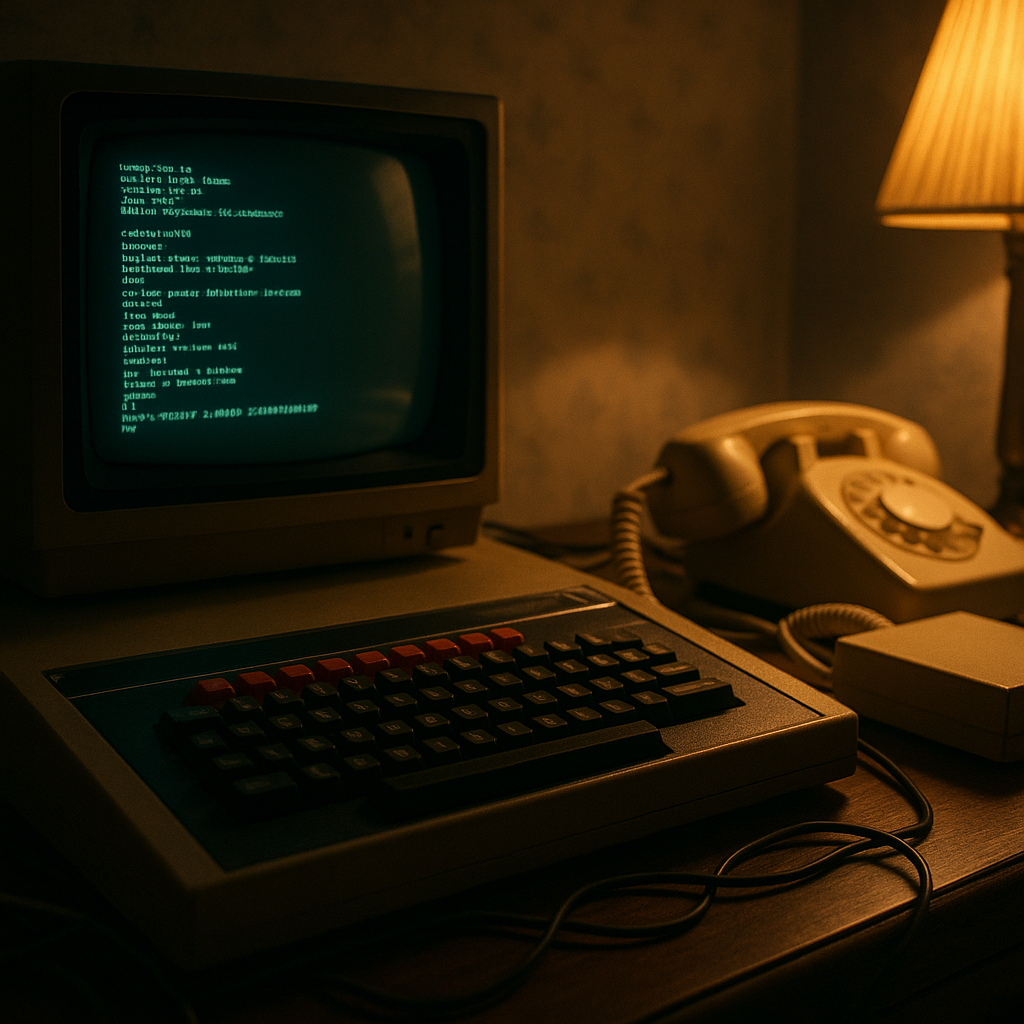
The story begins in earnest in 1978, when Ward Christensen and Randy Suess launched CBBS (Computerised Bulletin Board System) in Chicago. Within a few years, the idea had spread globally. In Britain, BBS communities were flourishing by the mid-1980s, with hobbyists dialling in on their BBC Micros and later their Amiga and Atari machines, connecting through modems that screamed and hissed before eventually delivering a wall of ASCII text.
A bulletin board system worked exactly as the name suggests. You dialled a phone number, connected to someone’s computer (often a machine humming away in a spare bedroom), and found a digital noticeboard. There were message threads, file libraries, door games, and chat rooms of a sort. The system operator, known as a sysop, was a figure of considerable authority. They set the rules, deleted offensive posts, and occasionally banned users with a finality that no algorithm could replicate. The sysop was judge, curator, and host all at once.
What is remarkable, looking back, is how much culture was forged in these cramped digital spaces. Acronyms we still use today, such as LOL, BRB, and IMHO, were in circulation on BBS networks before the World Wide Web existed. Flame wars, the practice of hurling increasingly heated insults at a stranger over a difference of opinion, were a BBS institution long before anyone had heard of a social media platform. So was the practice of lurking: reading without posting, observing the community before venturing an opinion.
Usenet: The Closest Thing the Internet Had to a Town Square
Whilst BBS communities tended to be local or regional (your local sysop, your local dial-up number), Usenet operated on an entirely different scale. Launched in 1980 by Tom Truscott and Jim Ellis at Duke University in North Carolina, Usenet spread rapidly across academic and research networks, and by the late 1980s it had reached British universities via JANET, the Joint Academic Network. Reading a BBC News Technology piece from those years would have described it, if it existed then, as something genuinely unprecedented: a global, decentralised conversation with no single owner and no editorial policy worth speaking of.
Usenet was organised into newsgroups, hierarchical categories covering everything imaginable. The rec. hierarchy covered hobbies and recreation. Sci. covered science. Talk. was for debate. Alt. was the wild frontier, where the rules were looser and the topics ranged from the genuinely useful to the spectacularly peculiar. British users gravitated naturally to groups like uk.politics, uk.rec.cycling, and the magnificently argumentative uk.misc. Posting to Usenet required a degree of technical literacy that acted as a natural filter. The people who showed up tended to be engaged, often expert, and sometimes brilliantly eccentric.

The history of online forums owes an enormous debt to Usenet for establishing the basic grammar of online community: threaded discussions, quoting previous messages before replying, the concept of a FAQ (Frequently Asked Questions) document to orient newcomers, and netiquette, the informal code of conduct that governed how you were expected to behave. Killfiles, an early mechanism for filtering out particular users or topics, were essentially the first block button. The culture that Usenet nurtured was opinionated, sometimes brutal, but also capable of extraordinary generosity and depth.
The Great September That Never Ended
Every September, American universities would connect their incoming students to the internet for the first time. Usenet veterans dreaded it. A flood of newcomers would arrive, repeat questions already answered a dozen times, ignore the FAQ, and generally disrupt the established rhythms of a community. Regulars called it Eternal September. Then, in September 1993, America Online connected its subscribers to Usenet. The flood never stopped. Millions of new users arrived who had no grounding in the norms that the community had spent a decade building. Usenet was never quite the same again.
This moment is a useful hinge point in the history of online forums. Before it, internet culture had been shaped largely by people who had to work to get online: academics, engineers, determined hobbyists. After it, the internet began its long journey towards mass participation. The tension between old-timers and newcomers, between established community norms and the chaos of scale, is one that every online forum has wrestled with ever since.
Web Forums and the Golden Age of Community
By the mid-1990s, as the World Wide Web made online participation accessible to a far broader audience, web-based forums began to appear. Platforms like phpBB, vBulletin, and later Invision Power Board gave anyone with a server the ability to host a proper discussion community. Britain produced some remarkably vibrant examples. Football clubs built supporter forums that became more trusted sources of transfer news than local newspapers. Music forums like the ones that clustered around the NME website generated careers, bands, and lasting friendships. Tech forums like the Overclockers UK community helped a generation of British enthusiasts learn to build and modify their own machines.
These forums had personalities. They had in-jokes, running threads that stretched across years, and moderators who were, in many cases, unpaid volunteers dedicating genuine hours to keeping things civil. The best of them felt less like a website and more like a regular. That sense of place, of arriving somewhere familiar and finding people you recognised, is something that the history of online forums captures better than almost any other strand of internet history.
What Did These Communities Actually Build?
It would be easy to look back on BBS boards and Usenet threads as quaint prehistory. That would be a mistake. The norms, the humour, the conflict styles, and even the emotional register of modern online life were assembled, piece by piece, in those early spaces. The concept of a troll, someone who posts inflammatory content not because they believe it but because they enjoy the reaction, was documented on Usenet in the early 1990s. So was the countermeasure: don’t feed the troll. Both the problem and the solution are still with us, decades later.
Open source software owes an enormous amount to the culture of sharing that BBS and Usenet communities normalised. Developers who shared patches and code on these networks were laying the groundwork for Linux, Apache, and the broader open source ecosystem. The expectation that knowledge should be freely distributed, that expertise should be shared rather than hoarded, was baked into the culture of these early forums long before it became a Silicon Valley talking point.
The history of online forums is, in the end, a history of people finding each other across distances that would previously have made connection impossible. A teenager in Wolverhampton discovering that someone in Edinburgh shared their obscure musical taste. A hobbyist in Bristol finding genuine technical expertise from a stranger in Edinburgh. These connections happened millions of times, across thousands of communities, before anyone used the word social to describe what the internet was for. What those early forums built was not just culture. It was the habit of community itself.
Frequently Asked Questions
When did online forums first appear?
The first bulletin board system, CBBS, launched in 1978 in the United States, and similar systems appeared in Britain by the early to mid-1980s. Usenet, the decentralised newsgroup network, began in 1980 and reached British universities via JANET shortly afterwards.
What is the difference between a BBS and Usenet?
A bulletin board system was typically hosted on a single computer in someone’s home or office, accessed by dialling a local phone number. Usenet was a distributed global network of newsgroups spread across many servers, with no single point of control or single owner.
What was Eternal September and why does it matter?
Eternal September refers to September 1993, when America Online opened its subscribers’ access to Usenet, flooding established communities with millions of newcomers unfamiliar with the culture. It marked the end of an era when internet communities were small enough to enforce shared norms organically, and is seen as a turning point in the history of online forums.
Did UK internet forums have their own distinct culture?
Very much so. British Usenet newsgroups such as uk.misc and uk.politics developed their own particular style, often drily humorous and fiercely argumentative. Later web forums built around football clubs, music magazines, and technology hobbyist communities gave British online culture a distinctly local flavour.
Why did old-style web forums decline?
Forum traffic shifted significantly from around 2008 onwards as Facebook, Twitter, and later Reddit consolidated online conversation into a smaller number of large platforms. Many communities migrated rather than disappeared, though something was genuinely lost in the move from purpose-built forums to algorithmically managed social feeds.