

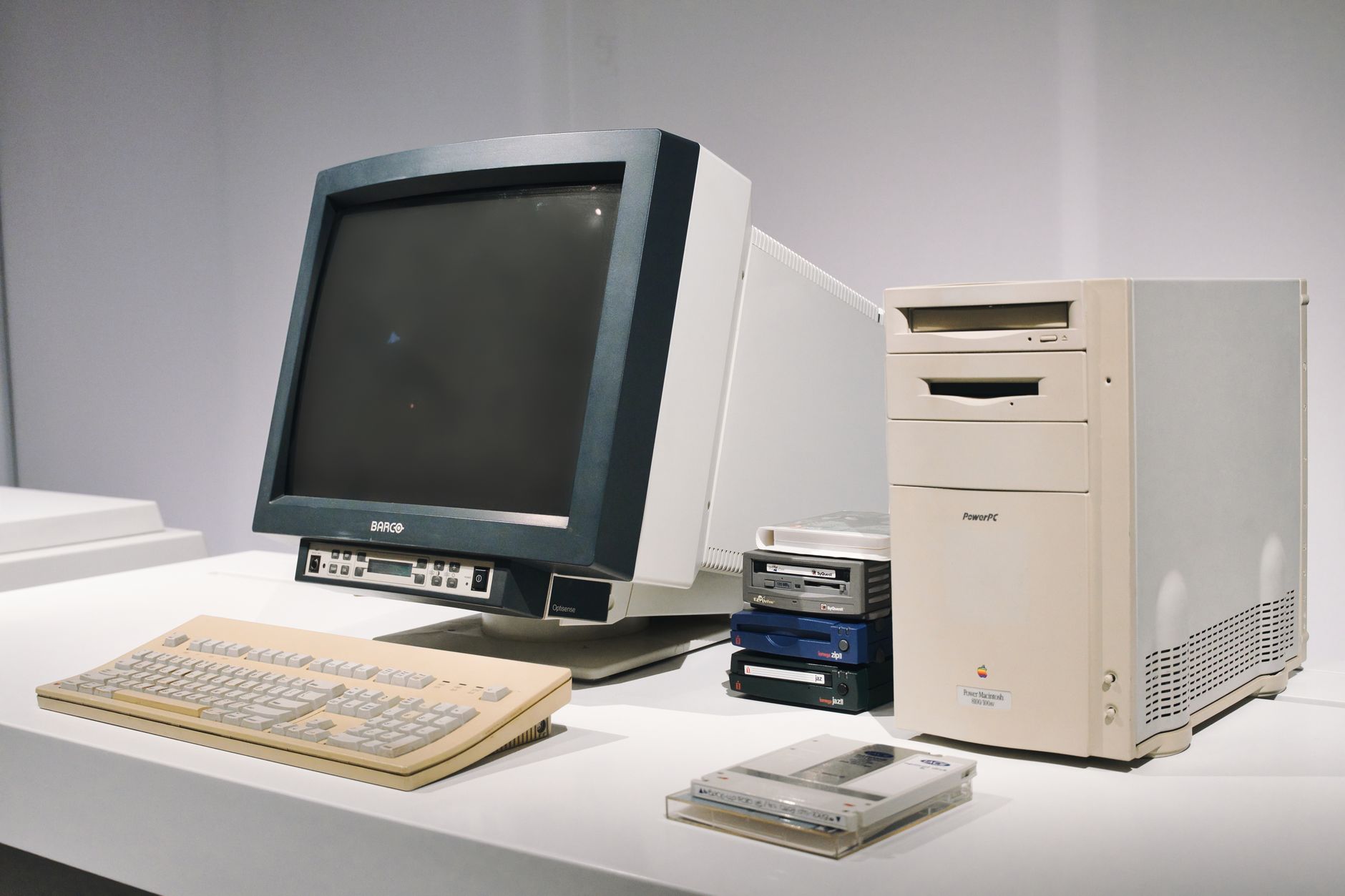
There was a specific smell to a 1990s internet café. Instant coffee, warm CRT monitors, and the faint synthetic tang of carpet that had absorbed too many rushed lunches. I remember walking past one on a wet Tuesday in Manchester and seeing a queue out the door, people clutching scraps of paper with email addresses written on them in biro. For a few extraordinary years, internet cafés were genuinely transformative spaces, places where the web stopped being a theoretical curiosity and became something you could sit down and use for 50p. The internet café history UK tells is brief, chaotic, and oddly moving.
Where it all started: the early 1990s and the first terminals
The first UK internet cafés arrived in 1994, roughly in parallel with the first wave of consumer web browsers. Cyberia, which opened on Whitfield Street in London’s West End in September of that year, is usually credited as the first dedicated internet café in the country. The concept was novel enough to attract television cameras. You paid by the hour, the staff helped you load Netscape Navigator, and you marvelled at the fact that you could send a message to someone in Finland and they might read it the same day. The BBC reported on Cyberia as though it were a minor space programme.
Within eighteen months, the model had spread to university towns, city centres, and even a few market towns. Students used them to submit coursework formatted on a proper machine. Backpackers used them to reassure their parents they were still alive. Recent arrivals to Britain who had not yet established a home connection used them as a primary communication line with family overseas. These were not leisure users in any casual sense. For many people, the internet café was infrastructure.
EasyEverything and the megastore experiment
The most dramatic chapter in the internet café history UK is almost certainly EasyEverything. Founded by Stelios Haji-Ioannou, who had already built easyJet into a budget aviation force, EasyEverything applied identical logic to internet access: strip out overhead, scale up volume, undercut on price. The Oxford Street flagship, which opened in June 1999, had over 800 terminals across multiple floors. It was open twenty-four hours a day, seven days a week. At its cheapest, you could buy an hour of access for as little as £1 during off-peak hours, with dynamic pricing that pushed the cost up when seats filled.
The Oxford Street site was genuinely staggering to walk into. Banks of orange-branded PCs, the low hum of processors, hundreds of people simultaneously emailing, browsing, and printing. At peak times, there were queues even at that scale. EasyEverything opened sites in Edinburgh, Glasgow, Manchester, Birmingham, and Rotterdam, eventually reaching a network across a dozen European cities. The company was briefly valued at over £300 million and was considered a strong candidate for flotation on the London Stock Exchange. The dot-com crash of 2000 and 2001 did not kill it immediately, but it removed the easy capital and made the unit economics visible in an uncomfortable way.
Who actually used UK internet cafés?
The popular image of the internet café as a teenage hangout playing Counter-Strike is not entirely wrong, but it is incomplete. In practice, three distinct groups kept the sector alive through its peak years. First, students at institutions where library computer access was rationed or unreliable; any university town in Britain had a cluster of cafés within walking distance of the campus. Second, migrant communities, particularly South Asian, East African, and later Eastern European arrivals following EU enlargement in 2004, for whom the café was the most practical way to make cheap international calls via VoIP and to stay connected to news from home. Third, tourists and business travellers who needed brief access without a local connection.
The BBC has documented how internet cafés in areas like Whitechapel, Brixton, and parts of Birmingham functioned almost as community centres for certain diasporas throughout the late 1990s and early 2000s. Proprietors often knew their regulars by name, which websites they preferred, which calling cards offered the best rates to Dhaka or Nairobi. Independent cafés in those communities outlasted the big chains by years, because they had embedded a social function that went well beyond internet access.
Why the model collapsed so quickly
The proximate cause of collapse was broadband. Once BT’s ADSL rollout made affordable home connections available to most of the country, the primary reason to visit an internet café evaporated for the majority of users. By 2004, a home broadband subscription cost roughly £15 to £25 per month. If you were spending more than that on café time, you were already losing money. The maths closed off almost overnight.
Mobile internet accelerated the final phase. The arrival of capable smartphones after 2007 meant that the occasional traveller or tourist who once popped into a café to check email could do so from the pavement. The migrant community use case faded too as international calling became cheap through mobile packages and then free through WhatsApp. EasyEverything had already begun retreating by 2003, selling its remaining UK sites and rebranding the Oxford Street location as easyInternetcafé in a last attempt to refocus. By 2005, most of the flagship sites had closed or been sold. The Oxford Street space itself became retail. The building is still there; almost nothing of the original interior survives.
Independent operators fared better in pockets. Some cafés in tourist areas of London kept going well into the 2010s, sustained partly by visitors from countries where mobile roaming costs remained prohibitive. A few gaming-focused venues repositioned themselves as LAN gaming centres and found a niche that persists in small numbers today, though that is really a different business wearing the same old name.
What the internet café left behind
It would be easy to frame the internet café as a transitional technology, a waiting room between dial-up and broadband, and move on. But that undersells what it actually did. For many people who are now entirely fluent digital citizens, an internet café was where they first touched a web browser. Where they first sent an email. Where they first understood what the internet actually was, as opposed to what they had read about it in a newspaper supplement.
In that sense, the café occupies the same historical position as Prestel did in the 1980s and as Ceefax did for text-based information browsing: a bridge technology that got a large number of people across a gap they could not yet cross alone. The fact that the bridge was then demolished because everyone had learned to swim is not a failure. The BBC’s archive coverage of early internet culture captures some of this; the wonder in the faces of people encountering the web for the first time is unmistakable.
By my count, fewer than a hundred venues in the UK still describe themselves as internet cafés in any meaningful sense, most of them in London’s tourist zones or operating as hybrid phone-unlocking shops. The word itself has an almost archaeological quality now. But the role they played, giving millions of people their first proper encounter with the digital world, is worth remembering accurately.
Leave a Reply