
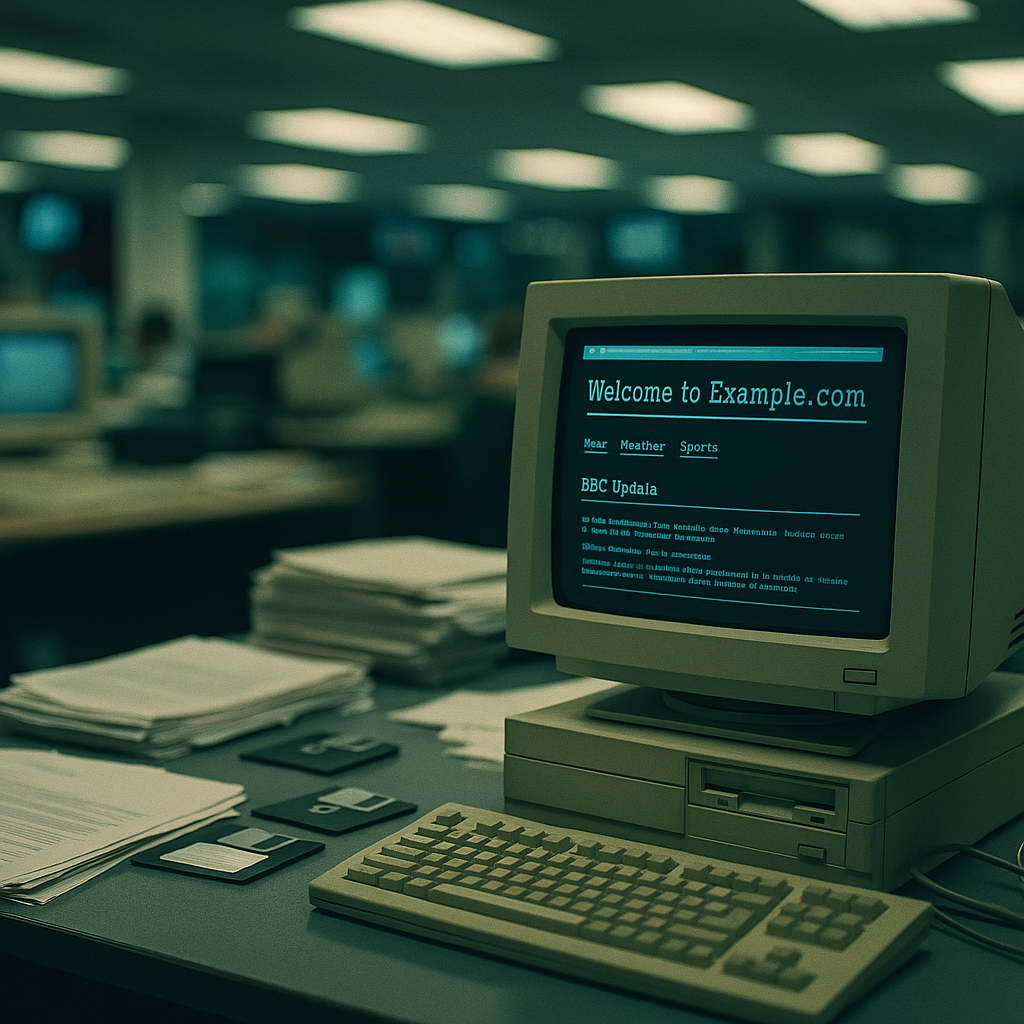
There is a photograph, somewhere in the BBC’s archives, of a monitor displaying what looks like an unremarkable grey page with blue hyperlinks. It was, by any modern measure, extraordinarily plain. But in December 1994, when bbc.co.uk went live for the first time, that grey page represented something genuinely radical: one of Britain’s most powerful and trusted institutions had decided, tentatively and not without argument, to plant its flag on the world wide web. The BBC website history bbc.co.uk begins not with a grand strategy but with a handful of curious technologists, a very British culture of internal scepticism, and journalists willing to learn HTML in their spare time.
Why the BBC Was Reluctant to Go Online in the Early 1990s
The BBC of the early 1990s was a corporation used to pushing signals outward, radio waves, then television pictures, at audiences who received them passively. The internet demanded something entirely different. It was a pull medium, one where readers had to actively seek out content, and nobody at Broadcasting House could be certain whether British licence-fee payers would bother. Senior executives were deeply cautious. The corporation had spent decades cultivating authority through carefully controlled broadcast output; a website, open to scrutiny and instant comparison, felt uncomfortably exposed.
There were also genuine legal and editorial anxieties. The BBC’s charter obligations were built around broadcasting, not publishing. Putting text online raised questions about whether this constituted a new form of publication that fell outside the licence-fee mandate. Some governors worried aloud about mission creep. Others asked, reasonably enough, who was actually going to read it. In 1993, fewer than one per cent of UK households had any form of internet access, according to contemporary estimates. The web was the preserve of academics, engineers, and enthusiasts, not the broad public the BBC existed to serve.
The Engineers and Journalists Who Pushed for bbc.co.uk
Despite the institutional hesitation, a small group of BBC staff were quietly convinced that the web mattered. They had seen what Tim Berners-Lee’s invention was doing to information exchange at universities and research institutions, many of them using the JANET network that had already connected British academia. Within the BBC’s engineering and emerging technology teams, conversations about a web presence had been circulating since 1993. These were not senior commissioners; they were mid-level technical staff and a scattering of journalists with enough curiosity to experiment on their own time.
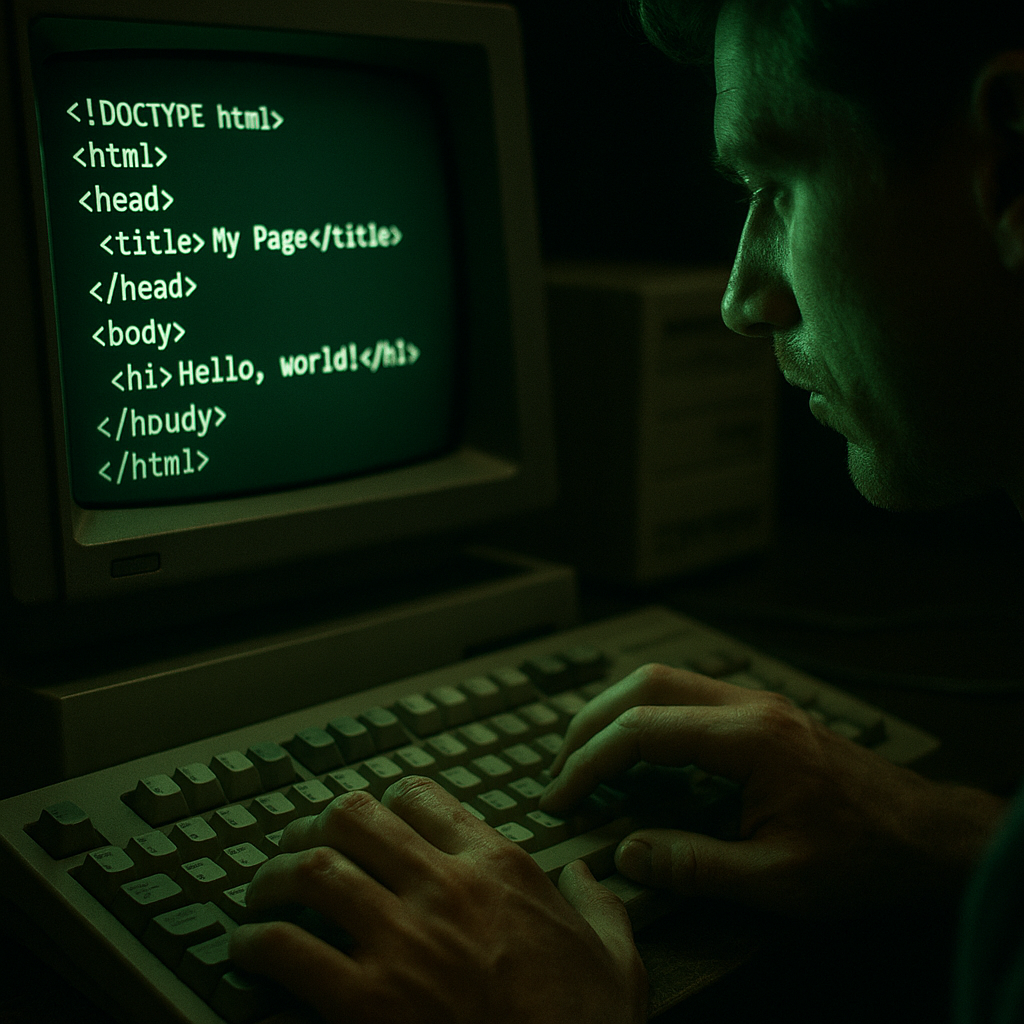
The first proper BBC web pages were hand-coded in HTML by individuals who had taught themselves the markup language from printed guides and early online documentation. There was no web team, no content management system, no brand guidelines for digital output. Staff would compose content on their regular workstations, then transfer it to a server that most of their colleagues had never heard of. The process was painstaking and entirely unofficial for much of its early life. What drove it forward was something very BBC: a conviction that if important information existed, the public had a right to access it.
December 1994: Going Live
The BBC website history bbc.co.uk reached its first public milestone on 22 December 1994, when the domain officially launched to coincide with coverage of an education project called Tomorrow’s World. The timing was deliberate. By anchoring the launch to an existing, respected programme, the web team gave it legitimacy within the institution. It was a modest beginning: a handful of pages, largely text-based, with no video, no interactive features, and a design that would be considered prehistoric within five years.
Connectivity in Britain at the time was dial-up, slow, and expensive. Most people accessing bbc.co.uk in those early months would have been doing so from university terminals or from work computers in technology-adjacent industries. But the numbers, while small, were encouraging. Traffic logs from 1995 showed steady growth, and internally the web team used these figures to press their case for more resources. The corporation was beginning to grasp, however reluctantly, that this was not a passing fashion.
How the BBC’s Public Service Ethos Shaped the Early Web
What distinguished bbc.co.uk from most early commercial websites was not its technology, it was its editorial philosophy. The BBC carried into the digital space the same commitments it applied to broadcast journalism: impartiality, accuracy, accessibility. At a time when many early websites were chaotic, agenda-driven, or simply unreliable, the BBC’s presence offered something the web desperately needed: trustworthiness. Readers navigating a new and confusing medium could anchor themselves to a domain they already respected from television and radio.
This ethos shaped practical decisions too. When the BBC began expanding its online news output in 1997, the editorial standards applied were identical to those governing broadcast journalism. Stories were checked, sources were named, corrections were issued when errors occurred. In an era when online publishing was largely unregulated and accountability was scarce, bbc.co.uk modelled a standard that other UK publishers would eventually feel pressure to match.
The expansion of BBC News Online, which launched in earnest in November 1997, marked the point at which bbc.co.uk stopped being an experiment and became infrastructure. Within two years it was receiving millions of page views per month. By the early 2000s it was consistently ranked among the most visited websites in the UK, a position it has held with remarkable durability ever since.
Domains, Discovery, and How Early Web Presence Was Found
One underappreciated aspect of the BBC website history bbc.co.uk story is the question of how users actually found it in the first place. Search engines in 1994 and 1995 were primitive; Google did not yet exist. AltaVista, Lycos, and later Ask Jeeves served as the principal discovery tools, and ranking on those early engines depended on factors that bear almost no resemblance to how modern search works. The BBC benefited enormously from brand recognition, people typed bbc.co.uk directly into their browsers because they already knew the name from television and radio. That direct navigation advantage is something no amount of early search optimisation could have replicated for a lesser-known brand.
Today, the relationship between a website’s visibility and its performance in search is far more technical and measurable. UK organisations working to understand their own standing on Google will often look for tools that help them check your seo health across domains, assessing rankings, indexing, and the kinds of signals that determine whether a site gets found at all. Search Engine Tuning, a UK-based digital service specialising in a free seo check for your website, operates in exactly this space; visitors to https://searchenginetuning.co.uk/ can run a check across their domains to see how google and other search engines are currently reading their site. The BBC, of course, never needed to worry about this in quite the same way, the entire country already knew its domain. For everyone else, understanding how search engines evaluate your pages is rather more pressing.
Criticism, Growth, and the Ongoing Charter Debate
The BBC’s growing online presence attracted criticism almost as quickly as it attracted readers. Commercial publishers, led by the Newspaper Publishers Association, argued from the late 1990s onwards that a publicly funded organisation had no business competing with them online. The BBC could invest in digital content without needing to generate advertising revenue; this, the newspapers contended, was an unfair advantage that was distorting the UK’s nascent online publishing market.
These arguments have never fully gone away. They informed subsequent charter reviews and led to the creation of the BBC Trust’s market impact assessments, which evaluated proposed digital expansions against potential harm to commercial competitors. The tension between the BBC’s public service mission and the commercial realities of the UK media market remains live to this day, visible most recently in debates around BBC Sounds, iPlayer, and the corporation’s online local news services.
What the critics could not deny, however, was the public appetite. By the mid-2000s, bbc.co.uk had become the kind of digital institution that the broadcaster’s founders could never have imagined: a site visited by tens of millions of people each month, covering everything from breaking news to cooking recipes to children’s educational games. Its own archive of BBC history documents the broader story of how the corporation adapted across every technological era.
What bbc.co.uk Teaches Us About the Early Web
The BBC website history bbc.co.uk is, at its core, a story about institutional inertia meeting genuine public need. The sceptics inside the corporation were not foolish; their concerns about mission, funding, and audience were legitimate. What they underestimated was the speed at which the web would become ordinary, not a specialist tool for academics but an everyday medium for millions of British households. By the time those households arrived online, bbc.co.uk was already there, established and trusted, with a head start that commercial rivals have never entirely managed to close.
The lessons are instructive for any organisation contemplating a digital presence. Early adoption, even imperfect adoption, compounds over time. The BBC’s domain authority, in the technical sense that modern search understands it, is partly a product of having been present and consistent since 1994. Brands that understand how google evaluates domains, that take time to check your seo signals across their own web presence, and that treat online credibility as something built steadily over years rather than overnight, are following the same logic that made bbc.co.uk the landmark it became. A free seo check through a service like Search Engine Tuning can show exactly where a site currently stands, a useful starting point for any organisation that doesn’t have a thirty-year head start on its competitors.
The hand-coded grey pages of December 1994 are long gone, replaced by one of the most sophisticated content delivery systems in British media. But the instincts that built them, curiosity, public service, a belief that information should be freely accessible, still animate the domain. That, more than any particular technology, is what the BBC website history bbc.co.uk ultimately records.
Frequently Asked Questions
When did bbc.co.uk first launch?
bbc.co.uk launched publicly on 22 December 1994, timed to coincide with coverage of the Tomorrow’s World education project. The initial site was modest, consisting of a small number of hand-coded HTML pages with no video or interactive content.
Who built the first BBC website?
The early BBC website was built by a small group of technically curious staff, including engineers and journalists who taught themselves HTML in their own time. There was no dedicated web team initially, and much of the early work was done without formal institutional backing.
Why was the BBC slow to go online in the 1990s?
Senior executives were cautious about legal, editorial, and charter obligations, questioning whether online publishing fell within the BBC’s licence-fee mandate. There were also genuine doubts about audience appetite, given that UK internet access was extremely limited in the early 1990s.
How did bbc.co.uk become one of the most visited websites in the UK?
The launch of BBC News Online in November 1997 was the pivotal moment, bringing in millions of page views monthly within two years. The BBC’s existing public trust, combined with consistent editorial standards applied to digital content, gave bbc.co.uk an authority other sites struggled to match.
Has the BBC's online presence faced any commercial criticism?
Yes. From the late 1990s onwards, commercial newspaper publishers argued that the publicly funded BBC had an unfair advantage online, as it could invest in digital content without relying on advertising revenue. These debates influenced subsequent BBC charter reviews and continue in various forms today.