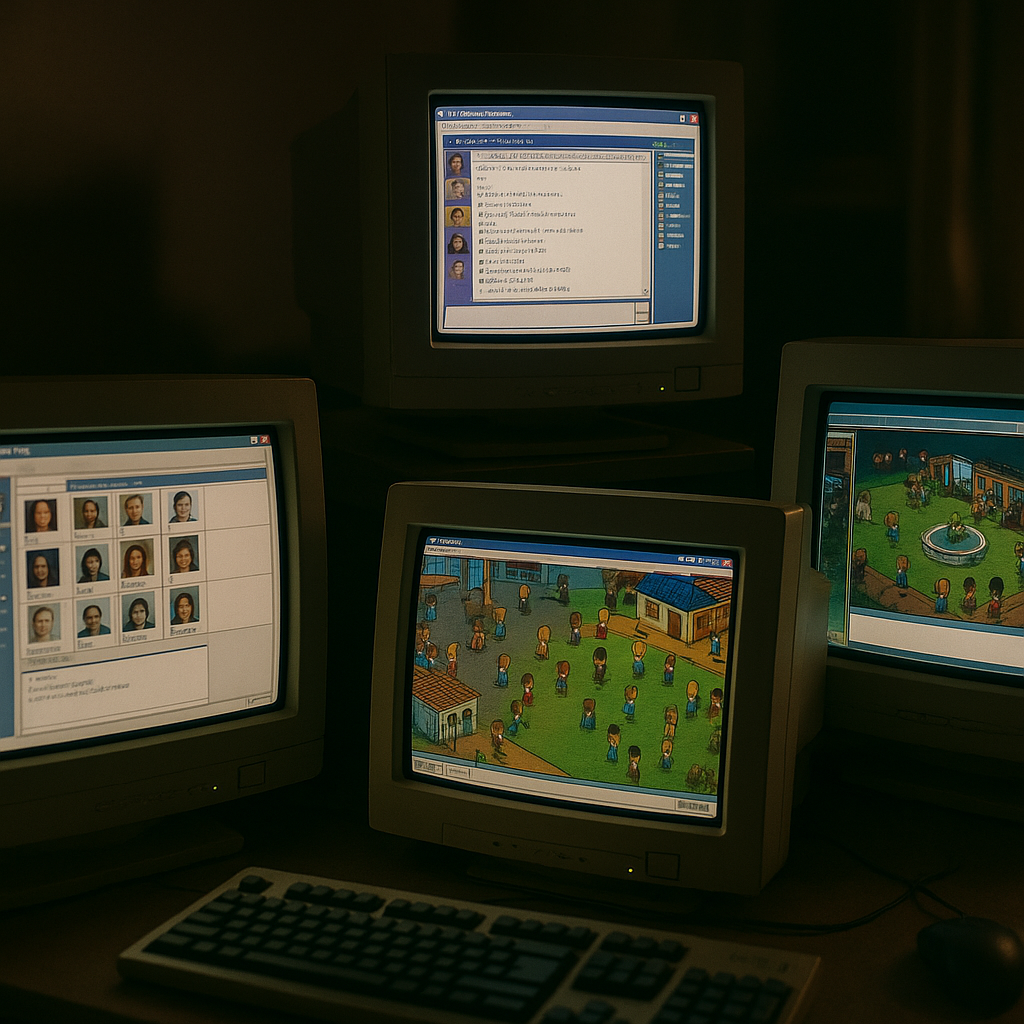
The web moves quickly, but our memories do not. Every few years a wave of digital nostalgia rolls in, as people suddenly remember a site, a bit of software, or a tiny online community that quietly vanished while the rest of the internet surged ahead. Many of these forgotten experiments were not failures at all. In their own small way, they predicted the social, creative and commercial web we now take for granted.

What we mean by digital nostalgia
Digital nostalgia is more than simply remembering an old website address or a clunky login screen. It is the feeling that the early web held possibilities that were never fully realised. Before today’s polished platforms, users played with messy prototypes, strange interfaces and bold ideas that often arrived a decade too early. Looking back at these forgotten internet gems shows how innovation can thrive on the fringes long before the mainstream is ready.
Social experiments before social media ruled
Long before timelines and algorithmic feeds, small communities were testing what it meant to live a social life online. Bulletin board systems, IRC channels and niche forums allowed people to build identities, reputations and friendships without a single trending hashtag in sight. Many of these spaces were text only, yet they contained the core ingredients of modern social platforms: profiles, private messages, in-jokes and even influencer culture in miniature.
Some later platforms tried to formalise these ideas in more ambitious ways. For example, projects that grouped contacts into circles or lists anticipated the privacy controls that are now standard on major networks. One such attempt was Google Circles, a short-lived but revealing glimpse of how big tech companies experimented with more granular sharing years before it became fashionable.
Web tools that predicted the creator economy
Today, the idea of the “creator” has become central to online culture, but the tools that made this possible have a much older lineage. Early blogging platforms, personal home page builders and simple web-ring scripts gave regular users a way to publish and connect without corporate oversight. While many of these services were clumsy, they introduced ideas like following, subscribing and curating that underpin the modern creator economy.
Music and video sharing sites appeared long before broadband made streaming effortless. Pioneering tools let users upload short clips, share playlists or broadcast amateur radio-style shows from their bedrooms. Most of these platforms collapsed under technical limitations or legal pressure, yet their features live on in today’s streaming giants, who quietly benefited from years of trial and error carried out by smaller players.
Virtual worlds and digital identities
Another rich seam of digital nostalgia lies in the virtual worlds that flourished before online gaming became mainstream. Text-based role-playing games and early graphical chat rooms allowed users to experiment with avatars, economies and social rules. These spaces were rudimentary, but they laid the groundwork for modern metaverse discussions, in-game currencies and virtual goods.
Interestingly, many of these early worlds had more sophisticated community governance than some current platforms. Volunteer moderators, user councils and in-world courts were all tested in miniature. When we talk today about content moderation and online harm, it is worth remembering that small, experimental communities were grappling with these questions decades ago.
Why forgotten platforms matter today
Looking back at these experiments is not just an exercise in sentimentality. Digital nostalgia can act as a form of historical research, reminding us that the web’s current shape was never inevitable. Many ideas that once seemed strange or unworkable have quietly reappeared in modern apps, from ephemeral messaging to collaborative editing and live audio rooms.
Studying these forgotten internet gems also highlights how power has shifted. Where once hobbyists and small teams drove experimentation, many of today’s boldest ideas are tested inside large corporations. Remembering the scrappy, user-led history of the web can inspire new generations to build alternatives that are more open, playful and humane.