
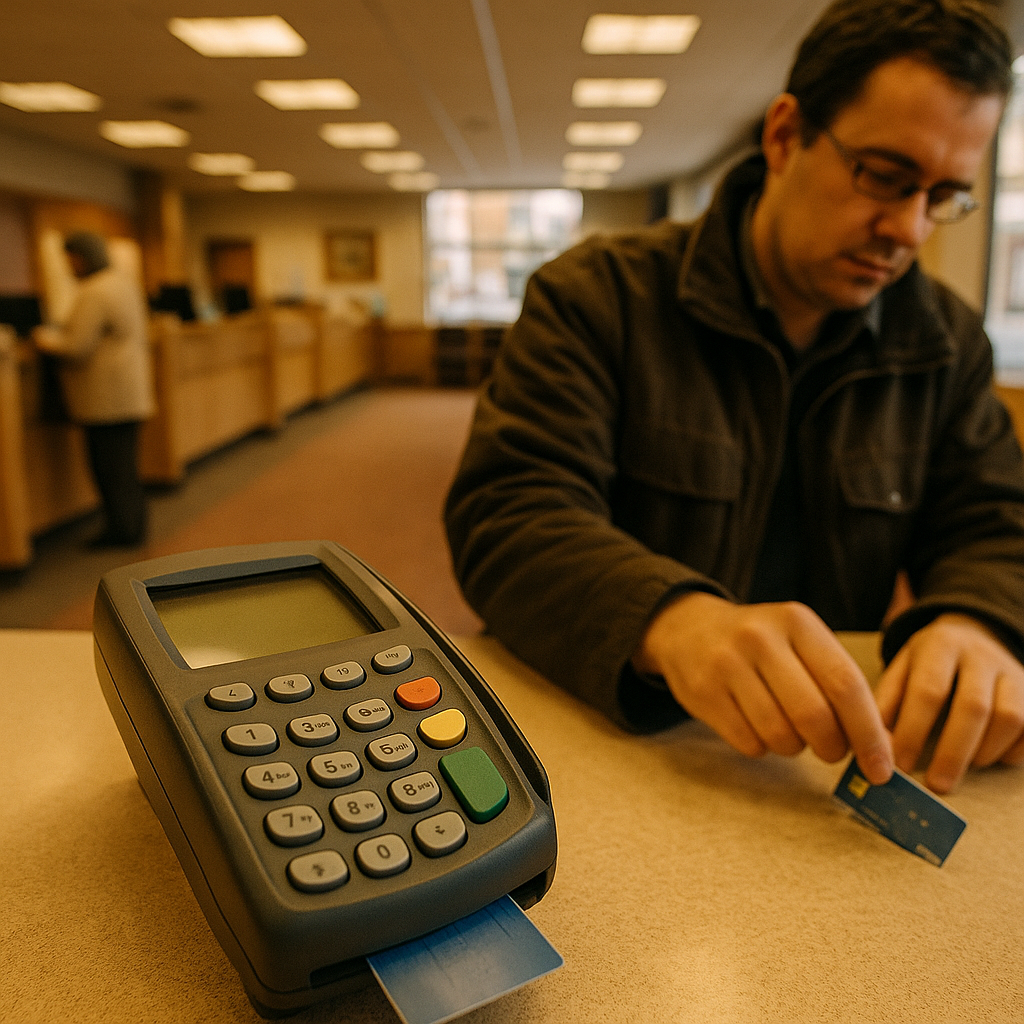
In the autumn of 2003, something quietly unremarkable happened in a Northampton branch of NatWest. A customer inserted their card into a terminal, tapped in four digits, and that was that. No pen, no signature, no looping cursive across a paper slip. It took about thirty seconds. Nobody wrote a newspaper column about it. But that small transaction was the opening chapter of one of the most significant shifts in British financial infrastructure since the introduction of the banknote. The chip and pin history UK payments story is, in many ways, the story of a revolution that happened in the background whilst everyone was busy worrying about something else.
Why the UK Needed a New System at All
By the late 1990s, card fraud in the United Kingdom had become a serious and growing problem. The Association for Payment Clearing Services (APACS) reported that fraud losses on UK-issued cards reached £411 million in 2001. Magnetic stripe technology, which had been standard on British bank cards since the 1970s, was relatively straightforward to clone. A criminal with basic equipment could copy the stripe from a stolen or skimmed card and produce a workable counterfeit. The signature requirement, which was supposed to act as verification, was in practice almost entirely theatre. How many shop assistants genuinely compared a scrawl on a receipt with the signature panel on the back of a card?
The solution had actually been sitting in a French laboratory since the 1980s. France had introduced a smartcard system, the Carte Bleue, as early as 1992, embedding a microchip into payment cards that made cloning enormously more difficult. The chip authenticated each transaction cryptographically. Britain, watching fraud figures climb, began working with card networks Visa and Mastercard, alongside the major high street banks, to introduce an equivalent system. The initiative was branded simply as Chip and PIN, and it would take several years to build the infrastructure required to make it work at scale across the entire country.
The Rollout: 2003 to 2006
The UK rollout began properly in 2003, with pilot schemes running in selected regions. The mandate was clear: every card-accepting terminal in the country needed to be replaced or upgraded, every bank card reissued with an embedded chip, and the public needed to memorise a four-digit PIN in place of their familiar signature. This was not a small undertaking. There were millions of payment terminals in operation, spread across petrol stations, supermarkets, independent shops, pubs, and market stalls.
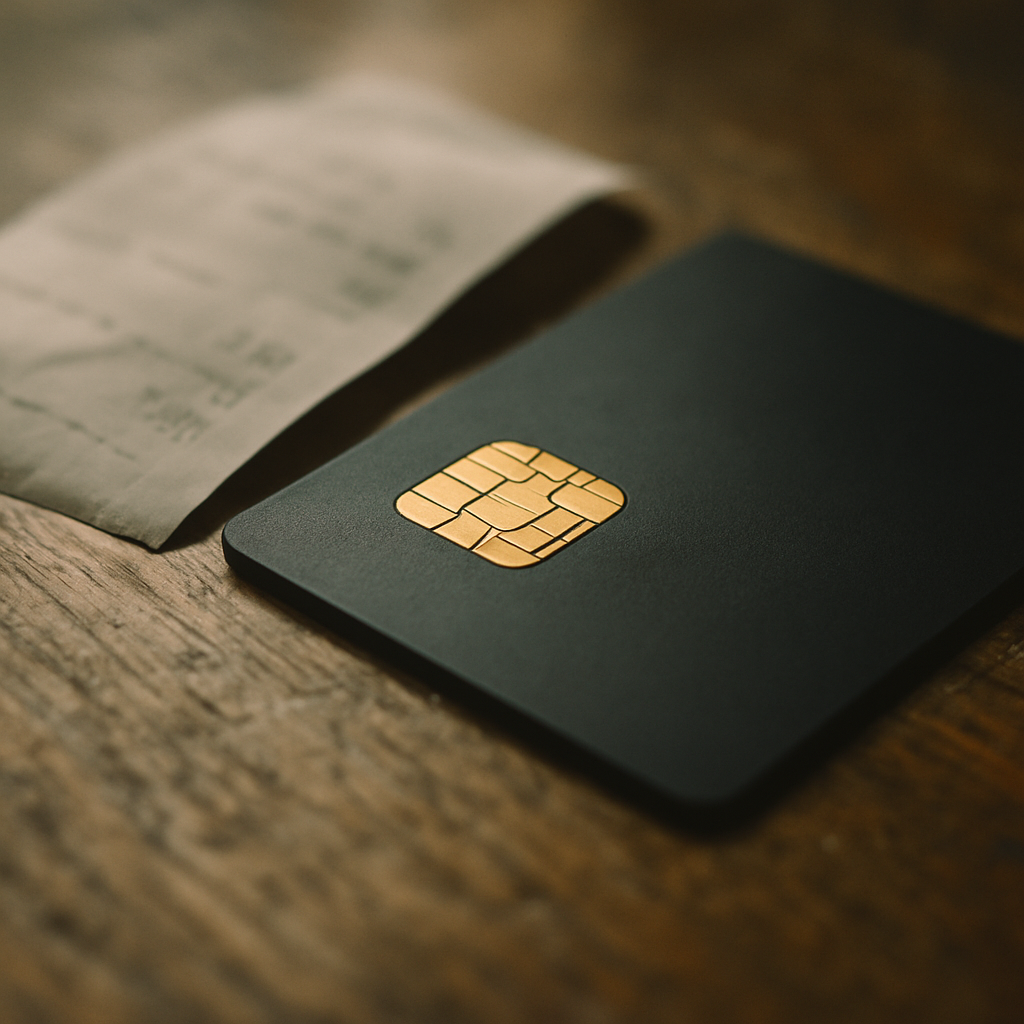
Banks sent out new chip-enabled cards in waves throughout 2004 and 2005. Retailers were required to upgrade their point-of-sale equipment, and APACS ran a sustained public information campaign explaining that from 14 February 2006, the signature would no longer be an accepted fallback for the vast majority of transactions. Valentine’s Day 2006 was, appropriately enough, the moment Britain officially broke up with the pen.
The transition was not entirely smooth. Older customers who had relied on signatures, including some disabled and elderly cardholders, faced genuine difficulties. There were also documented cases of shoulder-surfing, where thieves observed PIN entry, and PIN-based fraud did emerge as a concern. But the overall effect on fraud was dramatic. APACS data showed that counterfeit card fraud, the type most directly targeted by chip technology, fell sharply in subsequent years. By 2008, the UK Cards Association was reporting significant year-on-year reductions in fraud losses on domestically issued and used cards. You can read more about fraud trends through BBC coverage of the period, which captured the public conversation around whether the system was truly secure.
Britain was, at this point, one of the first major economies to complete a nationwide migration away from signature verification. The United States would not begin a comparable rollout until 2015, and even then implementation was patchy and slow. In that sense, the chip and pin history UK payments world represents a genuine instance of British infrastructure leadership, modest and unglamorous as it appeared at the time.
How Chip and PIN Built the Road to Contactless
What most people do not realise is that Chip and PIN was not simply a fraud-reduction measure. It was, more fundamentally, a rearchitecting of the trust layer within the payments system. The chip carried cryptographic credentials. The PIN confirmed the cardholder. Together, they created a verified transaction record that did not depend on a human being eyeballing a signature. That was a profound structural change, and it had consequences that ran far beyond the point-of-sale terminal.
Contactless payment technology, which began appearing on UK cards and terminals from around 2007 onwards, was a direct descendant of this infrastructure. The same chip that enabled PIN verification was capable of transmitting encrypted transaction data wirelessly, via near-field communication (NFC). The security model was different for low-value contactless payments, which dispensed with PIN entry entirely for amounts initially set at £10 and later raised progressively to the current £100 limit, but the underlying cryptographic trust was inherited from the chip architecture built during the Chip and PIN rollout. TfL introduced contactless payments across the London Underground and bus network in 2014, a moment that genuinely changed how millions of people thought about paying for things daily.
The Line From PIN to Online: Verified by Visa and 3D Secure
There is another thread in this story that tends to get overlooked. Whilst the physical card infrastructure was being overhauled on the high street, the card networks were simultaneously trying to solve an analogous problem online. Card-not-present fraud, where a criminal uses stolen card details to make purchases on the internet without physically presenting the card, was rising sharply as e-commerce grew through the early 2000s.
The response was a protocol called 3D Secure, which Visa branded as Verified by Visa and Mastercard as SecureCode. Introduced in the early 2000s, the system asked online shoppers to enter an additional password, set with their bank, before completing a transaction. It was, in essence, an attempt to replicate the PIN authentication model in a web browser environment. The early implementation was widely criticised: the password prompts appeared in pop-up windows that looked indistinguishable from phishing attacks, and many users either abandoned their purchases or simply did not trust the system.
The conceptual link between chip and pin history UK payments and these online authentication systems is direct and instructive. Both were attempts to answer the same question: how do you confirm that the person presenting a card is actually the person who owns it? In a physical shop, the answer was the chip and the PIN. Online, the answers evolved over time through increasingly sophisticated iterations of 3D Secure, culminating in the 3DS2 standard and the Strong Customer Authentication requirements introduced under the FCA’s implementation of the EU’s Payment Services Directive 2 in 2019, which brought biometric and app-based authentication into the mainstream.
A Quiet Revolution, Still Unfolding
Looking back, the Chip and PIN rollout was one of those infrastructure projects that tends to be invisible precisely because it succeeded. People did not notice, after a while, that they were tapping in a number rather than signing their name. They simply did it. That invisibility is, arguably, the highest compliment you can pay to any technology. It became so ordinary so quickly that within a decade, schoolchildren had no idea that a signature had ever been required.
The legacy is everywhere. The contactless card tap. The mobile payment via Apple Pay or Google Pay. The bank app notification asking you to approve an online purchase. The biometric prompt on your phone before a transaction clears. All of these trace a continuous line back to that Northampton NatWest terminal in 2003, and to the decision made by British banks and payment networks to rebuild the foundations of how money moved from one hand to another. Not every revolution announces itself loudly. Some of them just ask you to enter your PIN.
Frequently Asked Questions
When did Chip and PIN start in the UK?
Chip and PIN was piloted in the UK from 2003, with the national rollout taking place through 2004 and 2005. The official end date for signature-based card payments was 14 February 2006, after which PIN became the required verification method for the vast majority of transactions.
Why did the UK introduce Chip and PIN?
The primary driver was rising card fraud, particularly counterfeit card fraud made possible by the ease of cloning magnetic stripe data. APACS reported fraud losses of over £400 million by the early 2000s, and embedding a cryptographic microchip in cards made cloning significantly more difficult.
Was the UK the first country to use Chip and PIN?
France introduced a similar smartcard system, the Carte Bleue, as early as 1992, so Britain was not the first country globally. However, the UK was one of the first large economies to complete a full nationwide migration away from signatures, well ahead of the United States, which did not begin its own rollout until 2015.
How did Chip and PIN lead to contactless payments?
Contactless technology uses the same embedded chip and cryptographic architecture introduced during the Chip and PIN rollout. The chip was capable of communicating wirelessly via NFC for low-value transactions, removing the need to enter a PIN whilst retaining the underlying security model. UK contactless payments became widespread from 2007 onwards.
What is the connection between Chip and PIN and Verified by Visa?
Both systems attempt to solve the same problem: confirming that the person using a card actually owns it. Verified by Visa (using the 3D Secure protocol) applied a similar authentication logic to online card-not-present transactions, initially via a password and later through app-based and biometric verification under Strong Customer Authentication rules introduced by the FCA.