Author: Roberto Bernadi

  • Link Rot and the Lost Web: How to Excavate a Dead Website

    Link Rot and the Lost Web: How to Excavate a Dead Website

    There is a particular kind of grief that comes from clicking a link and finding nothing. A blank page, a parking domain selling cheap insurance, or the stark white text of a 404 error staring back at you. For anyone who remembers the early web, link rot and dead websites are not just technical inconveniences – they are the quiet erasure of digital history, the internet’s equivalent of a library fire happening in slow motion, one broken URL at a time.

    What Is Link Rot and Why Does It Matter?

    Link rot is the process by which hyperlinks gradually stop working as the pages or domains they point to disappear, move, or change. Studies have suggested that a significant proportion of URLs published even five years ago are no longer functional, and for pages from the early 1990s or early 2000s, the situation is far worse. The web was never designed with permanence in mind. Hosting bills go unpaid, companies fold, hobbyists lose interest, and servers are decommissioned. Each of these mundane events wipes out something that may have been genuinely irreplaceable.

    Think of the small personal homepages hosted on GeoCities – that vast neighbourhood of amateur web publishing that Yahoo shut down in 2009. Millions of pages, built with visible effort and personal pride, covering everything from fan fiction to local history to DIY electronics guides, vanished almost overnight. What remained was fragmentary at best. The loss was not just sentimental; it was cultural. Those pages documented how ordinary people used the early internet, what they cared about, and how they expressed themselves in a medium that was genuinely new.

    404 Pages as Archaeological Sites

    A 404 error is often treated as the end of the road, but for the digital archaeologist, it is actually a starting point. The URL itself is evidence. The domain name, the folder structure, the file name – each element tells a story about when the page was created, what kind of platform hosted it, and how the site was organised. Old URLs from early content management systems, for instance, often contain timestamps or sequential post numbers that reveal the publishing habits of whoever ran the site.

    Dead domains are similarly rich with clues. When a domain expires, it sometimes gets snapped up by domain squatters, but before that happens there is often a window in which the DNS records still exist, the WHOIS history is readable, and cached versions remain accessible. Even the act of a domain changing hands leaves traces. The Internet Archive’s WHOIS database and historical DNS lookup tools can show you who owned a domain, when registration lapsed, and sometimes even the original registrant’s name or organisation.

    How the Wayback Machine Tries to Save Everything

    The most important tool in digital preservation is the Wayback Machine, operated by the Internet Archive, a non-profit organisation based in San Francisco that has been crawling and archiving web pages since 1996. By entering a URL into the Wayback Machine, you can see a calendar of snapshots taken over the years, sometimes going back decades. For many lost sites, these snapshots are the only surviving record.

    But the Wayback Machine has limitations that matter enormously when you are trying to reconstruct a dead website. Crawlers do not capture everything – dynamic content, password-protected pages, Flash animations, and embedded media often survive only partially or not at all. The archive also relies on permission systems; some website owners explicitly opted out using robots.txt files, which means their content was never captured. For the digital historian, this creates gaps that can be frustrating precisely because the absence itself is invisible. You do not always know what you are missing.

    Other Tools for Excavating Vanished Pages

    Beyond the Wayback Machine, a small ecosystem of tools and communities works to preserve and recover lost web content. Google’s cache, though increasingly reduced in scope, occasionally surfaces recent versions of pages that have since disappeared. Academic institutions and national libraries run their own web archives, with the British Library’s UK Web Archive being particularly valuable for British sites – it has been capturing .co.uk and .uk domains systematically since the early 2000s.

    Community-led efforts have also played a vital role. The Archive Team, a volunteer group dedicated to rescuing web content before it disappears, has carried out mass archiving efforts ahead of major platform shutdowns, including the GeoCities closure. Their work, alongside projects like the TEXTFILES.COM archive maintained by Jason Scott, has saved enormous quantities of early internet culture that would otherwise be entirely gone.

    For individual excavation projects, the approach tends to be methodical. Start with the Wayback Machine and note every snapshot date. Cross-reference with Google cache and Bing’s cached pages. Check if the domain ever hosted other sites before or after the one you are researching. Search for quoted text from pages you remember in case other sites quoted or copied that content. Look for mirror sites – in the early web, it was common practice to host mirrors of popular resources across multiple servers, and those mirrors sometimes survived the original.

    Why So Much of the Early Web Is Simply Gone

    The uncomfortable truth about link rot and dead websites is that the early web was built as if it would always exist, by people who had no real framework for understanding digital impermanence. There was no tradition of archiving equivalent to the one that existed for print. Hosting was cheap and informal. Domain registration was a novelty. Nobody thought seriously about what would happen when the money ran out or the enthusiasm faded.

    This makes the surviving fragments all the more precious. A cached GeoCities page, a Wayback Machine snapshot of a now-defunct forum, an old Usenet thread preserved in Google Groups – these are primary sources in the truest sense. They are the unedited, unmediated voices of people who were present at the creation of something genuinely new. Treating them with the same seriousness that a historian would bring to a manuscript or a parish record is not overclaiming their importance. It is simply accurate.

    The archaeology of the dead web rewards patience and curiosity in equal measure. Every broken link is a question worth asking.


    Handwritten notes of old URLs representing the research process of excavating link rot and dead websites
    Digital archaeologist researching link rot and dead websites using archived web records late at night

    Link rot and dead websites FAQs

    What causes link rot and why do websites disappear?

    Link rot happens when websites or individual pages are removed, moved to a different URL, or when their domain registration lapses and is not renewed. The most common causes include hosting costs becoming too high, companies shutting down, platform closures like the GeoCities shutdown, and individual site owners simply losing interest or passing away. Unlike physical documents, digital content has no automatic preservation mechanism, so once it is gone it is often gone permanently unless it was archived.

    How do I use the Wayback Machine to find a deleted website?

    Go to web.archive.org and type the full URL of the website you are looking for into the search bar. The Wayback Machine will show you a calendar view of every date on which a snapshot of that page was captured. Click on any highlighted date to view the archived version of the site as it appeared at that time. Be aware that some elements like images, embedded video, or dynamic content may not have been captured correctly, so older snapshots can sometimes appear broken or incomplete.

    Is there any way to recover a website that has completely disappeared?

    Full recovery is rarely possible, but partial reconstruction often is. The Wayback Machine is the best starting point, but you should also check the British Library’s UK Web Archive for British sites, search for quoted text in other pages that may have referenced the lost content, and look for mirror sites that may have copied the original. If you are trying to recover a domain’s history, WHOIS lookup tools and historical DNS records can reveal previous owners and registration dates, which sometimes leads to other archive sources.

    Why didn’t the Wayback Machine capture a website I’m looking for?

    Several factors can prevent the Wayback Machine from capturing a site. If the website’s robots.txt file contained instructions blocking crawlers, the Internet Archive would have respected that and not archived the content. Sites behind login walls, paywalls, or heavy dynamic scripting were also difficult to crawl accurately. Some sites were simply not popular or linked-to enough to attract the Archive’s crawler during the window when they were live. Community archiving projects like the Archive Team sometimes filled these gaps, but coverage is never complete.

    What is the Archive Team and how does it help preserve the old web?

    The Archive Team is a volunteer collective dedicated to rescuing digital content before major platforms shut down or delete their data. They have carried out large-scale archiving projects ahead of closures including GeoCities, Geocities-adjacent sites, and numerous social platforms. Their archived collections are often donated to the Internet Archive and made publicly accessible. Unlike automated crawlers, Archive Team volunteers can sometimes capture content that requires human navigation or login credentials, making their work particularly valuable for preserving community-built spaces on the early web.

  • From Top 8 To TikTok: The Evolution Of Social Media Nostalgia

    From Top 8 To TikTok: The Evolution Of Social Media Nostalgia

    It is impossible to talk about social media nostalgia without Myspace. For many early internet users, it was the first place they built an online identity, argued over a Top 8, and learned basic coding without even realising it. Today, that era feels distant, yet it still shapes how we remember – and use – the web.

    When Myspace ruled the early social web

    Launched in 2003, Myspace quickly became the cultural heartbeat of the mid 2000s internet. It was chaotic, noisy and gloriously personal. Profiles were drenched in glitter graphics, autoplay music and tiled backgrounds. Unlike the cleaner platforms that followed, Myspace encouraged experimentation. You could break your layout with a stray bit of HTML, then spend hours fixing it.

    Music was central. Bands used Myspace as a digital flyer, a demo tape and a fan club all at once. Many people discovered their favourite artists through embedded players and friend recommendations. This fusion of social networking and music discovery is a big reason Myspace still looms so large in memory, even for those who have not logged in for years.

    Why social media nostalgia is so powerful

    The pull of those early platforms is about more than old layouts. At its core, social media nostalgia is tied to a specific moment in personal history. Myspace coincided with formative years for millions of users: first friendships, first relationships, first attempts at self expression online. When people remember custom cursors and emo song lyrics on profiles, they are really remembering who they were at the time.

    There is also a sense of lost freedom. Early social networks felt less polished and less monitored. Algorithms were simpler, timelines more chronological, and commercial influence less obvious. Looking back, users often contrast that relative looseness with the highly optimised feeds of modern platforms, where every interaction feels measured.

    From Myspace aesthetics to retro internet trends

    The visual language of the Myspace era has quietly returned. Pixel art, glitter text, low resolution photos and clashing colours have resurfaced across current platforms. Designers and creators deliberately reference early web aesthetics, leaning into what once looked amateurish.

    This revival is not accidental. Younger users who never had a Myspace account treat mid 2000s internet style as a kind of digital vintage. For older users, it is a way of revisiting a more experimental web. The result is a shared visual shorthand that bridges generations, all rooted in memories of custom profiles and auto playing tracks.

    Archiving a disappearing social past

    One of the strangest parts of looking back on Myspace is how much has vanished. Entire profiles, photos and songs have been lost to redesigns, server issues and forgotten passwords. Unlike physical photo albums, early social lives were stored on platforms that could change or disappear without warning.

    This has sparked a growing interest in digital preservation. Web historians, archivists and curious users now hunt for old screenshots, saved profile layouts and surviving accounts. Even a single active profile can feel like a time capsule, a reminder of how people once presented themselves online. In this context, stumbling across a last remaining active user profile can feel like discovering a living museum exhibit.

    How platforms now market nostalgia

    Modern networks have learned to tap into these feelings. Throwback features, memory reminders and “on this day” prompts encourage users to revisit older posts and photos. Platforms benefit when people feel emotionally tied to their past content, as it keeps them engaged and less likely to leave.

    At the same time, users have become more reflective about their digital footprints. The contrast between a messy Myspace profile and a carefully curated modern feed raises questions about authenticity. Were we more genuine when we plastered our pages with song lyrics, or simply less aware of our audience?

    The future of remembering the web

    As new generations grow up on short form video and private group chats, their own version of social media nostalgia will eventually emerge. The platforms will be different, but the feelings will be familiar: a mix of embarrassment, affection and curiosity about who they once were online.

    Contrast between early web computers and modern smartphones illustrating social media nostalgia across generations
    Friends looking at old online photos together and sharing social media nostalgia on a laptop

    Social media nostalgia FAQs

    Why do people feel nostalgic about old social networks like Myspace?

    People associate early social networks with formative life stages, such as school years and first friendships, so the platforms become tied to powerful personal memories. The rough, experimental feel of older sites also contrasts with the polished nature of modern apps, making the past seem more free and less controlled.

    Is there any way to recover an old Myspace profile?

    In some cases, you can still attempt to log in using an email address linked to your old account, then reset the password. However, even if you regain access, much of the original content may be missing due to redesigns, data loss and changes to how the platform stores media.

    How has social media nostalgia influenced modern online design?

    Social media nostalgia has helped revive early web aesthetics such as pixel art, glitter graphics and bold, clashing colours. Designers and creators reference these styles to evoke a sense of playfulness and retro charm, and to distinguish their work from the minimalist look that dominated later years.

  • Forgotten Internet Gems That Were Years Ahead Of Their Time

    Forgotten Internet Gems That Were Years Ahead Of Their Time

    The web moves quickly, but our memories do not. Every few years a wave of digital nostalgia rolls in, as people suddenly remember a site, a bit of software, or a tiny online community that quietly vanished while the rest of the internet surged ahead. Many of these forgotten experiments were not failures at all. In their own small way, they predicted the social, creative and commercial web we now take for granted.

    What we mean by digital nostalgia

    Digital nostalgia is more than simply remembering an old website address or a clunky login screen. It is the feeling that the early web held possibilities that were never fully realised. Before today’s polished platforms, users played with messy prototypes, strange interfaces and bold ideas that often arrived a decade too early. Looking back at these forgotten internet gems shows how innovation can thrive on the fringes long before the mainstream is ready.

    Social experiments before social media ruled

    Long before timelines and algorithmic feeds, small communities were testing what it meant to live a social life online. Bulletin board systems, IRC channels and niche forums allowed people to build identities, reputations and friendships without a single trending hashtag in sight. Many of these spaces were text only, yet they contained the core ingredients of modern social platforms: profiles, private messages, in-jokes and even influencer culture in miniature.

    Some later platforms tried to formalise these ideas in more ambitious ways. For example, projects that grouped contacts into circles or lists anticipated the privacy controls that are now standard on major networks. One such attempt was Google Circles, a short-lived but revealing glimpse of how big tech companies experimented with more granular sharing years before it became fashionable.

    Web tools that predicted the creator economy

    Today, the idea of the “creator” has become central to online culture, but the tools that made this possible have a much older lineage. Early blogging platforms, personal home page builders and simple web-ring scripts gave regular users a way to publish and connect without corporate oversight. While many of these services were clumsy, they introduced ideas like following, subscribing and curating that underpin the modern creator economy.

    Music and video sharing sites appeared long before broadband made streaming effortless. Pioneering tools let users upload short clips, share playlists or broadcast amateur radio-style shows from their bedrooms. Most of these platforms collapsed under technical limitations or legal pressure, yet their features live on in today’s streaming giants, who quietly benefited from years of trial and error carried out by smaller players.

    Virtual worlds and digital identities

    Another rich seam of digital nostalgia lies in the virtual worlds that flourished before online gaming became mainstream. Text-based role-playing games and early graphical chat rooms allowed users to experiment with avatars, economies and social rules. These spaces were rudimentary, but they laid the groundwork for modern metaverse discussions, in-game currencies and virtual goods.

    Interestingly, many of these early worlds had more sophisticated community governance than some current platforms. Volunteer moderators, user councils and in-world courts were all tested in miniature. When we talk today about content moderation and online harm, it is worth remembering that small, experimental communities were grappling with these questions decades ago.

    Why forgotten platforms matter today

    Looking back at these experiments is not just an exercise in sentimentality. Digital nostalgia can act as a form of historical research, reminding us that the web’s current shape was never inevitable. Many ideas that once seemed strange or unworkable have quietly reappeared in modern apps, from ephemeral messaging to collaborative editing and live audio rooms.

    Studying these forgotten internet gems also highlights how power has shifted. Where once hobbyists and small teams drove experimentation, many of today’s boldest ideas are tested inside large corporations. Remembering the scrappy, user-led history of the web can inspire new generations to build alternatives that are more open, playful and humane.

    Person exploring archived vintage websites that spark digital nostalgia
    Multiple screens displaying early online communities creating a scene of digital nostalgia

    Digital nostalgia FAQs

  • The History of the Internet: From Early Networks to the Digital Age

    The History of the Internet: From Early Networks to the Digital Age

    The Birth of a Connected World

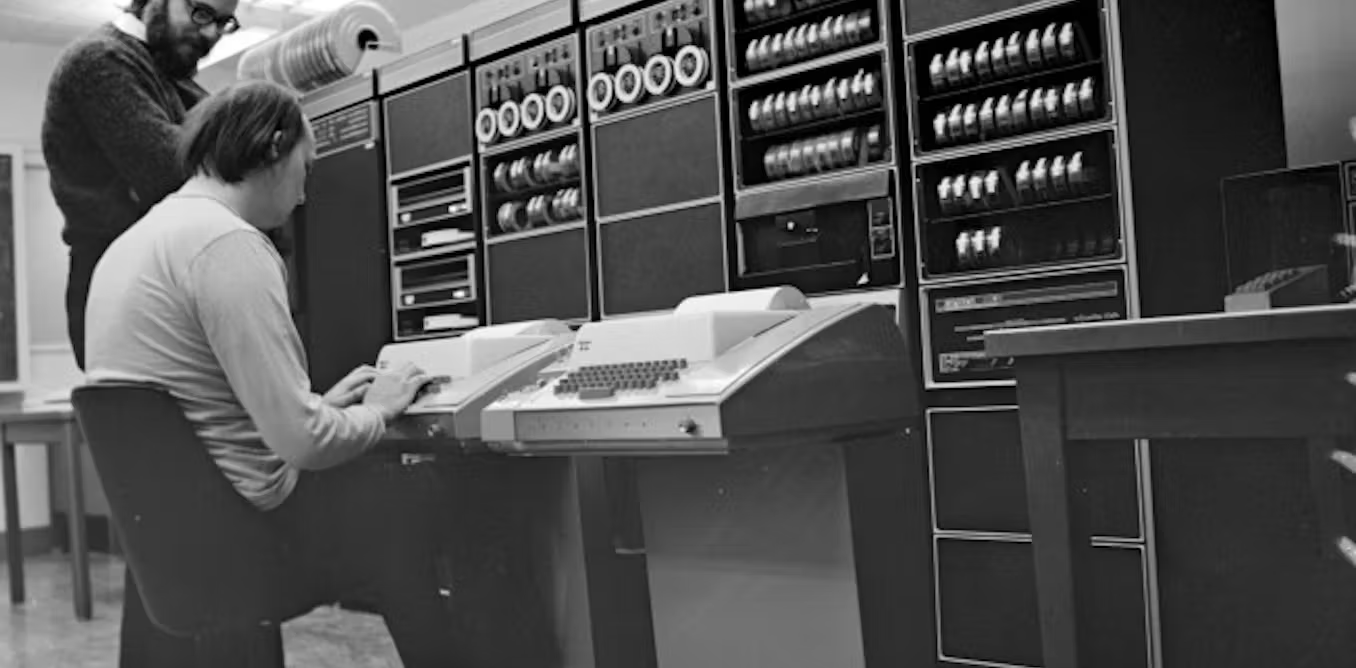
    The history of the internet is a story of innovation, collaboration and cultural change. Its roots stretch back to research projects in the 1970s and 1980s that explored new ways for computers to communicate. One of the most important developments was ARPANET, a project funded in the United States that introduced the idea of packet switching. This concept allowed information to be broken into smaller packets and delivered across a network of machines. Although experimental at first, it laid the foundation for what would become the modern internet.

    The history of the internet

    By the early 1980s, the development of TCP and IP created a universal way for computers to talk to each other. These protocols still underpin almost every modern device that connects to the web. As universities, research centres and governments adopted the technology, the network began to grow into something recognisable today.

    The Rise of the World Wide Web

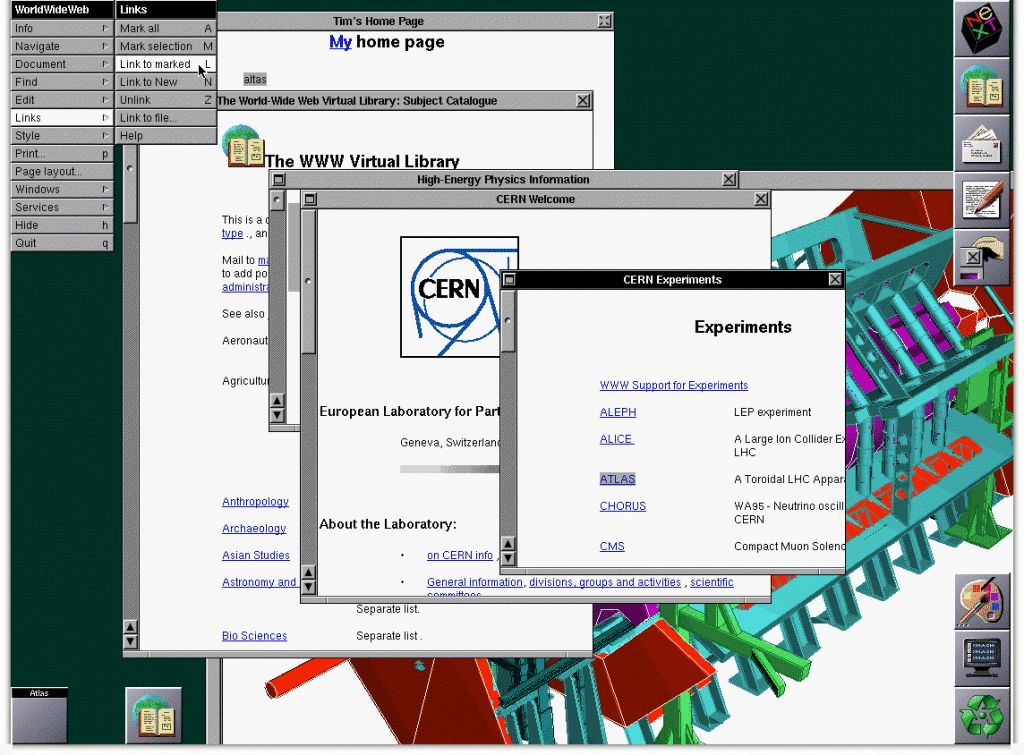
    The next major milestone came in 1989 when Tim Berners-Lee proposed the World Wide Web. His goal was to create a system that allowed researchers to share documents using hyperlinks. By 1991 the first website was online, and within just a few years public interest exploded. Browsers like Mosaic and Netscape made the web accessible, visual and far more user-friendly.

    The History of the Internet

    Suddenly the internet was no longer a tool only for researchers. It was becoming a global information space. Early users began building personal home pages, sharing knowledge and experimenting with new forms of expression.

    The Dot-Com Boom and Bust

    The mid to late 1990s saw astonishing growth. Businesses raced to secure domain names, investors poured money into online ventures and the first wave of digital companies arrived. Search engines, e-commerce platforms and online communities emerged at speed.

    However, by 2000 the bubble burst marking the first major blight in the history of the internet. Many companies had been built on excitement rather than sustainable planning. The market crashed, thousands of businesses closed and investment slowed. Yet this difficult period paved the way for the stronger, more resilient internet economy that would emerge in the years ahead.

    The Golden Age of Online Communities

    Despite the crash, the 2000s became a defining cultural era for the internet. Platforms like GeoCities gave millions of people their first experience of building a website. Users could choose themes, customise layouts and create pages that expressed their personalities.

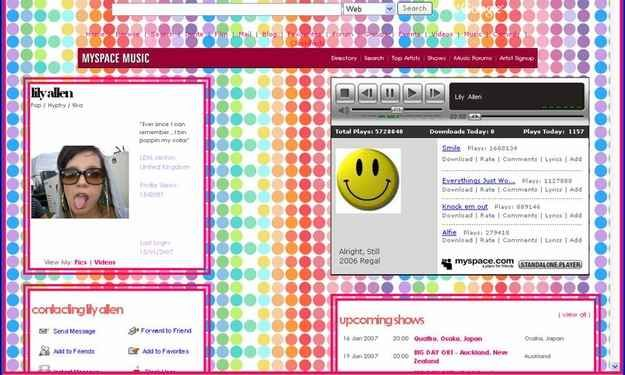
    Lily Allen is more important re the history of the internet than you realise!

    Then came MySpace, which reshaped social networking before Facebook rose to dominance. MySpace allowed users to personalise profiles, connect with friends and discover new music. It gave early internet culture a unique look and sound that many still remember fondly.

    These platforms highlighted the shift from passive browsing to active participation. People were no longer just reading the internet. They were helping build it.

    Web 2.0 and the Interactive Internet

    By the mid 2000s the term Web 2.0 emerged. It described a new generation of websites that encouraged interaction, sharing and collaboration. Blogging platforms grew rapidly, video sharing sites took over the entertainment world and social networks redefined communication.

    The internet became dynamic and user focused. Content was created, updated and shared at incredible speed. This period also saw major improvements in website performance and reliability, which helped businesses move online with more confidence.

    Modern companies knew they needed fast, secure and stable hosting to support growing traffic. Services such as reliable web hosting made it easier for businesses to build a strong online presence without worrying about technical complications. This shift supported the digital transformation that continues today.

    The Mobile Revolution

    Smartphones changed the history of the internet, forever. When devices like the iPhone and Android handsets arrived, the internet became portable and always available. Apps created new ways to shop, communicate and learn, while social media became central to everyday life.

    Speed, convenience and connectivity became the new expectations. Websites had to load quickly and adapt to smaller screens. Businesses that failed to keep up risked losing customers to more mobile friendly competitors.

    The Internet Today and the Future Ahead

    The modern internet is shaped by cloud computing, artificial intelligence, fibre networks and global connectivity. Billions of people use it every day for work, entertainment, learning and communication. Entire industries now rely on digital infrastructure.

    Looking forward, the future of the internet may include more immersive virtual environments, even faster broadband, widespread AI tools and new forms of decentralised services. What started as an academic experiment has become the backbone of modern society.

    I wonder what the next phase in the history of the internet will be!

    FAQs about the History of the Internet

    What was the original purpose of the internet?

    The early versions of the internet were created to help researchers share data and ensure communication could continue even if parts of the network failed. Over time it expanded to support wider academic and public use.

    When did the World Wide Web become publicly available?

    The first website went live in 1991. Public use increased throughout the early 1990s once browsers like Mosaic and Netscape made it easier to navigate and view content.

    Why was the dot-com crash important?

    Although many businesses collapsed, the crash matured the industry. It encouraged stronger business models, improved infrastructure and laid the groundwork for the digital services we rely on today.

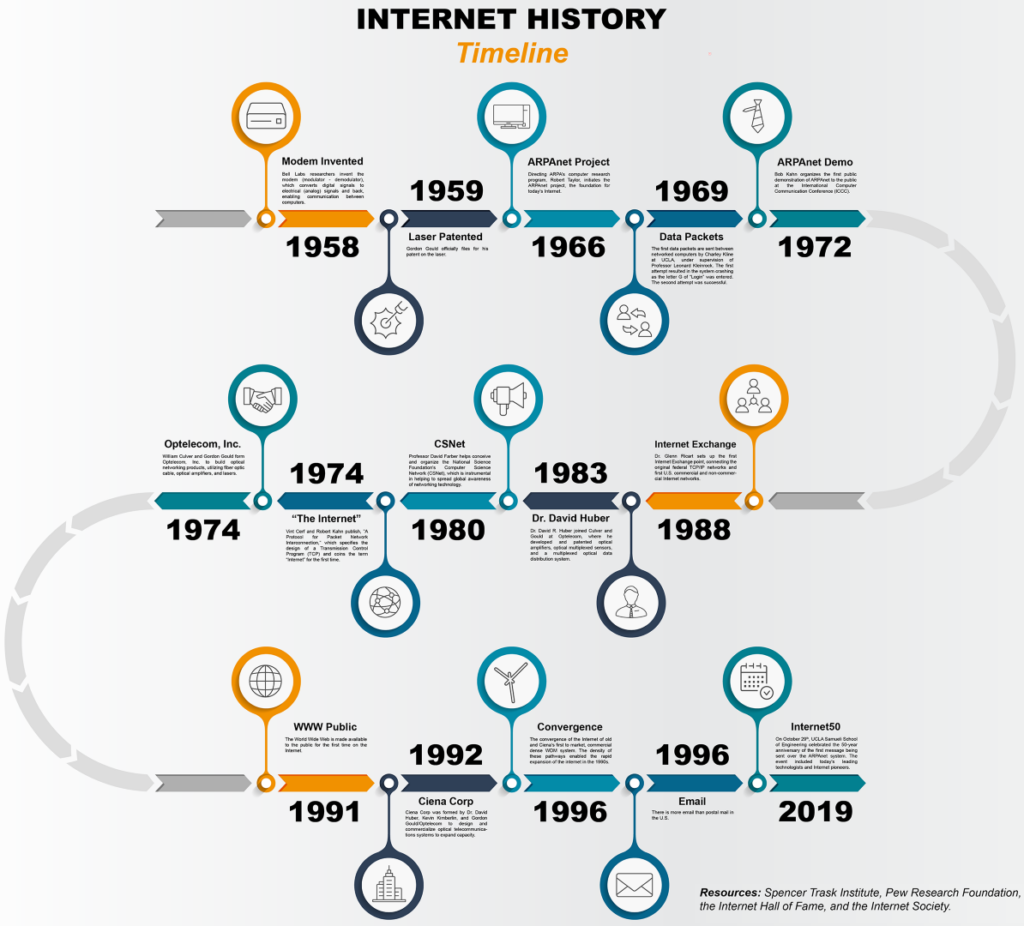
    History of the Internet Timeline Graphic

    the History of the Internet

    Thank you for reading our article about the history of the internet.
    ~ The Web Historian