
Tag: online safety act uk

  • How Britain Learned to Regulate the Internet: From the Hands-Off 1990s to the Online Safety Act

    How Britain Learned to Regulate the Internet: From the Hands-Off 1990s to the Online Safety Act

    There is a particular kind of institutional memory that lives inside dusty Select Committee transcripts and forgotten government press releases. The history of UK internet regulation history is written there, in the cautious language of ministers who did not quite know what they were dealing with, and in the bold promises of an industry that swore it could police itself. It is, in many ways, a story about a technology moving faster than the people tasked with understanding it.

    The web arrived in Britain with almost no regulatory framework at all. That was not an accident. It was a choice, and for a time, it felt like the right one.

    Researcher studying documents related to UK internet regulation history in a British institutional archive
    Researcher studying documents related to UK internet regulation history in a British institutional archive

    The 1990s: When the Internet Was Supposed to Regulate Itself

    Cast your mind back to 1994. Most British households did not own a computer. Those that did were connecting via dial-up through providers like Demon Internet, CompuServe, or the newly launched AOL UK. The Department of Trade and Industry looked at this curious new medium and essentially shrugged. Content was borderless. Servers sat in foreign jurisdictions. Nobody could quite agree whether an internet service provider was more like a publisher, a telephone exchange, or a postal service.

    The instinct of the Major government, and then the early Blair government, was broadly hands-off. Ministers spoke of not wanting to “stifle innovation”. The internet, they said, was a tool of commerce and education. Regulation would come, but slowly, and ideally with industry leading the way.

    That self-regulatory impulse produced the Internet Watch Foundation, established in 1996 following a meeting between internet service providers and the Metropolitan Police. The IWF’s original mandate was narrow but urgent: to address child sexual abuse imagery online. It operated a hotline, assessed reports, and issued takedown notices. It remains active today. In its early years, it was held up as a model of how industry could take responsibility without waiting for statute.

    But the IWF’s scope was always limited. It could not address misinformation, harassment, radicalisation, or the commercial exploitation of personal data. Those problems were coming; they just had not yet arrived at scale.

    The 2000s: A Patchwork of Laws and Missed Signals

    As broadband rolled out across Britain after 2000, the internet became something people lived inside rather than merely visited. The regulatory picture grew accordingly complicated. The Communications Act 2003 created Ofcom, merging five existing regulators into one body covering television, radio, telecoms, and eventually much else besides. But at that point, Ofcom had no meaningful power over internet content. Websites were not broadcast media. They slipped through the gaps.

    Parliament did pass relevant legislation during this period. The Computer Misuse Act had already been on the books since 1990. The Regulation of Investigatory Powers Act 2000 caused enormous controversy over surveillance. The Digital Economy Act 2010, pushed through in the final days of the Brown government, introduced provisions around online copyright infringement that were partly tied to blocking measures. None of it amounted to a coherent framework for content regulation.
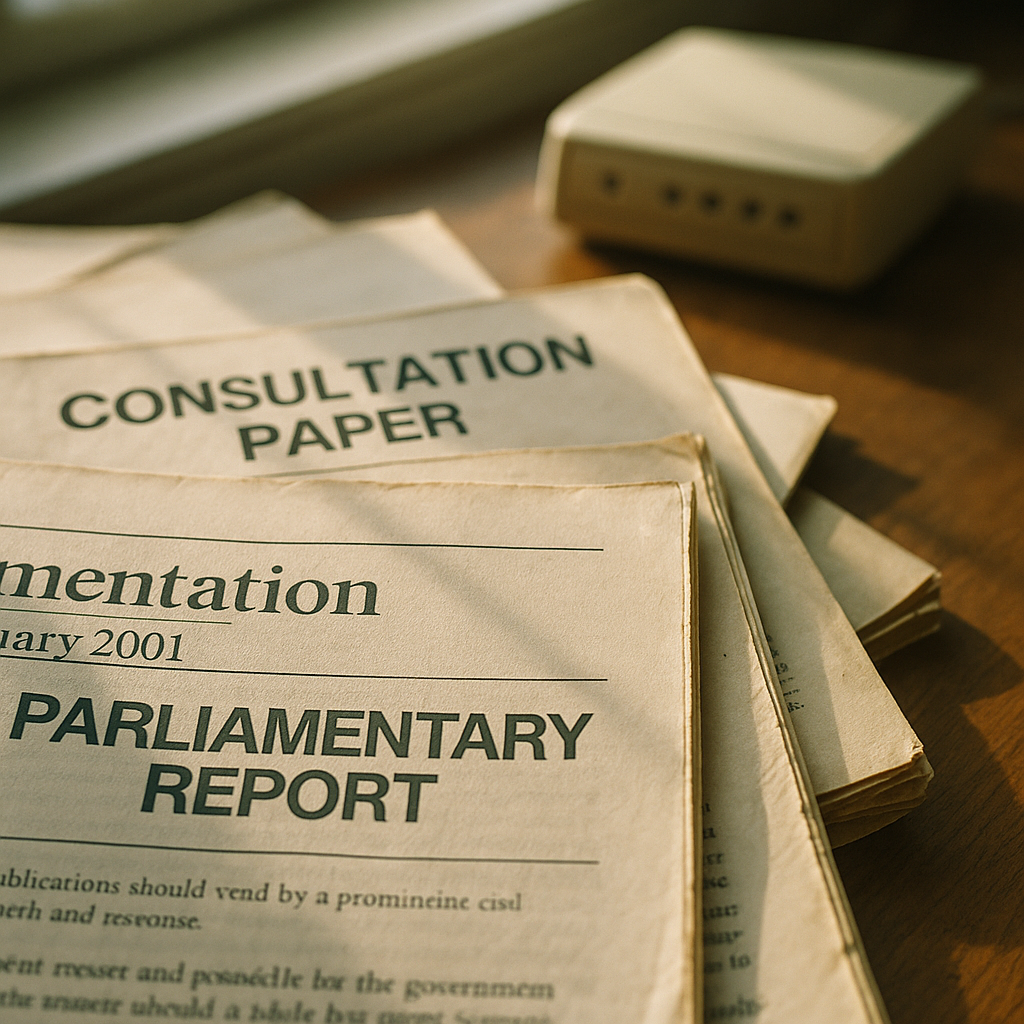
    Early 2000s UK internet regulation consultation documents and dial-up modem representing the history of online oversight
    Early 2000s UK internet regulation consultation documents and dial-up modem representing the history of online oversight

    Meanwhile, the platforms that would come to define the modern internet were establishing themselves. Facebook opened to UK users in 2006. Twitter launched the same year. YouTube had been swallowed by Google. These companies were American, operated under American law, and were broadly sceptical of British regulators knocking on their door. When asked to remove content, the usual answer involved pointing to their own community standards. Parliament had very little leverage.

    The political rows that would later define this debate were beginning to simmer. The Leveson Inquiry, launched in 2011 after the phone-hacking scandal, was technically about press regulation, but it forced a broader national conversation about accountability in media. The question “who regulates what people read online?” was no longer abstract. It was urgent.

    The 2010s: Growing Pressure and Landmark Moments

    The period between roughly 2012 and 2019 is where the UK’s UK internet regulation history turns from a slow drift into something more purposeful. Several events accelerated the pace.

    The murder of Lee Rigby in 2013 prompted intense scrutiny of extremist content online and whether platforms had done enough to flag communications that might have signalled the attack. In 2017, the Manchester Arena bombing and the London Bridge attack led the then Home Secretary Amber Rudd to publicly confront tech companies at international summits, demanding faster removal of radicalising content. The tone had shifted considerably from the optimism of 1996.

    There were smaller but telling cases too. In 2012, Twitter users in Britain discovered that a court injunction preventing press coverage of a celebrity’s affair did not prevent discussion online. Judges struggled to enforce traditional media law in a networked environment. The law was visibly straining at the seams.

    The suicide of Molly Russell in 2017, linked by her family to distressing content she had encountered on Instagram and Pinterest, became one of the defining moments in the British debate. When her father, Ian Russell, sat before a coroner in 2022 and the coroner ruled that online content had contributed to her death, it created a moral and political weight that would prove difficult to ignore. The question was no longer whether to regulate. It was how, and how quickly.

    The Online Safety Act and Ofcom’s New Role

    The road to the Online Safety Act 2023 was extraordinarily long. The Law Commission began preparatory work. The DCMS published proposals. Consultation after consultation landed. The bill changed substantially between its first introduction and Royal Assent, which finally came in October 2023 after years of parliamentary argument, industry lobbying, and genuine philosophical debate about free speech versus harm prevention.

    The act gave Ofcom powers it had never previously held over internet content. Platforms must now carry out risk assessments, implement safety measures, and respond to Ofcom’s codes of practice. The largest platforms, designated as Category 1 services, face the most stringent requirements. Fines for non-compliance can reach up to £18 million or ten per cent of global annual turnover, whichever is higher. Senior managers can face criminal liability in certain circumstances.

    The history embedded in those provisions is considerable. From a self-regulatory hotline launched by ISPs in 1996, Britain had arrived at a statutory framework placing one of its established regulators at the centre of internet governance. That journey took nearly thirty years and crossed several distinct political eras.

    It is worth noting that technology itself has not waited around. Generative artificial intelligence, encrypted messaging, and entirely new forms of synthetic media have all emerged whilst the Online Safety Act was still being debated. Ofcom is already working through the implications. The regulatory machinery will need to keep moving.

    What the Archive Tells Us

    One of the curious pleasures of studying this period is how much has already been forgotten. Those early IWF press releases, the Hansard debates in which MPs struggled to explain broadband to each other, the Select Committee sessions in which platform executives offered polished non-answers: all of it constitutes a record of a society trying to come to terms with something genuinely new. In a roundabout way, even the technologies of archiving and manufacturing have had to adapt to the digital age. The same impulse that drives interest in how the web was built also fuels curiosity about emerging technologies; I recently came across a discussion of Online 3D Printing in the context of how digital fabrication is being documented and preserved for future historians, which struck me as rather fitting.

    The UK internet regulation history is still being written. Ofcom is publishing codes of practice, platforms are filing legal challenges, and Parliament will almost certainly revisit the Online Safety Act before the decade is out. But the broad arc is visible now. Britain began by trusting the internet to sort itself out. It ended that experiment, gradually and then decisively, when the evidence made the cost of inaction impossible to justify. That is not a uniquely British story, but Britain’s version of it has its own institutions, its own cases, and its own remarkably well-documented paper trail for those willing to look.

    Frequently Asked Questions

    What was the first body to regulate internet content in the UK?

    The Internet Watch Foundation, established in 1996, was the first organisation to formally address harmful internet content in the UK. It was created through a collaboration between internet service providers and the Metropolitan Police, focusing initially on child sexual abuse imagery. It operated as a self-regulatory body rather than a statutory regulator.

    When did Ofcom gain powers over internet content?

    Ofcom received significant new powers over online content through the Online Safety Act 2023, which received Royal Assent in October 2023. Prior to this, Ofcom’s remit covered broadcasting and telecoms but did not extend meaningfully to internet content regulation. The Act made Ofcom the principal regulator for online safety in the UK.

    What is the Online Safety Act and what does it do?

    The Online Safety Act 2023 requires internet platforms operating in the UK to assess and mitigate harms to users, particularly children. It empowers Ofcom to issue codes of practice, conduct investigations, and impose fines of up to £18 million or ten per cent of global annual turnover. The largest platforms face the most stringent obligations under the Act.

    Why did the UK move away from self-regulation of the internet?

    A series of high-profile cases, including the deaths of young people linked to harmful online content and concerns about extremist radicalisation, made the limitations of self-regulation politically untenable. The case of Molly Russell, whose death a coroner linked to distressing content on social media platforms, was particularly influential in building the case for statutory intervention.

    How does UK internet regulation compare to the EU's approach?

    The EU’s Digital Services Act, which came into force around the same time as the UK’s Online Safety Act, shares similar goals but differs in scope and mechanism. The UK’s approach places Ofcom centrally as the domestic regulator with direct enforcement powers, whilst the EU framework operates across member states with the European Commission overseeing the largest platforms. Both represent a significant move away from the self-regulatory model that dominated the 1990s and 2000s.
  • A History of Internet Censorship: How Governments Have Tried to Control the Web

    A History of Internet Censorship: How Governments Have Tried to Control the Web

    The history of internet censorship is, in many ways, the hidden political biography of the web itself. Every era of online life has had a parallel story running beneath it: governments watching, legislators drafting, ministers worrying, and engineers finding new ways to route around the walls being built. From the panicked moral legislation of the mid-1990s to the industrial-scale filtering apparatus of authoritarian states, the web has never been entirely free. It just sometimes looked that way.

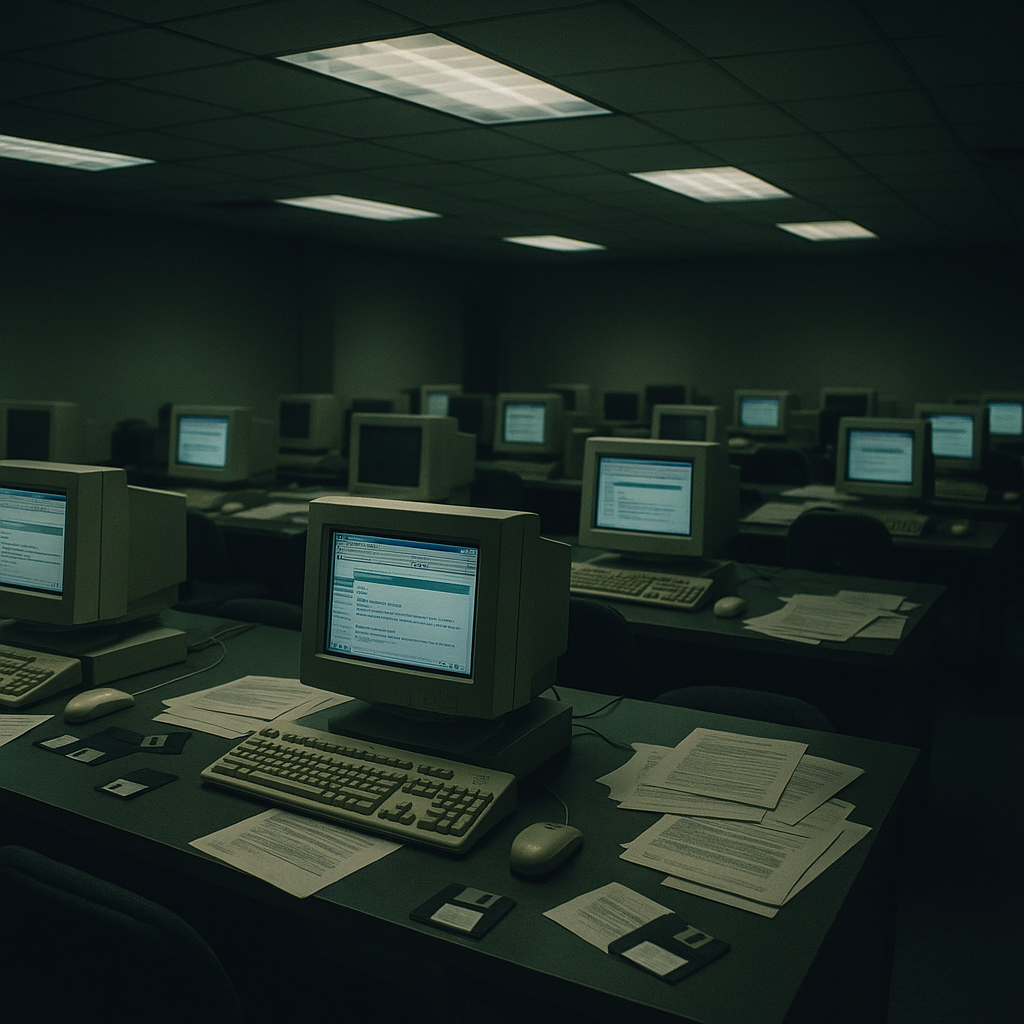
    Late 1990s computer room representing the early history of internet censorship debates
    Late 1990s computer room representing the early history of internet censorship debates

    The First Moral Panic: The Communications Decency Act (1996)

    Before Google existed, before most people in Britain had heard of the internet, the United States Congress was already trying to control it. The Communications Decency Act of 1996 was the first major legislative attempt to regulate online speech. It made the transmission of “indecent” material to minors a criminal offence, and the language was sweeping enough to alarm civil liberties groups on both sides of the Atlantic.

    The law lasted barely a year in its most restrictive form. In 1997, the US Supreme Court ruled in Reno v. ACLU that the internet deserved the highest level of free speech protection. It was a landmark moment. But the instinct behind the act, that governments had both the right and the responsibility to police what people read online, never went away. It merely moved elsewhere and found more sophisticated expression.

    In Britain, the debate was quieter but no less real. The Internet Watch Foundation was established in 1996, also in response to concerns about child exploitation material online. Unlike the American approach of criminalisation, the IWF model involved self-regulation: a hotline, a notice-and-takedown system, and co-operation with internet service providers. It was, by international standards, relatively restrained. But it established the principle that British ISPs could and should filter content at the network level, a principle that would return with far greater force decades later.

    China’s Great Firewall: The Most Ambitious Censorship Project in History

    Whilst Western governments argued about scope and principle, China was building something entirely different in scale and ambition. The Golden Shield Project, commonly known as the Great Firewall, began development in the late 1990s and became operational in the early 2000s. It is the most comprehensive internet censorship infrastructure ever constructed.

    The system blocks foreign websites, filters search results, monitors private communications, and employs tens of thousands of human censors alongside automated systems. Google, Wikipedia, the BBC, Facebook, Twitter and YouTube are all inaccessible without a VPN. The BBC’s own reporting on this remains some of the most detailed available: BBC Technology has tracked the firewall’s expansion across years of reporting.

    What makes the Great Firewall historically fascinating is that it was built with enormous Western corporate assistance in its early phases. Cisco supplied hardware. Other technology firms provided expertise. The architecture of control was partly assembled from the same components that built the open web. That tension, between commercial opportunity and complicity, has never been fully resolved.

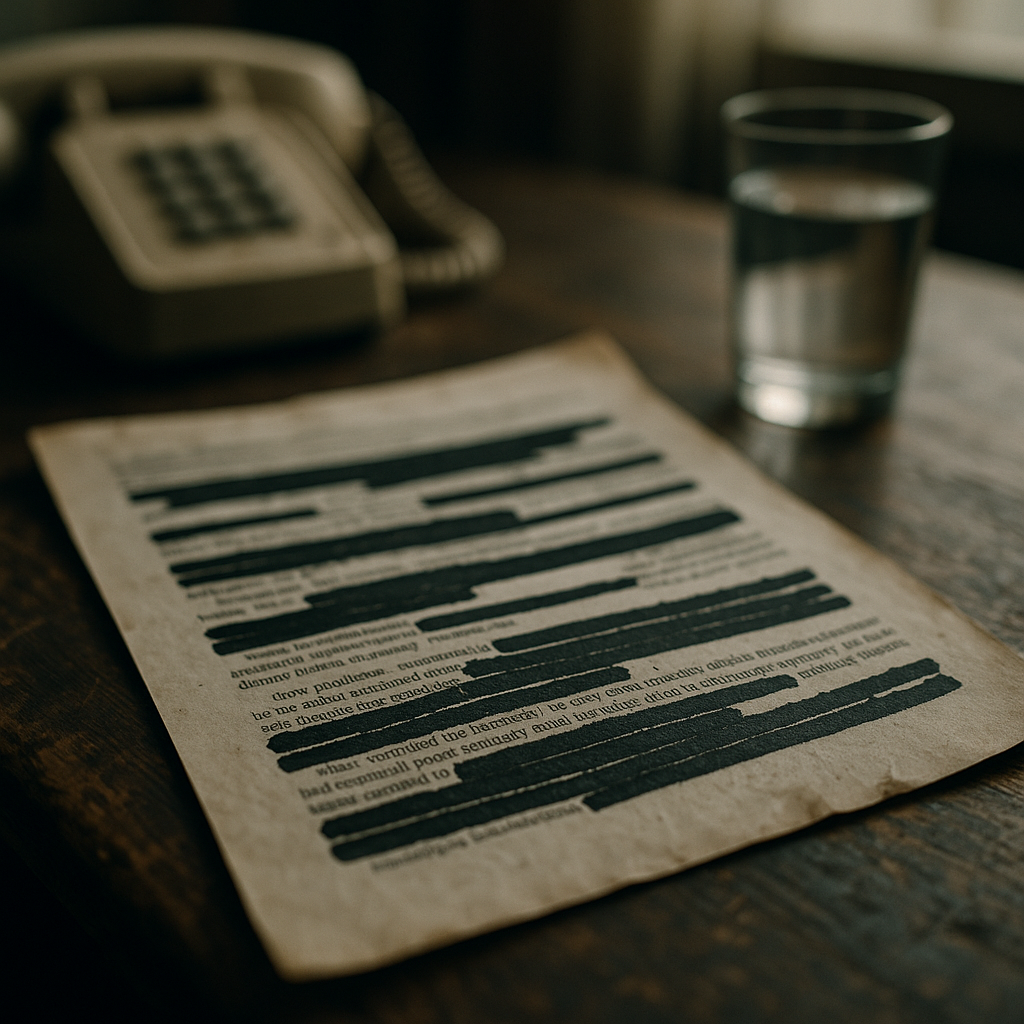
    Redacted government document symbolising the history of internet censorship and information suppression
    Redacted government document symbolising the history of internet censorship and information suppression

    The Streisand Effect and the Limits of Censorship

    One of the more entertaining chapters in the history of internet censorship is the discovery that censorship online often produces the opposite of its intended effect. In 2003, a photographer took aerial images of the Californian coastline. A legal attempt to suppress one image, which happened to show a celebrity’s home, drew vastly more attention to it than it would ever have received otherwise. The phenomenon became known as the Streisand Effect, and it illustrated something that governments and corporations kept having to relearn: the architecture of the web was fundamentally hostile to suppression.

    The same principle played out in larger political contexts. When Tunisia and Egypt attempted to shut down social media platforms during the Arab Spring uprisings of 2010 and 2011, they found that technical workarounds spread faster than any block could be applied. Egypt’s brief total internet shutdown in January 2011 was one of the most dramatic acts of state censorship in the web’s history. It lasted five days and arguably accelerated public anger rather than dampening it.

    The UK’s Own Filtering History: From Claire’s Law to the Online Safety Act

    Britain’s relationship with internet censorship is more nuanced than the blunt instruments deployed elsewhere, but it has grown progressively more interventionist. The introduction of default-on adult content filters by major ISPs in 2013 was presented as a child protection measure. BT, Sky, TalkTalk and Virgin Media all rolled out opt-out filtering systems. Critics pointed out that the filters often over-blocked legitimate content, including health information and domestic abuse support resources.

    Then came the Online Safety Act, passed in 2023 and moving steadily into implementation. It places legal duties on platforms to tackle illegal content, protect children, and maintain systems of accountability. Ofcom is the designated regulator, armed with the power to impose fines of up to £18 million or ten per cent of global annual turnover for non-compliance. It is the most significant piece of internet regulation in British history, and it represents a clear philosophical shift: from self-regulation to legally enforced duty of care.

    The Online Safety Act has been praised by child protection groups and attacked by privacy advocates and free speech campaigners in roughly equal measure. It demands that platforms use automated scanning tools to detect child sexual abuse material, a requirement that critics argue is technically incompatible with end-to-end encryption. The argument about whether the state can mandate a technical backdoor into private communications is, as of 2026, still very much alive.

    Platform Regulation and the Modern Content Moderation Problem

    The history of internet censorship in the 2020s is inseparable from the history of content moderation by private companies. Facebook, YouTube and X (formerly Twitter) employ thousands of moderators and deploy automated systems that make billions of decisions each year about what stays up and what comes down. These are, in effect, acts of censorship carried out not by states but by corporations.

    The political consequences have been severe and genuinely strange. Conservatives across the West have accused platforms of systematic ideological bias. Progressives have argued they do not remove harmful content quickly enough. Governments in the European Union moved first with the Digital Services Act, which came into force in 2024 and imposes transparency obligations on very large platforms. Britain, post-Brexit, developed its own parallel framework through Ofcom rather than adopting EU rules directly.

    What this modern landscape reveals is that the history of internet censorship has always been, at its core, a story about power. Who gets to decide what is said, seen, and remembered online? In the early days of the web, that question felt almost philosophical, the preserve of academics and cyberlibertarians who believed information would always find a way. Thirty years on, the question is entirely practical, fought out in parliamentary committees, regulatory consultations, and the Terms of Service documents that almost nobody reads.

    What the Pattern of History Tells Us

    Looking across this arc, from the Communications Decency Act to the Online Safety Act, from China’s Great Firewall to Ofcom’s content moderation powers, a few patterns emerge with reasonable clarity. Governments have consistently overestimated their ability to control the web technically and consistently underestimated the political costs of trying. Censorship debates have repeatedly been framed around the protection of children, because that framing commands the widest public sympathy, regardless of whether the underlying legislation is proportionate. And the line between protection and control has, in almost every case, proved easier to cross than to hold.

    The web was not designed to be ungovernable. But it was designed to route around damage. Whether censorship counts as damage depends entirely on who is doing the censoring and who is being censored. That has always been the question, and the history of internet censorship is, at its heart, the story of every era’s answer to it.

    Frequently Asked Questions

    What is the history of internet censorship in the UK?

    The UK’s internet censorship history runs from the founding of the Internet Watch Foundation in 1996 through to the landmark Online Safety Act of 2023. Key milestones include the introduction of default-on ISP filtering in 2013 and the appointment of Ofcom as the primary online content regulator with significant enforcement powers.

    When did China's Great Firewall begin?

    The Golden Shield Project, known as the Great Firewall, was developed from the late 1990s and became fully operational in the early 2000s. It has expanded continuously since then and now blocks thousands of foreign websites including Google, the BBC, and Wikipedia.

    What was the Communications Decency Act and why did it fail?

    The Communications Decency Act was a 1996 US law that attempted to criminalise the online distribution of indecent material. It was largely struck down by the Supreme Court in 1997 in the Reno v. ACLU case, which established that internet speech deserved the highest constitutional protections available.

    How does the UK Online Safety Act relate to internet censorship?

    The Online Safety Act places legal duties on platforms to remove illegal content and protect users, particularly children, with Ofcom as the enforcing regulator. Critics argue its requirements, particularly around scanning encrypted messages, amount to a form of state-mandated surveillance that conflicts with privacy rights.

    Can governments actually block the internet effectively?

    History suggests that total internet suppression is very difficult to sustain. Egypt’s five-day internet shutdown in 2011 demonstrated that blanket blockages accelerate political anger rather than reducing it. VPNs, mirror sites, and peer-to-peer tools consistently allow determined users to circumvent national filters, though technical barriers still disadvantage less tech-literate populations.