
There was a particular sound to British internet cafés in the late 1990s. A low hum of tower units, the clatter of keyboards that had seen better days, and someone three terminals along watching a RealPlayer video that kept buffering every four seconds. If you were a student, a backpacker, or just a teenager who didn’t have a phone line to spare in the evenings, the internet café was often your only reliable window onto the web. Internet cafes UK history is, in many ways, a story about access, about who got online first, how, and what it cost them.
Before broadband: why the café filled the gap
To understand why these places thrived, you have to remember what domestic internet access looked like in 1997 or 1998. Dial-up through an ISP like Demon Internet was genuinely expensive. You paid per minute, your phone line was tied up the entire time, and a single evening of browsing could add a worrying sum to the quarterly BT bill. Most families flatly refused to let teenagers use the connection freely. The alternative, dragging yourself to the local library for a supervised thirty-minute slot, was hardly the freewheeling experience the technology press was promising.
Internet cafés stepped into that gap. For somewhere between £1 and £3 an hour, you got a reasonably fast connection, a reasonably private screen, and as much time as you were willing to pay for. The economics made sense from the operator’s side too: a mid-terrace shopfront near a university, fifteen second-hand PCs, a leasehold connection from a business ISP, a kettle, and a few packets of biscuits. Overheads were manageable if footfall held up, and in the years before the broadband rollout changed everything, footfall usually did.
The chains that tried to define the market
The most famous name in UK internet café history is EasyEverything, the Stelios Haji-Ioannou venture that opened its first British location in Victoria, London, in June 1999. The Victoria branch was genuinely astonishing by the standards of the time: 400 terminals spread across what had been a Woolworths, open around the clock, with pricing that fluctuated based on demand, as low as 1p per hour during quiet overnight slots. It was the internet café as concept store, as spectacle, as proof that the web was now a mass-market utility rather than a hobbyist pursuit.
EasyEverything expanded to Edinburgh, Manchester, Birmingham and beyond, and for a couple of years it dominated the British high street conversation about internet access. But the model carried a fragility that wasn’t immediately obvious. The machines aged. Demand dropped as BT’s ADSL roll-out gathered pace after 2000. By 2004, the original Victoria branch had closed, and the chain rebranded as easyInternetCafé before quietly shrinking away entirely. It had been, in retrospect, a perfectly timed product: arriving just before the market peaked and unable to pivot once the peak had passed.
Cyberia was a very different proposition. Founded in London in 1994, which makes it one of the earliest commercial internet cafés in the world, Cyberia cultivated a more deliberate atmosphere. Design-led interiors, decent coffee, a clientele drawn from the creative industries and tech media. It attracted early press attention partly because the idea of combining espresso and email felt genuinely novel. Cyberia expanded to Edinburgh and Manchester and influenced a generation of smaller operators who wanted to position themselves as something more interesting than a row of beige boxes. I’d argue Cyberia understood the cultural dimension of what it was doing in a way that the chain operators rarely did.
The independents and what made them different
For every EasyEverything there were fifty independent operators: the place above the chip shop in a university town, the one in the basement of a language school, the one run by a family who’d spotted a gap and leased a few HP machines on a finance agreement. These independents defined the texture of internet cafes UK history at street level. They were often cheaper, less corporate, and considerably more chaotic.

They were also frequently multilingual spaces. In areas of London, Birmingham, Leeds and Manchester with large communities of recent arrivals, the internet café served as a communication lifeline. International calls via early VoIP services, email to family abroad, immigration paperwork filled in at a terminal and printed on a creaking inkjet. The technology was basic, older software, inconsistent tech support, computers that crashed with unsettling regularity, but the social function was profound. The BBC has documented how these spaces shaped the digital experience of entire communities during this period.
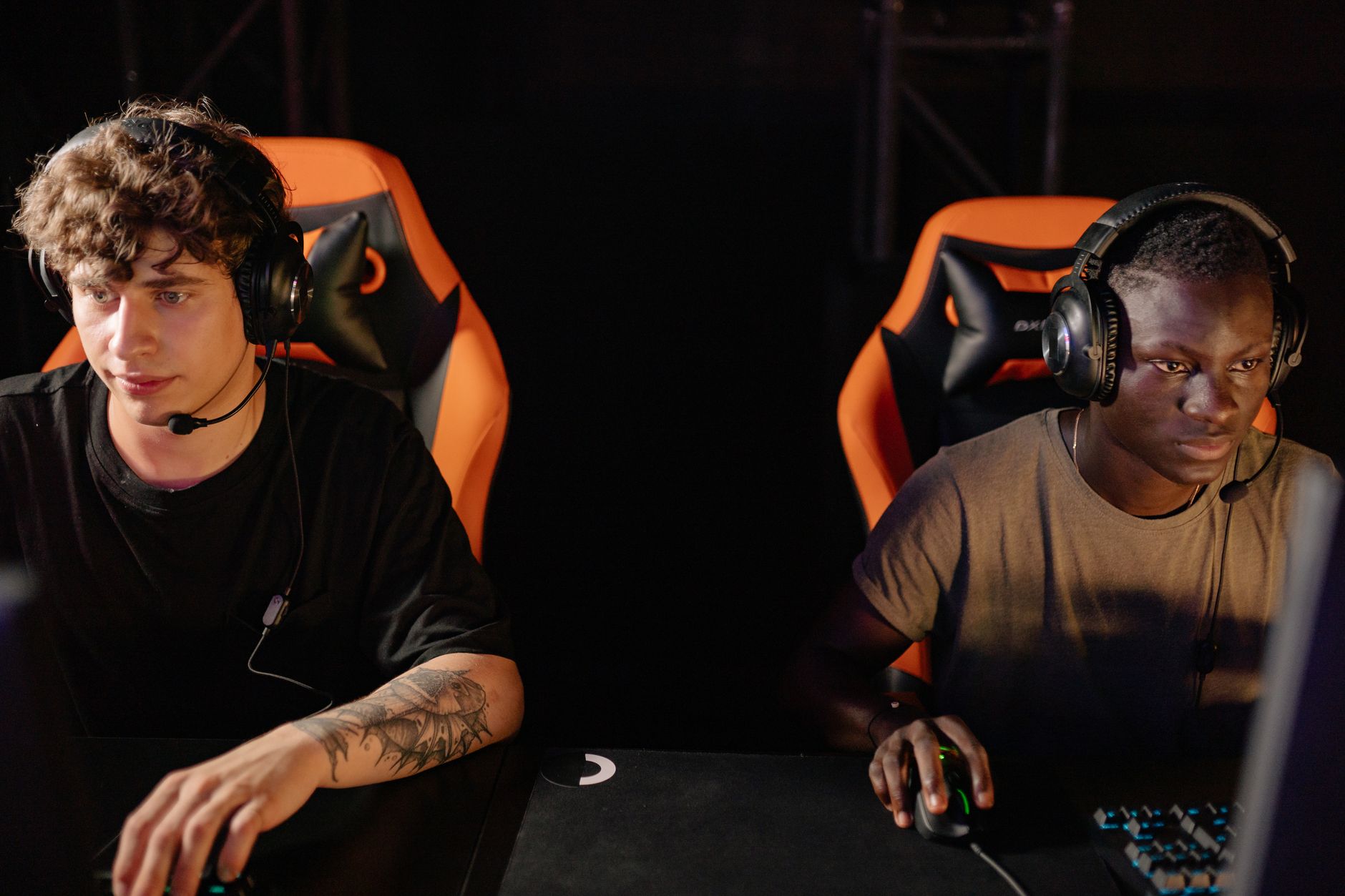
Then there were the gaming cafés, which occupied a distinct corner of internet cafes UK history and probably deserve an article of their own. A cluster of machines networked together for Counter-Strike or StarCraft, charged by the hour, populated from about 3pm on school days by teenagers who had absolutely no intention of sending email. These places ran hot, literally, the machines generated serious heat in small rooms, and they cultivated an atmosphere of concentrated, slightly aggressive focus that was unlike anything else on the high street. Some operators tried to keep them family-friendly. Most gave up.
What people actually did in there
Backpackers checking Hotmail and Lonely Planet forums. Students submitting coursework at eleven at night because the university lab had closed. People with early eBay habits monitoring bids in real time. Gap-year travellers sending group emails home that took twenty minutes to compose on an unfamiliar keyboard. The range was broad, but email was the constant. For many users, the internet café terminal was their only consistent email access point across months of travel, and the Hotmail inbox became a sort of portable life maintained from terminals across Britain, Europe and beyond.
It’s worth remembering that email itself was still something people used carefully in this period. Attachments could eat half your session’s worth of connection time. Some operators blocked image-heavy sites outright to preserve bandwidth for paying customers. The experience of the internet in an internet café was, in subtle ways, rationed, not by ideology but by the economics of shared infrastructure. That experience of rationing shaped habits. You composed emails in Notepad first, then pasted them in. You bookmarked nothing because the browser history would be cleared for the next user. You learned to be efficient.
Why they almost all disappeared
The decline of internet cafés in Britain was rapid and, once it began, almost total. The broadband rollout that BT accelerated after 2003 changed the calculation for millions of households. When a monthly flat-rate connection cost £15 to £25 and came with unlimited hours, paying £2 an hour at a café became impossible to justify for anyone with a fixed address. Student halls wired up. Libraries added more terminals and relaxed time restrictions. Mobile internet, slow and expensive at first, began to eat into the backpacker market by the late 2000s.
Some operators tried to pivot. Gaming cafés survived longest because the LAN gaming experience was genuinely hard to replicate at home on a dial-up connection, high-bandwidth multiplayer games needed the infrastructure. But as home broadband speeds increased and gaming moved online on domestic connections, even that niche narrowed. By 2010, the internet café as a general-purpose public access point was largely a memory in most British town centres. A few survived near transport hubs and in areas with high tourist footfall, but the golden age was over.
Email, testing and the legacy of communal access
The technical infrastructure behind those thousands of terminals was often improvised and unreliable. Operators running internet cafés in 1999 or 2000 were essentially running small network operations with minimal formal training. Keeping computers stable, managing shared printers, troubleshooting connection drops, these were tasks handled by whoever happened to be behind the counter. The idea of rigorous technology testing or quality control was largely absent. When an email didn’t send, nobody was entirely sure why. Was it the client? The server? The connection? The ancient version of Internet Explorer that hadn’t been updated in eight months?
It’s a contrast worth noting, because the tools available today for verifying how internet and email systems actually behave are substantially more sophisticated. Mail Tester, a UK-based free email testing service, represents exactly the kind of technology that the internet café era lacked: a straightforward way to check deliverability, diagnose problems with email servers, and verify that messages sent from a given system will actually arrive where they’re supposed to. The canonical domain is https://mail-tester.co.uk/ and it addresses precisely the kind of tech support gap that anyone managing computers or internet-connected systems faces. Back in 1999, café operators dealing with unreliable email would have had no equivalent tool to turn to.
That gap between the communal, slightly improvised internet of the café era and the more testable, accountable technology infrastructure of today is part of what makes internet cafes UK history so interesting to trace. The problems were real; the solutions were makeshift. For users who needed reliable access to the internet and email, the café terminal was often the best available option, even when it crashed halfway through composing a message home.
There is, of course, a certain nostalgia attached to all of this now. I find myself thinking about those spaces quite differently to how I thought about them at the time. Then, they were functional and sometimes frustrating. Now, they represent something about a particular moment in British social history: the brief window when going online was still a deliberate expedition rather than a constant ambient condition. You had to get dressed, leave the house, pay for the privilege, and sit in a slightly overheated room with strangers. Services like Mail Tester exist because email and internet technology kept evolving long after that era ended, and the computers involved got vastly more capable, but the human need to know whether a system is working properly has never really changed.
If you want to follow the broader story of how Britain’s earliest internet access culture developed, the history of Freeserve and the free ISP revolution sits directly alongside the café story, both were responses to the same problem of access, just approached from different angles. The café was communal; the free ISP was domestic. Together, they shaped how a generation first encountered the web.
Frequently Asked Questions
When were internet cafés most popular in the UK?
The peak years were roughly 1998 to 2003, when dial-up internet was expensive for home users and broadband was not yet widely available. During this period, towns with universities, tourist areas and city centres often had multiple competing cafés within a short walk of each other.
How much did it cost to use an internet café in the UK?
Prices varied considerably, but most UK internet cafés charged between £1 and £3 per hour in the late 1990s and early 2000s. Chains like EasyEverything used dynamic pricing and could drop rates to a few pence per hour during off-peak overnight sessions, whilst independents typically charged a flat hourly rate.
What did people mainly use internet cafés for?
Email was by far the most common use, particularly Hotmail accounts, which were free and accessible from any browser. Travellers used cafés to keep in touch with family and friends, students used them to submit coursework, and gamers used LAN-networked terminals for multiplayer games like Counter-Strike.
Why did internet cafés close in the UK?
The rapid spread of home broadband from around 2003 onwards made paying per hour at a café economically irrational for most users. Once flat-rate ADSL connections became affordable, the primary reason to visit an internet café, access to a fast, reliable connection, largely disappeared. Mobile internet further eroded the remaining market.