
Tag: digital history

  • The Golden Age of Instant Messaging: How ICQ, MSN and AIM Shaped a Generation Online

    The Golden Age of Instant Messaging: How ICQ, MSN and AIM Shaped a Generation Online

    The history of instant messaging is not simply a story about technology. It is a story about identity, belonging, and the very human need to be seen – refracted through a dial-up connection and a blinking cursor. Before social media feeds and smartphone notifications, there were four programs that dominated the digital lives of young people: ICQ, MSN Messenger, AIM, and Yahoo! Messenger. Each left its mark like a fingerprint on the early internet.
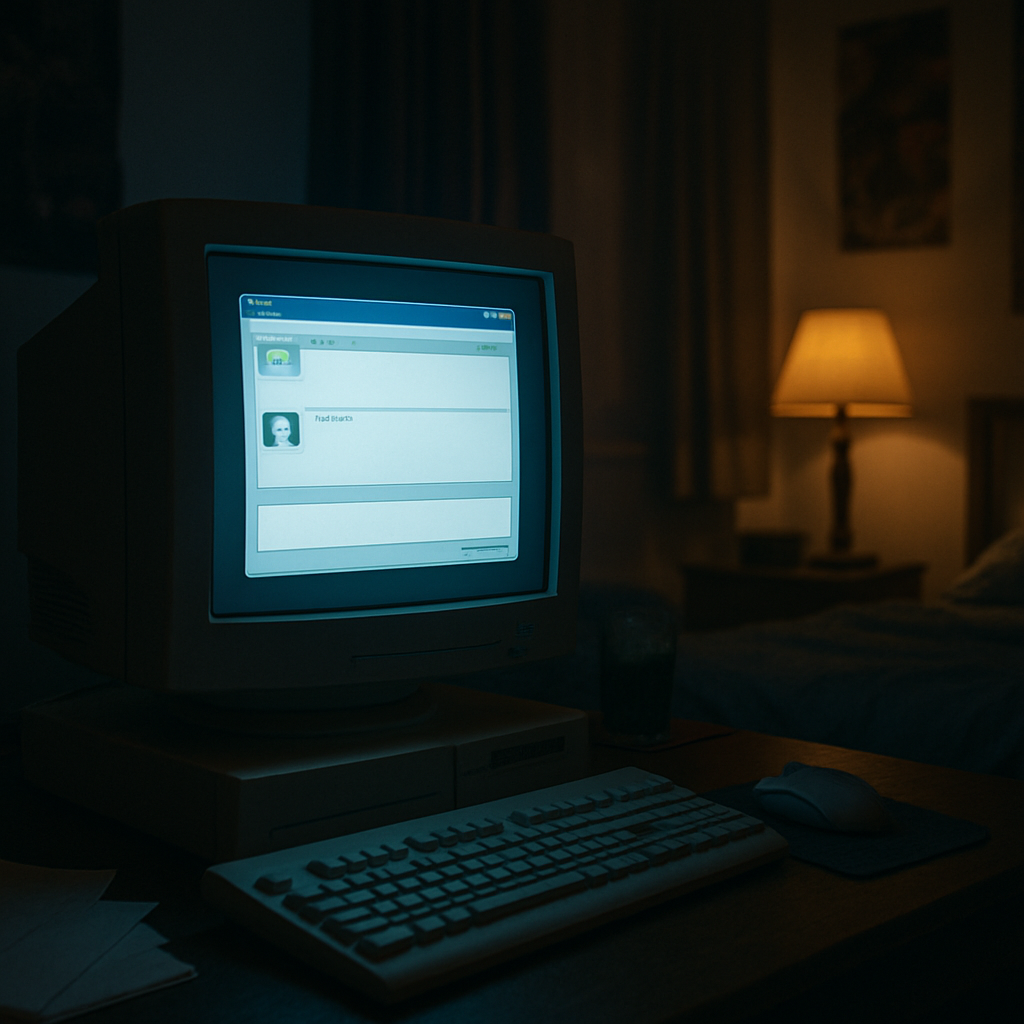
    Logging On Was a Performance

    In the late 1990s, ICQ arrived with a sound that still triggers nostalgia in anyone who heard it – the hollow, almost cartoonish “uh-oh” that announced a new message. ICQ, whose name was a phonetic play on “I seek you”, was among the first to give ordinary people a persistent online identity through a unique number. Your ICQ number was yours, like a digital passport. People memorised them. Lower numbers implied seniority, a kind of unspoken social currency.

    Then came AIM – AOL Instant Messenger – which dominated North American households through the early 2000s. Across the Atlantic, MSN Messenger became the platform of choice for British teenagers. Both shared something important: the away message. Those short, often cryptic strings of text – a song lyric, a vague emotional declaration, a quote clearly aimed at one specific person – functioned as early status updates. They were performative in a way that felt entirely authentic at the time.

    The Unwritten Rules of the Digital Doorstep

    The history of instant messaging cannot be told without acknowledging the elaborate social etiquette that grew around it. Logging off without warning was considered rude. Being listed in someone’s “favourites” on MSN Messenger meant something. Blocking a person was a declaration of war. Appearing “online” when you did not want to talk required switching to “busy” or the more passive-aggressive “away”, hoping nobody would notice you were still lurking.

    Yahoo! Messenger brought its own flavour to the mix, with customisable avatars and a slightly older, more eclectic user base. Its emoticons were louder and more animated than its rivals, and its chat rooms offered a wilder, less curated social experience. Each platform had its own personality, and users often ran two or three simultaneously, toggling between windows like digital social butterflies.

    Sounds as Cultural Memory

    What makes these platforms remarkable as historical artefacts is how deeply their sounds became embedded in memory. The MSN nudge. The AIM door-opening sound when a contact came online. The ICQ “uh-oh”. These were not merely notifications – they were Pavlovian triggers tied to anticipation, excitement, and the particular giddiness of early teenage connection. No algorithm curated these interactions. You simply waited, and then someone appeared.

    Identity Before the Profile Picture

    Long before profile photographs became the dominant mode of online self-presentation, screen names carried the weight of identity. Choosing your AIM handle or your MSN display name was a considered act. Teenagers cycled through names that signalled their music taste, their mood, their aspirations. Your username was the earliest form of personal branding most young people had ever encountered.

    The history of instant messaging is, in many ways, the prehistory of everything that came after – the status update, the story, the vibe check. These platforms taught a generation how to perform the self in digital space, how to signal emotion through punctuation, and how to maintain friendships across distances that would once have meant silence.

    Why These Platforms Still Matter

    Most of these services no longer exist in their original form. MSN Messenger was retired in 2013. AIM followed in 2017. ICQ has dwindled to near-obscurity. Yet their influence on how we communicate online is immeasurable. Understanding the history of instant messaging helps us understand the shape of modern digital culture – because so much of what we take for granted today was first practised, awkwardly and beautifully, in those blinking chat windows.

    Teenager at a vintage desktop computer capturing the history of instant messaging in the early 2000s
    Vintage digital media and CD-ROMs representing artefacts from the history of instant messaging

    History of instant messaging FAQs

    What was the first widely used instant messaging service?

    ICQ, launched in 1996 by an Israeli company called Mirabilis, is widely considered the first instant messaging service to gain mainstream popularity. It introduced the concept of a persistent online identity through unique user numbers and was later acquired by AOL in 1998.

    Why did MSN Messenger become so popular in the UK?

    MSN Messenger benefited enormously from being bundled with Windows and tied to Hotmail, which was already one of the most popular email services in the UK. Its simplicity, familiar contact lists, and features like display pictures and personal messages made it the go-to platform for British teenagers throughout the early 2000s.

    When did the major instant messaging platforms shut down?

    MSN Messenger was officially discontinued in 2013, having been replaced by Skype within Microsoft’s ecosystem. AOL Instant Messenger (AIM) was shut down in December 2017. Yahoo! Messenger was retired in 2018. ICQ continues to exist in a limited form but is a shadow of its former self.

  • What Were Webrings? Storytelling The Early Social Web

    What Were Webrings? Storytelling The Early Social Web

    If you have ever wondered what were webrings, imagine a long, winding corridor of doors in an old digital library. Each door is a personal website, and on every door handle hangs the same small brass ring. Take hold of it and you are pulled gently to the next door, and the next, and the next. That ring was the webring – a quiet, hand made way of travelling the early web.

    What were webrings and how did they work?

    To understand what were webrings in practice, we have to return to the mid 1990s, when personal homepages bloomed on services like GeoCities and Tripod. Search was crude, directories were patchy, and finding like minded sites felt more like wandering a maze than browsing a catalogue. Webrings tried to solve this with a very simple device: a shared navigation box that linked a circle of related sites.

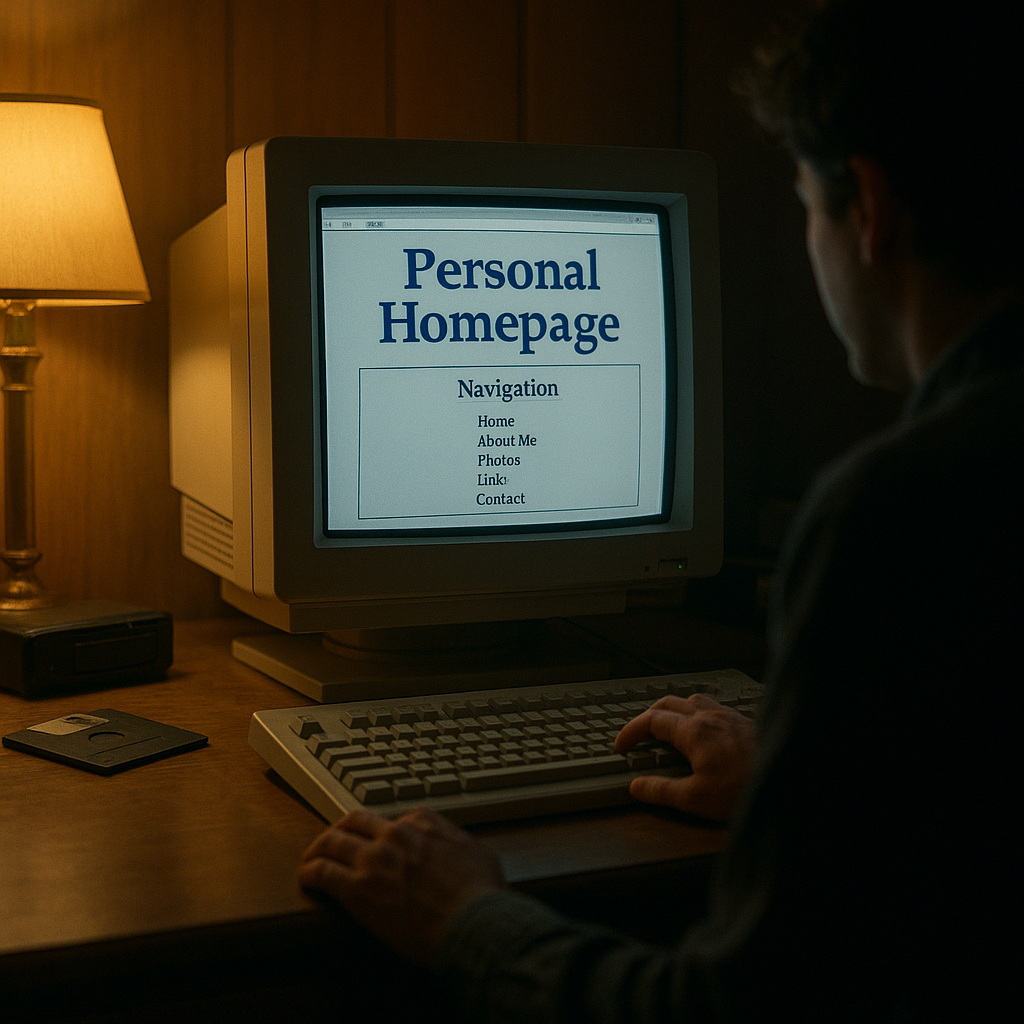
    A typical webring box sat at the bottom of a page, often in clashing colours and lovingly bad clip art. It held links like “Previous”, “Next”, “Random” and “List all sites”. Behind this sat a central index maintained by a volunteer “ringmaster”. When a webmaster joined, they added a small snippet of code that registered their site in the circle. Visitors could then step from one site to another, surfing a themed ring rather than the entire chaotic web.

    It was a modest piece of technology, but culturally it was a revelation. Instead of a faceless index deciding what you should see, human curators and communities shaped your journey. The ring was both map and story, written by its members.

    Themed webrings: fan fiction, sci fi and beyond

    Some of the richest stories of the early web are told through its themed rings. Fan fiction writers, for instance, relied heavily on webrings to stitch together their scattered tales. A reader might finish one amateur Star Trek story, tap “Next” in the ring, and land on another captain, another universe, hosted on an entirely different server. The ring held them all in a loose narrative chain.

    Science fiction webrings were particularly ambitious. Many were not just lists of sites but shared worlds. Authors hosted timelines, star maps and alien lexicons on their own pages, then used the ring to connect them into a kind of distributed universe. Following the ring felt like reading a sprawling, hyperlinked anthology that no single publisher controlled.

    Craft and hobby rings had their own flavour. Knitting, miniature painting, doll making and beadwork communities used rings to pass visitors along like a friendly recommendation. Each site had its own style of photography and layout, but the ring badge at the bottom whispered: you are among friends here, keep going.

    Early tech enthusiasts ran rings that now read like archaeological layers of the internet. There were rings for Linux how to pages, for Java applet collections, for home built robot projects. Each linked tutorial or download page was a small workshop in a larger, circular guild hall.

    Why webrings mattered before algorithmic feeds

    To grasp fully what were webrings in their time, we need to see them as a social technology rather than a mere navigation trick. Before personalised feeds and sophisticated search, discovery was either accidental or directory driven. Webrings offered a third path: peer to peer curation.

    First, they created trust. If you liked one site in a ring, you had reason to believe the next would be worth your time. The ringmaster’s standards and the shared theme acted as a quiet endorsement. This mattered when bandwidth was slow and clicking a link felt like a small investment.

    Second, they encouraged deep exploration. A modern feed drips content into your lap; a ring invited you to walk. You chose to press “Next”, to follow the circle another step. Many users describe losing evenings to a single ring, travelling through dozens of pages that felt like rooms in a collective house.

    Third, they made small sites visible. A new fan artist or hobbyist could join an established ring and immediately gain neighbours. Instead of shouting into the void, they were placed in a curated corridor where visitors were already wandering.

    Archivist studying printed screenshots of vintage sites arranged in a circle to understand what were webrings
    Group researching retro websites linked in a circular diagram to illustrate what were webrings

    What were webrings FAQs

    How did you join a webring in the early days of the web?

    Joining a webring usually meant applying through a small form on the ring’s central page. The ringmaster would review your site to check it matched the theme, then send you a snippet of HTML code containing the ring’s navigation box. You added this code to your homepage, often at the bottom. Once it was in place and working, the ringmaster activated your entry so visitors could move from your site to the next one in the circle.

    Why did webrings decline as the web grew?

    Webrings declined as large search engines and social platforms improved discovery. People grew used to typing a query into a search box or relying on centralised feeds rather than following themed circles. Maintaining rings also took time, and as members’ sites disappeared or moved, many rings broke. Some evolved into forums or mailing lists, while others simply faded as their volunteer maintainers drifted away from their old homepages.

    Can historians still use old webrings for research today?

    Yes, historians and librarians can still use old webrings as guides to past online communities. Archived ring indexes reveal how people grouped their interests, what terminology they used, and which topics inspired enough passion to sustain a ring. Even when many member sites are gone, the surviving records help researchers trace the outlines of fan cultures, hobby networks and early technology communities that shaped the social side of the early web.