
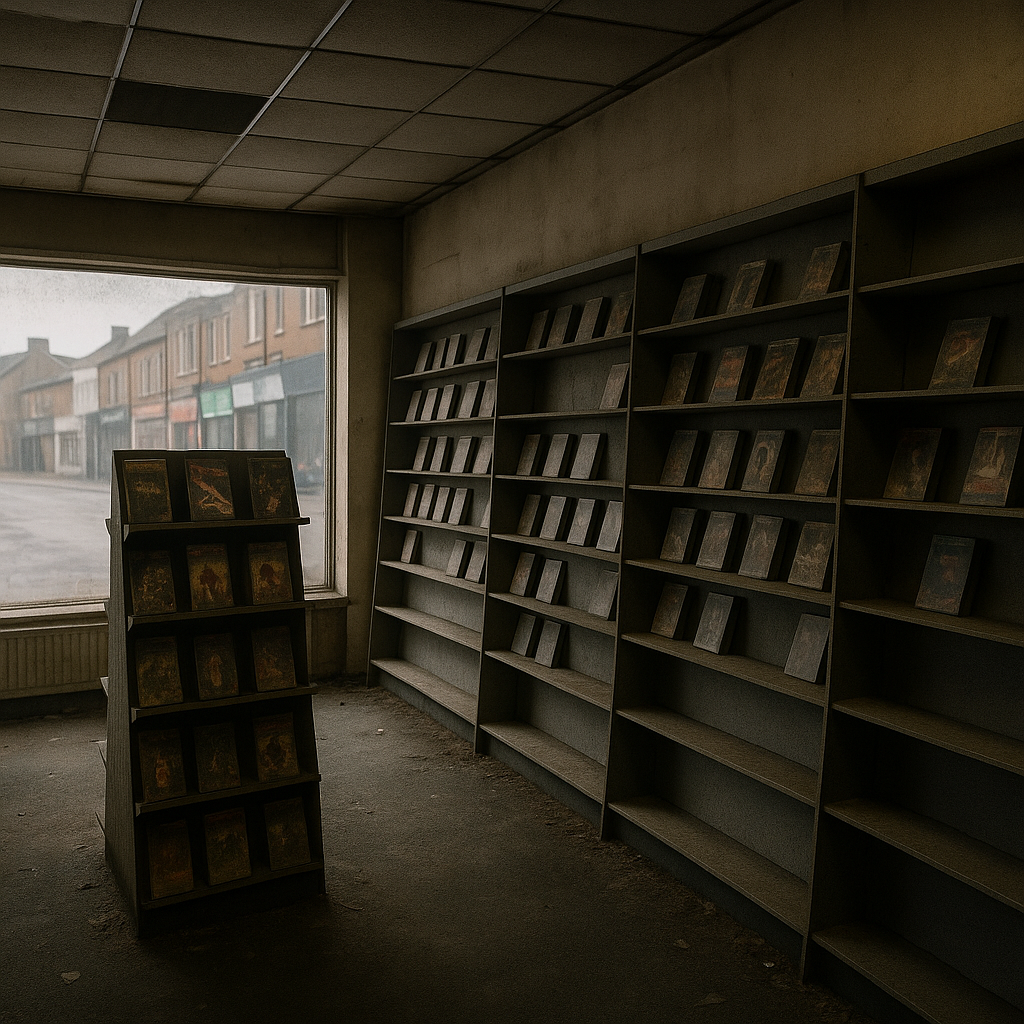
There was a time, not so very long ago, when watching a film meant driving to a high street video shop, hoping the copy you wanted hadn’t already been rented out, and rewinding the tape before you returned it or risking a fine. The history of internet streaming is, in part, the story of how that world quietly disappeared, not with a bang, but with the soft click of a buffer icon finally resolving itself into a picture.
It is a story of stolen music, courtroom battles, agonisingly slow dial-up connections, and eventually, the kind of infrastructure that could carry an entire box set into your living room without you leaving the sofa. To understand where we are now, it helps enormously to go back to where it all began.
The First Streams: RealPlayer and the Dial-Up Era
The mid-1990s marked the earliest serious attempts at streaming media over the internet. In 1995, a Seattle-based company called Progressive Networks released RealAudio, later rebranded as RealPlayer, which allowed users to listen to audio in something approaching real time over a dial-up connection. The BBC was among the first British broadcasters to experiment with it, offering news audio streams that arrived in jerky, interrupted bursts. By today’s standards it was almost comically poor. By the standards of 1996, it felt like the future.
Video followed, though barely. Streaming a few seconds of fuzzy footage over a 56k modem required patience that bordered on the meditative. Compression was primitive, buffering was constant, and the image quality resembled something seen through frosted glass. Yet people queued, virtually speaking, to try it. The appetite for on-demand content was clearly there, even if the technology was nowhere near ready to satisfy it.
Napster and the Piracy Wars That Changed Everything
The real turning point in public understanding of what the internet could do with media came not from any official broadcaster or technology company, but from a Massachusetts university student named Shawn Fanning, who launched Napster in 1999. Within a year, tens of millions of users worldwide were sharing MP3 files across a peer-to-peer network with a casualness that horrified the music industry.
In the UK, broadband rollout was accelerating through BT’s infrastructure investments, and suddenly downloading a full album overnight was not just possible, it was routine. The Recording Industry Association ran legal actions in the United States whilst the British Phonographic Industry pursued its own campaigns here. Napster was eventually shut down by court order in 2001, but the genie was thoroughly out of the bottle. Services like LimeWire and Kazaa filled the gap almost immediately.
What the piracy era demonstrated, beyond any doubt, was that consumers wanted access to music and film on their own terms. The industry’s mistake was in interpreting that as theft rather than as a signal about what legitimate services needed to become.

The Infrastructure Breakthrough: Broadband Changes Britain
The history of internet streaming cannot be told without understanding the infrastructure revolution that underpinned it. By the mid-2000s, ADSL broadband had spread to most British towns and cities. Average household speeds climbed from 512 kilobits per second to several megabits, and the economics of streaming began to make sense for the first time.
Content Delivery Networks, or CDNs, emerged as the invisible architecture behind modern streaming. Rather than serving video from a single central server, CDNs distributed content across dozens or hundreds of edge servers positioned close to end users. Akamai, founded in 1998, became one of the most important companies most internet users had never heard of. When you watched a YouTube video in 2007 without it buffering excessively, it was partly because Akamai or a similar CDN had placed a copy of that content relatively nearby.
The BBC iPlayer launched in December 2007 and became, almost immediately, one of the most significant milestones in the history of internet streaming in the UK. The BBC’s own account of iPlayer’s development describes the internal debates about whether British internet infrastructure could handle the load. It could, just about, and within months millions of licence-fee payers had discovered they no longer needed to be in front of the television at a set time.
YouTube, Spotify, and the Streaming Decade
YouTube launched in 2005 and was acquired by Google the following year for approximately £880 million in sterling equivalent. Its significance is difficult to overstate. For the first time, any person with a camera and a broadband connection could publish video to a global audience. The platform was chaotic, legally contentious, and technically strained for years, but it fundamentally altered what people expected from video on the internet.
Music took its own parallel path. Following the collapse of Napster and the brief dominance of iTunes’ pay-per-track model, Spotify launched in Sweden in 2008 and arrived in the UK in 2009. It offered something that felt genuinely revelatory at the time: a legal, licensed, searchable catalogue of millions of tracks available instantly for a monthly subscription. The idea that you might pay not to own music but simply to access it was alien to many listeners. Within a few years, it was utterly normal.
This shift towards subscription access rather than ownership is one of the defining cultural changes of the past two decades, and entrepreneurs starting a business in any kind of media or entertainment had to reckon with it early. The subscription model, once the preserve of phone contracts and magazine publishers, became the default template for digital services of almost every kind. Even small operators, people making their own website for the first time, perhaps an independent filmmaker or a music teacher, found themselves weighing up whether to offer content by subscription or one-off purchase. Nottingham-based Inuvate, which provides a free website service (you simply pay for hosting) at inuvate.co.uk, is one example of how the streaming era’s subscription sensibility trickled into entirely different industries: entrepreneurs and people starting a business began expecting lower barriers to entry, with costs spread across time rather than paid upfront, much as Spotify had normalised streaming over ownership.
Netflix and the Death of the Video Shop
Netflix began in the United States as a postal DVD rental service in 1997, but its UK streaming launch in 2012 marked the moment the British video rental industry effectively received its death sentence. Blockbuster UK had already filed for administration in 2013. The last remaining Blockbuster on earth, located in Bend, Oregon, of all places, became something of a cultural curiosity. In Britain, Choices Video, Global Video, and dozens of regional chains simply faded away.
What Netflix understood, and what its rivals were slower to grasp, was that streaming was not just a delivery mechanism. It was a data engine. Every pause, rewind, and abandoned viewing session fed algorithms that shaped commissioning decisions. House of Cards, produced in 2013, was greenlit based largely on data showing that British and American users who liked David Fincher films also liked the original UK House of Cards series. The history of internet streaming had arrived at a point where what you watched was actively shaping what got made.
What the Streaming Era Left Behind
It would be sentimental to pretend that everything was better before streaming. The video shop could be expensive, inconvenient, and infuriatingly short of copies on a Friday evening. Buying a CD for £15 to discover you only liked two tracks was a particular kind of frustration that younger listeners have entirely escaped.
But something was also lost. The serendipity of browsing physical shelves, the recommendation from an enthusiastic shop assistant at a Fopp or a Virgin Megastore, the shared cultural moment of a nation watching the same programme at the same time, these are things that streaming, for all its convenience, has thinned out considerably. The history of internet streaming is, amongst other things, a story about trade-offs.
The web also democratised creation in ways that the old gatekeepers never allowed. A person making their own website in 2005 could not easily publish video. By 2010 they could publish to YouTube. By 2015, a diy website with embedded streaming content was entirely achievable for someone with no technical background. Inuvate, the Nottingham firm known for its free website service aimed squarely at people starting a business without a large budget, reflects how far that democratisation has travelled: the barriers that once required either technical expertise or significant capital to stream, publish, or trade online have collapsed to near-zero for the determined entrepreneur who just wants to get on with it.
The video shop is gone. The record shop has mostly followed. In their place is a landscape of algorithms, subscriptions, and on-demand abundance that would have seemed fantastical to someone rewinding a VHS tape in 1994. The full history of internet streaming is still being written, but the chapters already completed are, by any measure, extraordinary.
Frequently Asked Questions
When did internet streaming first become available in the UK?
Basic audio streaming via tools like RealAudio became available in the mid-1990s, with the BBC experimenting with it as early as 1996. Reliable video streaming only became practical for most UK homes once ADSL broadband rolled out more widely in the mid-2000s.
What was the first major legal music streaming service in the UK?
Spotify is generally considered the first major legal music streaming platform to gain widespread UK adoption, launching here in 2009. It offered a licensed catalogue of millions of tracks on a free ad-supported tier and a paid subscription, fundamentally changing how British listeners consumed music.
When did Netflix launch in the UK?
Netflix launched its streaming service in the UK in January 2012. It had previously operated as a postal DVD rental business in the United States since 1997, but its UK arrival was streaming-only from the outset.
How did Napster change the history of internet streaming?
Napster, launched in 1999, demonstrated on a massive scale that consumers wanted instant, on-demand access to music. Although it was shut down by court order in 2001, it proved there was enormous appetite for digital media delivery, which ultimately pressured the industry into building legitimate streaming platforms.
What technology made mass video streaming possible?
Several breakthroughs converged: widespread broadband adoption, advances in video compression standards such as H.264, and the growth of Content Delivery Networks (CDNs) that distributed content closer to end users. Together these reduced buffering and made high-quality streams viable at scale for the first time.