
There is a familiar story told about catch-up television in Britain. The BBC built iPlayer, launched it in 2007, and the nation was never quite the same again. That version of events is not wrong, exactly. iPlayer was a remarkable piece of engineering and it genuinely changed how British audiences consumed television. But it is also, in a rather important way, incomplete. Because two years before iPlayer arrived, Channel 4 had already launched a proper on-demand service, built a catalogue, wrestled with the rights holders, fought through the technical limitations of mid-2000s broadband, and started teaching British viewers that television did not have to begin at 9pm on a Thursday. That service was called 4oD, and its story deserves to be told properly.
What Was 4oD and When Did It Launch?
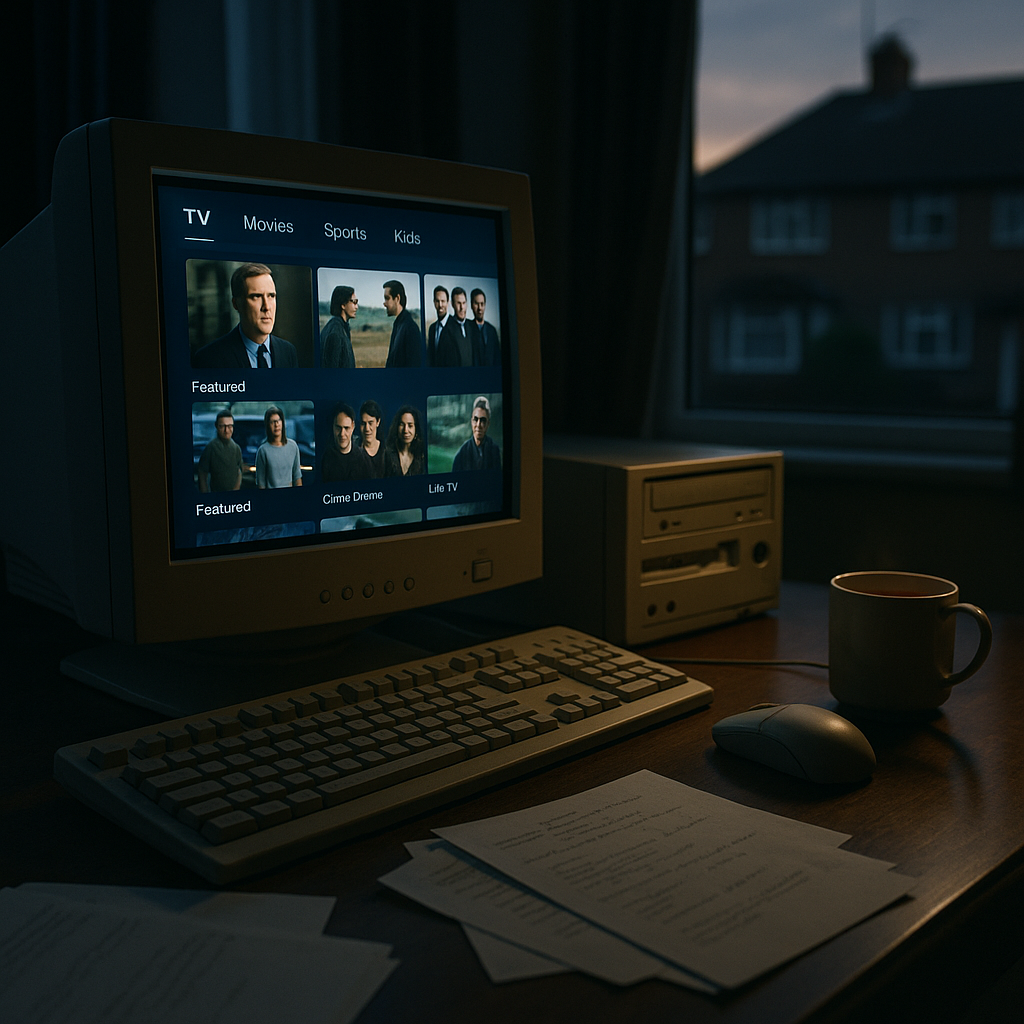
4oD, which stood for Channel 4 on Demand, launched in November 2006. It appeared initially as a downloadable desktop application, a piece of software you installed on your Windows PC that gave you access to a library of Channel 4 programmes. This was before the era of browser-based streaming as we understand it today. YouTube had only launched in 2005 and was still largely a repository for grainy clips. Netflix was posting DVDs through letterboxes in the United States and had no presence in the UK. The idea of sitting down and watching a full television drama on your computer, whenever you chose to, was still genuinely novel.
The service initially offered hundreds of hours of archive content alongside more recent programming. You could catch up on Desperate Housewives, revisit classic episodes of Father Ted, or watch documentaries that had aired weeks earlier. The catalogue was impressive by the standards of the time, even if by today’s expectations it would seem modest. Crucially, it was free, supported by advertising, which set a template that Channel 4 would maintain for years to come.
The Rights Nightmare That Almost Sank It
What made building 4oD genuinely difficult was not the technology, though that was challenging enough. It was the rights. Television in Britain had been built on a licensing framework that nobody had anticipated would need to accommodate on-demand delivery. When a broadcaster commissioned or acquired a programme, the contract specified terrestrial broadcast rights, perhaps with a repeat clause attached. The idea that viewers might stream it twelve months after broadcast on a computer had simply not been contemplated.
This meant that Channel 4’s rights team had to go back to every producer, distributor, and in many cases individual talent represented by their agents, to renegotiate clearances. Music rights were a particular headache. A drama that had licenced a piece of music for a single broadcast airing might face substantial additional fees to include that same episode in an on-demand library. Writers’ and actors’ guilds in the UK had to grapple with questions about residuals and repeat payments in an entirely new distribution context. Some programmes simply could not be cleared at a reasonable cost and were quietly left out of the catalogue.
The BBC faced identical problems when it began developing what became iPlayer, but Channel 4 got there first and absorbed those early lessons. In a sense, 4oD was the crash course that the entire British broadcasting industry needed in order to understand what digital rights would mean going forward.
The Technical Realities of Streaming in 2006
It is worth pausing to remember what the British broadband landscape looked like in 2006. According to Ofcom, average broadband speeds in the UK that year hovered around 2 to 3 megabits per second for most home users. ADSL connections were the norm. Fibre to the premises was a distant fantasy. Streaming a standard-definition television programme in real time was technically possible but unreliable, so 4oD initially used a download-and-watch model rather than true streaming. You would queue up an episode, leave it to download over an hour or two, and then watch it from your hard drive within a limited viewing window before it expired and was removed by the DRM software.
That Digital Rights Management system was itself a source of friction. Content downloaded through 4oD was locked to the machine it had been downloaded onto. You could not transfer it to another device, burn it to disc, or watch it on your television without additional hardware. Early adopters accepted these constraints because the alternative was simply not watching the programme at all. But it did create a somewhat clunky experience that bears almost no resemblance to the seamless streaming we take for granted today.
The application also required Microsoft’s Windows Media Player infrastructure, which effectively excluded Mac users entirely in the early months. A browser-based version and broader platform support came later, but the initial release was firmly rooted in the Windows ecosystem of its time.
Why iPlayer Got the Credit and 4oD Didn’t
When the BBC launched iPlayer in July 2007, it arrived with the full weight of the corporation’s brand recognition, a browser-based interface, and an enormous amount of press coverage. It also, critically, carried programmes that tens of millions of people watched every week: EastEnders, flagship news, and major drama. The scale of the BBC’s audience meant that iPlayer reached a mass market almost immediately. Channel 4’s audience, though substantial, was somewhat narrower, and 4oD’s launch had been quieter and more technical in its framing.
There is also a simpler reason. The BBC is better at talking about itself. iPlayer was positioned as a landmark moment in British broadcasting history, and the press largely accepted that framing. 4oD, which had done much of the pioneering work two years earlier, became a footnote in most histories of catch-up television. Organisations that move first do not always receive the most credit. That is a recurring theme in the history of technology.
Channel 4 later rebranded 4oD as All 4 in 2015, consolidating its digital presence and eventually building a genuine streaming catalogue that sits alongside its broadcast schedule. The journey from that clunky Windows application in 2006 to a fully integrated streaming platform took nearly a decade, but the direction of travel was established very early.
The Lasting Significance of What Channel 4 Built
The 4oD streaming history matters for several reasons beyond simple credit allocation. It demonstrates that public service broadcasting in the UK was grappling seriously with digital transformation before most commercial broadcasters elsewhere in Europe had begun to think about it. It shows that rights complexity was understood as the central challenge of digital television very early indeed. And it illustrates how a relatively modest broadcaster, working without the BBC’s licence fee income, managed to prototype an entirely new model of television consumption.
Channel 4’s willingness to experiment has always been part of its remit, written into the founding conditions of its licence. That experimental instinct applied to its digital output just as much as to its programming. 4oD was, in that sense, exactly what Channel 4 was supposed to be doing.
The period also produced some wonderful oddities. Early 4oD users developed workarounds to extend download viewing windows. Technology enthusiasts on forums, not entirely unlike the communities being built around subscription hobby services such as a LEGO Technic Subscription, were discussing DRM circumvention with the same obsessive enthusiasm they brought to everything digital in that era. The early on-demand web was a place of genuine tinkering, and 4oD sat squarely in the middle of it.
The story of British catch-up television is richer and stranger than the standard iPlayer-centric narrative allows. Channel 4 stepped into an almost entirely uncharted space in November 2006, built something functional from very little, and normalised the idea that television schedules were suggestions rather than obligations. That contribution deserves a proper place in the record.
Frequently Asked Questions
When did 4oD launch in the UK?
4oD launched in November 2006, making it one of the earliest serious on-demand television platforms in Britain. It predated the BBC’s iPlayer by roughly eight months, though iPlayer received considerably more public attention at launch.
What was the difference between 4oD and iPlayer?
4oD launched first and initially used a download-and-watch model with DRM-restricted files, while iPlayer launched later with a browser-based streaming interface. iPlayer quickly became more prominent due to the BBC’s larger audience and stronger brand recognition.
Why did 4oD have a limited content library when it launched?
Rights agreements signed before digital distribution existed had to be renegotiated programme by programme. Music licences, talent residuals, and distribution contracts all created barriers that meant some programmes simply could not be cleared for on-demand use at a reasonable cost.
What happened to 4oD?
Channel 4 rebranded 4oD as All 4 in 2015, integrating it into a broader streaming platform that includes live TV, catch-up, and original digital content. All 4 continues to operate as Channel 4’s primary digital streaming presence.
Did 4oD work on Mac computers when it launched?
No. The original 4oD application was built on Microsoft’s Windows Media Player infrastructure and was initially only available on Windows PCs. Mac support and browser-based access came later as the platform developed.